



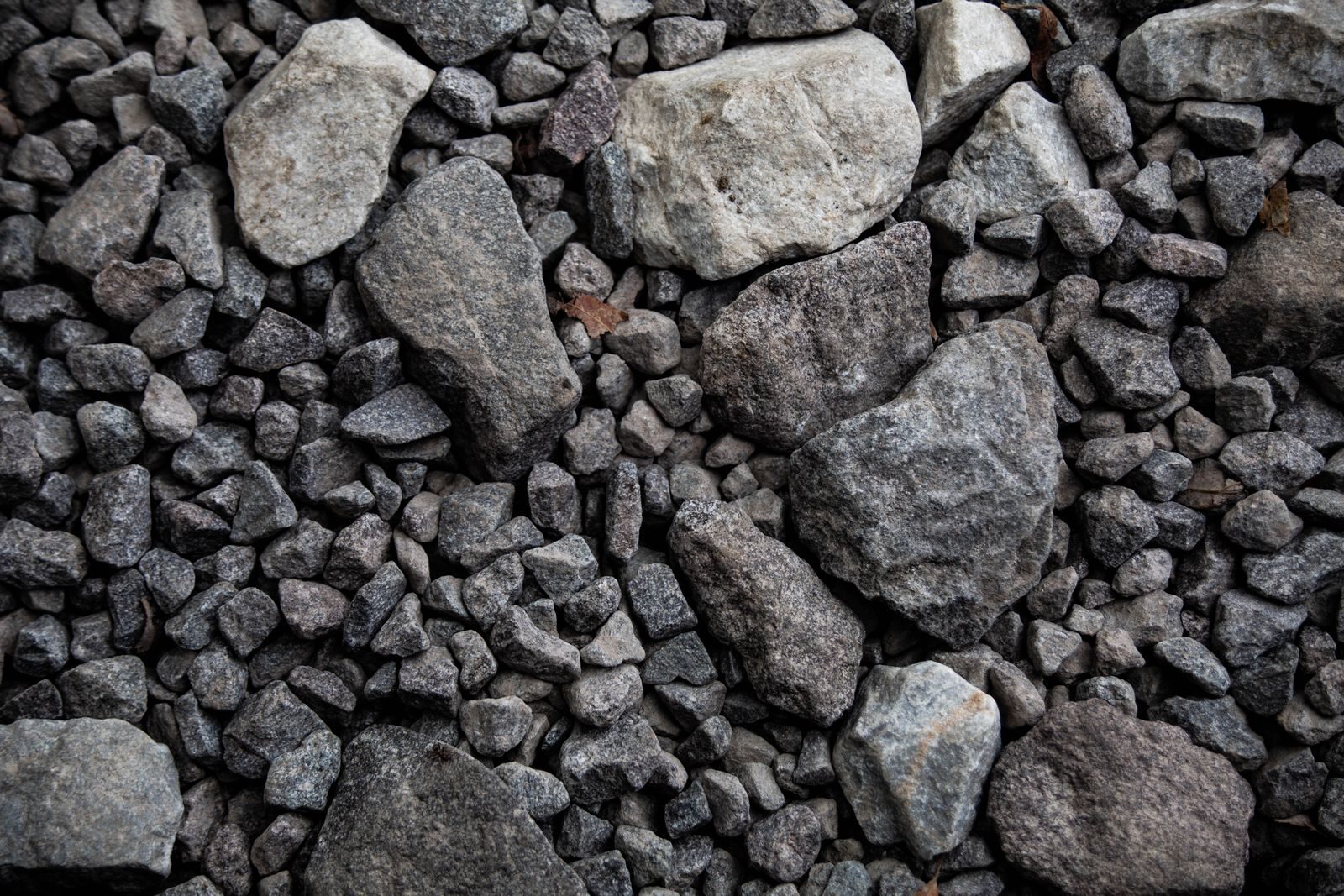
Someone spreads crushed rock on a field. A few years later, they sell carbon credits for it.
That sounds like it should not work. It does work, and the chemistry behind it is older than any forest on Earth. But there is a catch in the middle of the process that decides whether it works at all, and almost nobody writing about it mentions the catch.
I studied biogeochemistry, which is the science of how chemical elements move between rocks, soil, water, living things and the air. Rock weathering is one of the first things you meet in that subject. It is the slow reaction that has controlled the amount of CO₂ in our atmosphere across geological time, long before anything alive was involved.
Enhanced rock weathering is a proposal to speed that reaction up on purpose.
The Reaction That Has Been Running for Billions of Years
Start with the natural version, because the whole idea is built on it.
Rain is not pure water…
As it falls, it dissolves a small amount of CO₂ from the air. That makes a weak acid called carbonic acid. It is the same mild acid that makes fizzy drinks slightly sharp.
That weak acid lands on rock. Over a long time it eats into it, breaking the minerals apart.
When it breaks apart the right kind of rock, two things come out. The first is a set of dissolved metals, mainly calcium, magnesium, potassium and sodium. These are called cations, which just means they carry a positive electrical charge. The second is bicarbonate, which is the CO₂ that started in the air, now locked into a dissolved form in water.
Rainwater carries the bicarbonate into streams, then rivers, then the sea. Once it is in the ocean it can stay locked away for thousands of years, or become part of shells and eventually limestone.
So the atmosphere loses carbon, and the ocean gains it. That process is one of the main reasons the Earth’s climate has stayed within a liveable range for so long.
The problem is speed. Left alone, this is a geological process. It works on a timescale of hundreds of thousands of years, and we do not have that.
What Enhanced Rock Weathering Changes
The reaction happens at the surface of the rock. So the amount of surface you give it decides the rate.
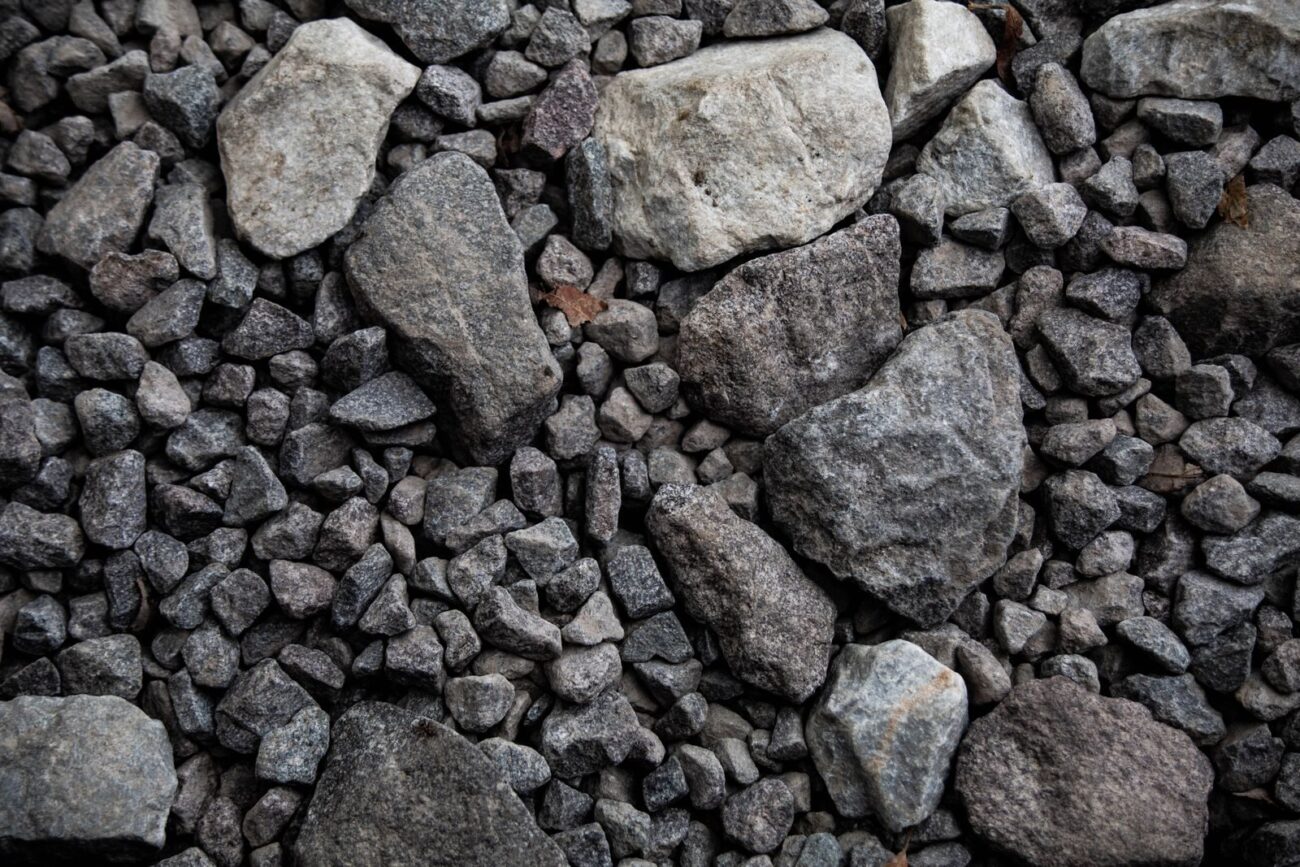
A boulder has very little surface compared to its mass. Grind that same boulder into powder and you have created an enormous amount of new surface for water and acid to reach. The reaction that would have taken geological time can then run in years.
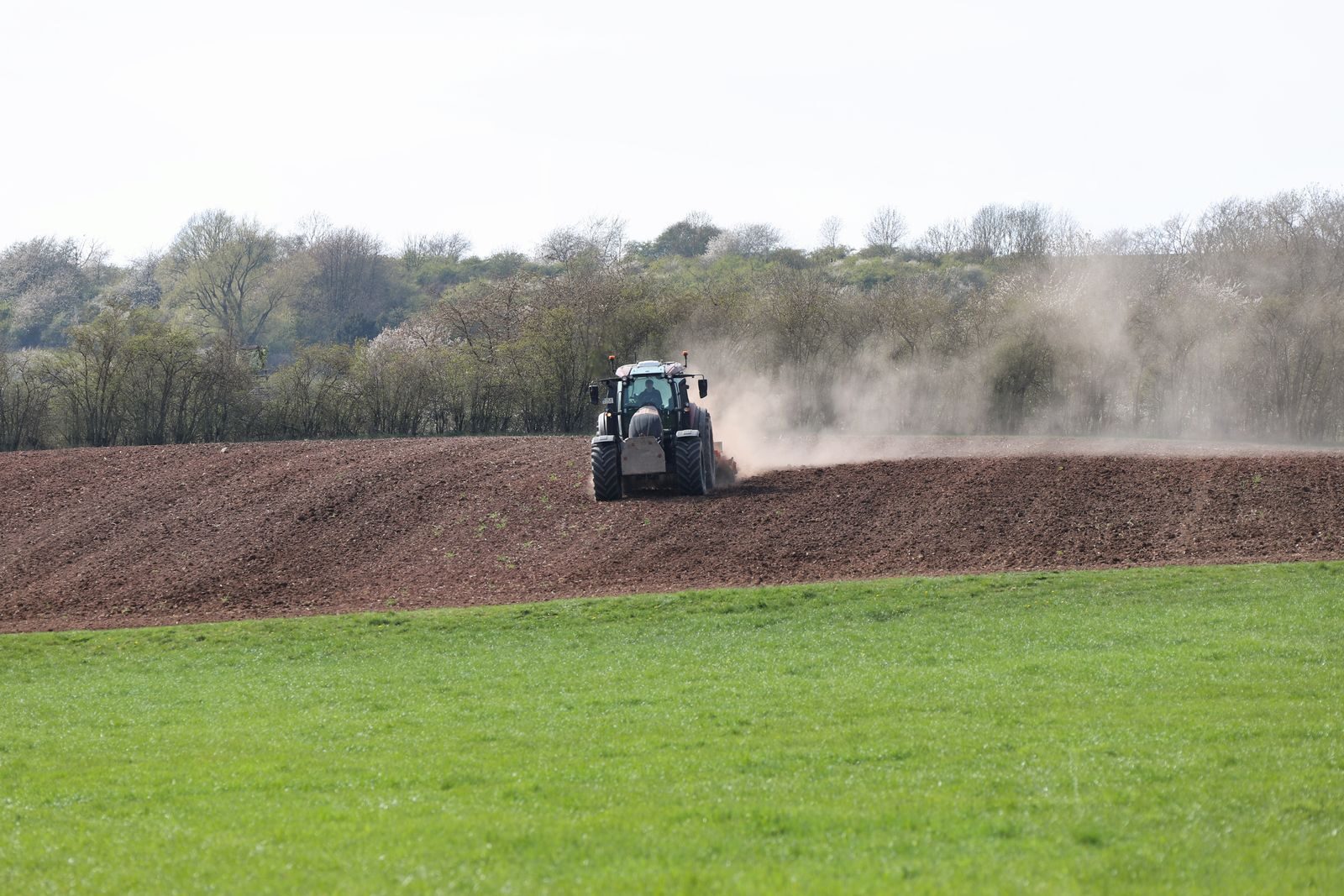
That is the whole idea. Crush silicate rock, spread it over farmland where it will get rain and be mixed into the soil, and let a process that normally takes millennia run inside a human lifetime.
Farmland is chosen for practical reasons rather than scientific ones. The land is already there, the machinery to spread material already exists, and farms are already visited regularly.
Basalt is the usual choice of rock. It is common, it weathers relatively fast, and it is rich in the calcium and magnesium the reaction needs. A good deal of it is already produced as a by-product by quarries.
The Part I Find Most Interesting: It Also Feeds the Soil
Look again at what comes out of the rock when it dissolves. Calcium, magnesium, potassium.
Those are not waste products. They are plant nutrients.
I studied mineral nutrition of plants, which is the subject of how plants get the chemical elements they need out of soil. Calcium, magnesium and potassium are three of the major ones. Magnesium sits at the centre of every chlorophyll molecule, so without it a plant cannot make chlorophyll and cannot photosynthesise. Potassium controls water movement in and out of cells and the opening of leaf pores. Calcium builds cell walls.
So crushed silicate rock releases fertiliser as it weathers.
There is a second effect. Weathering consumes acid, which raises soil pH. Farmers already spread crushed rock for exactly that reason, and they call it liming. Basalt does the same job while capturing carbon at the same time.
The Frontiers study on basalt rock powder sets out both sides of this together, the sequestration and the agricultural co-benefits, in the same experiment.
My view is that this is the reason to take the idea seriously rather than treat it as another climate scheme. Most carbon removal methods ask someone to do something they would not otherwise do, and pay them for it. This one overlaps with something farmers already do for their own reasons. That changes the economics, and it changes how likely it is to actually happen at scale.
The Catch, and It Is a Large One
Here is the part that gets left out.
I said the bicarbonate travels to the ocean. It does not always travel. It can come back out of solution while still in the soil and turn into solid carbonate, which is essentially limestone forming in the ground.
When that happens, CO₂ is released again. One molecule of CO₂ goes back to the air for every one of those metal ions that precipitates.
The ScienceDirect work on basalt mineralogy and carbon capture puts the arithmetic plainly. If the bicarbonate precipitates as solid carbonate in the soil, the net capture drops to one molecule of CO₂ for every two that were consumed in the weathering reaction.
Half of it comes back.
What decides which way it goes is soil pH. In more alkaline soil, carbonate is more likely to precipitate. In more acid soil, the bicarbonate is more likely to stay dissolved and be carried away in water.
Sit with that for a moment. The amount of carbon actually removed depends on the pH of the field it was spread on. The same rock, the same rate, the same rainfall, in two different soils, gives two different answers.
Why This Makes Me Cautious About the Numbers
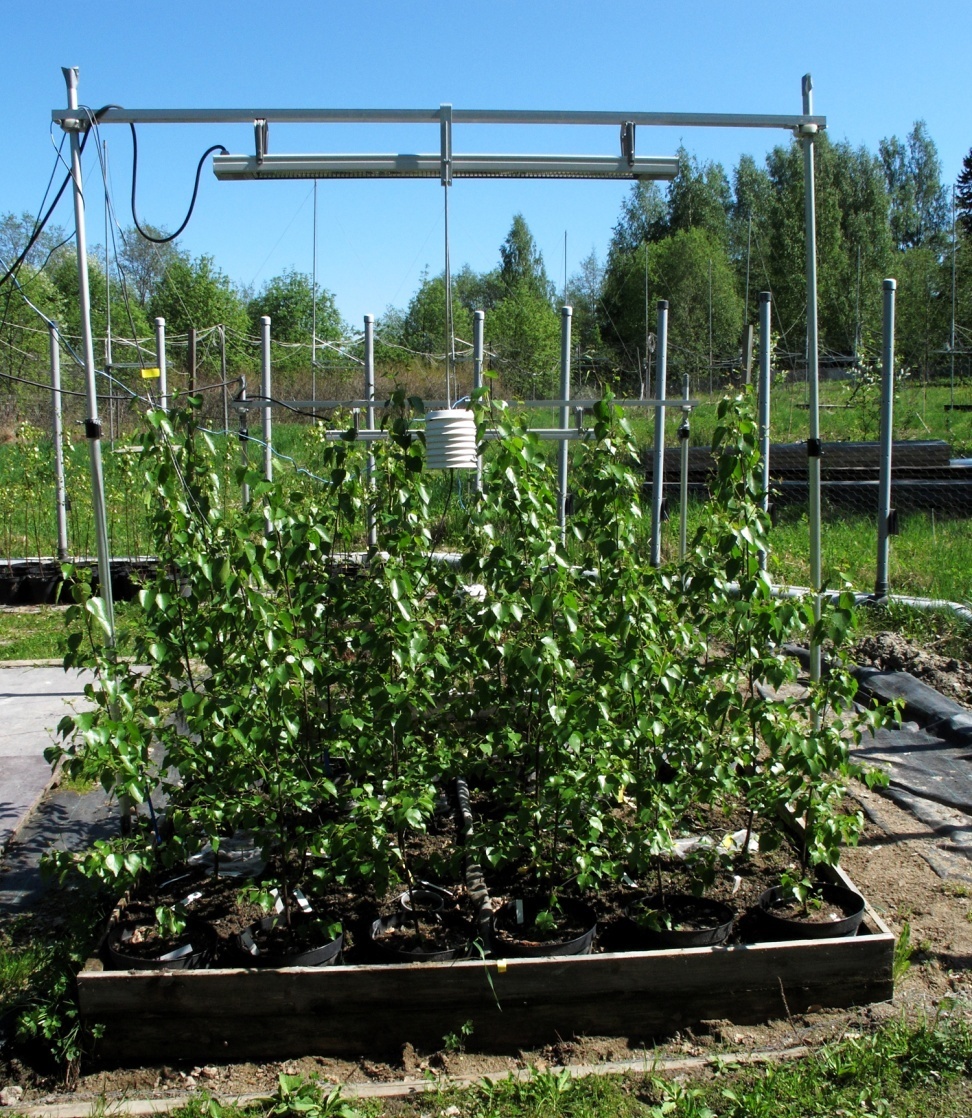
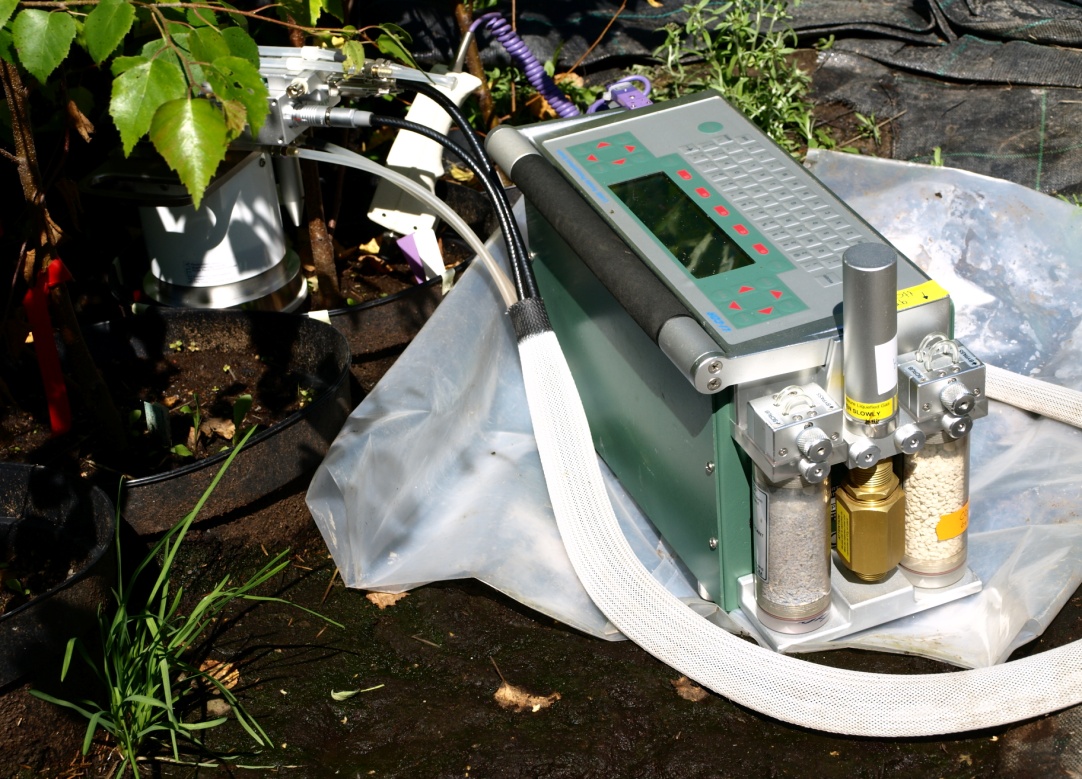
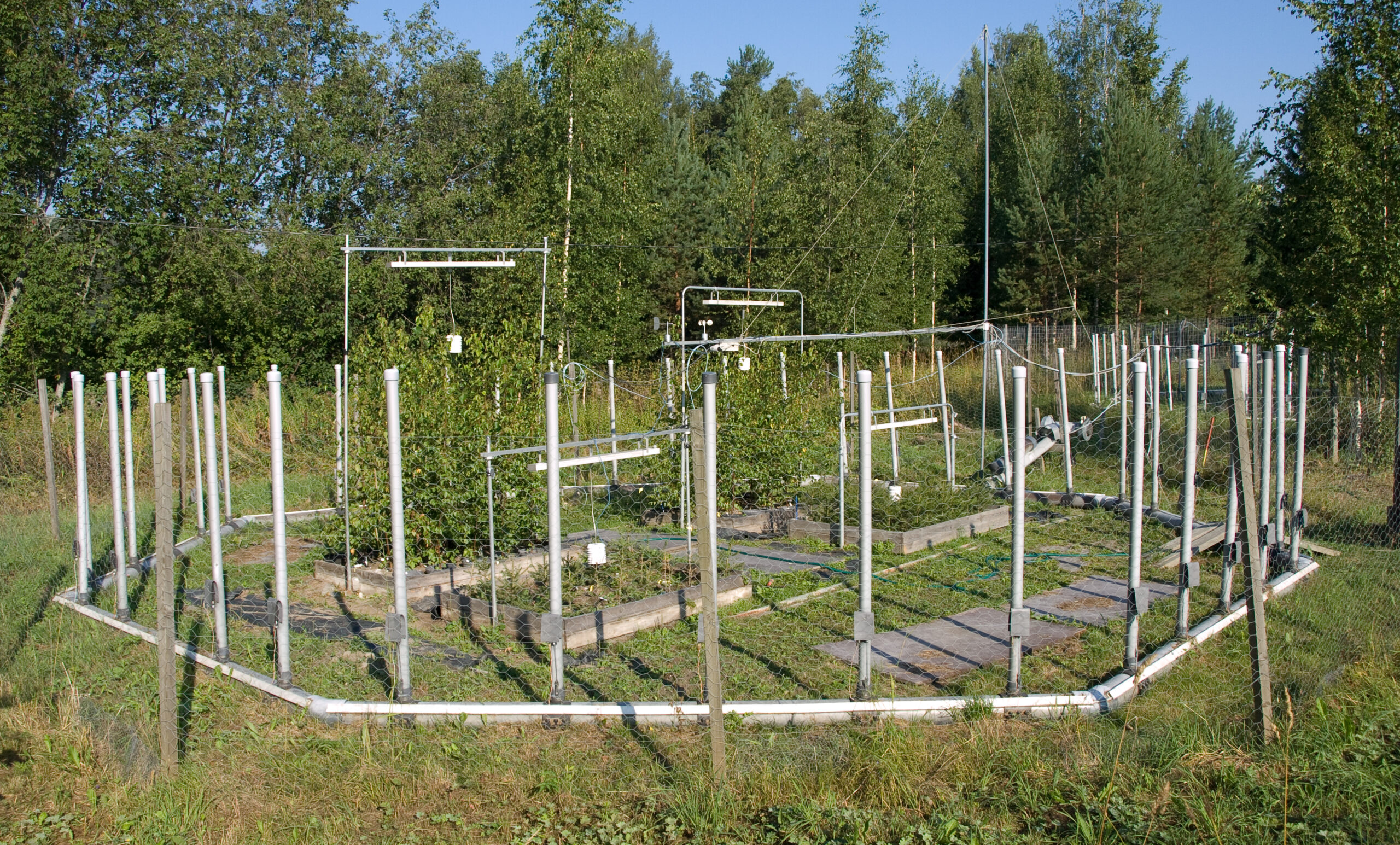
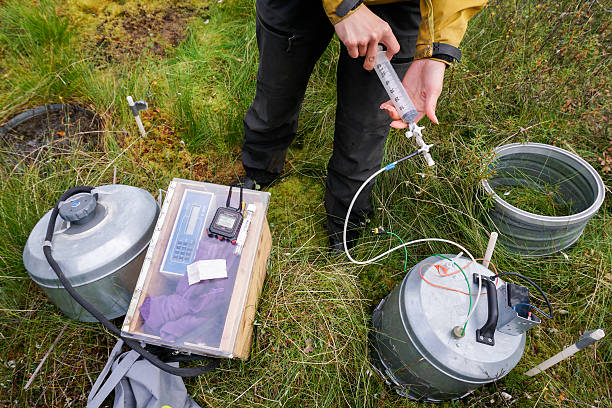
My background is field measurement. I spent a growing season logging soil conditions continuously and taking monthly soil CO₂ readings with a chamber, and I studied quality control of chemical and environmental measurements. That work leaves you with one habit. Before believing a figure, ask how it was obtained.
Apply that habit here.
To know how much carbon a field removed, you need to know how much rock dissolved, how much bicarbonate formed, how much precipitated back out in the soil, and how much left the field in water. The last one is the difficulty. Water leaves a field slowly, through soil, in every direction, into groundwater and ditches and streams. There is no boundary where you can stand and count it.
This is different from measuring a tree. A tree is a solid object in a fixed place, and you can measure it and come back next year and measure it again. The carbon in enhanced rock weathering leaves as dissolved ions in moving water.
Then add the fact that the cations, the calcium and magnesium and potassium, are also being taken up by plants, held on soil particles, and exchanged with other ions. The Frontiers study makes this point directly: changes in soil cations are confounded by plant uptake, adsorption and cation exchange. So the most obvious thing to measure is also being altered by processes that have nothing to do with carbon.
None of that means the carbon is not being removed. It means the number attached to it is harder to establish than the idea sounds, and I would treat any confident figure with the same care I would treat a single soil reading taken in one spot.
Where This Sits
Enhanced rock weathering is a real process resting on well-understood chemistry that has been operating on this planet since long before life existed. Crushing the rock speeds it up. Spreading it on farmland puts it where rain and soil and machinery already are, and the nutrients it releases give farmers a reason to want it.
The uncertainty is not in whether the reaction works. It is in how much of the captured carbon stays captured, and how anyone proves it for a particular field in a particular soil.
That is the subject of the next piece in this series, on why proving enhanced rock weathering worked is harder than doing it.