




One study worked out how many soil samples it takes to prove a field has gained carbon.
The answer was 650.
That was for a gain of three tonnes of carbon per hectare, across thirty pairs of fields, over ten years. Not to measure it exactly. Only to show it happened.
The reason is not poor technique. The reason is how soil behaves. The same problem appeared on a smaller scale in my own field research.
The Lab Is Not the Problem
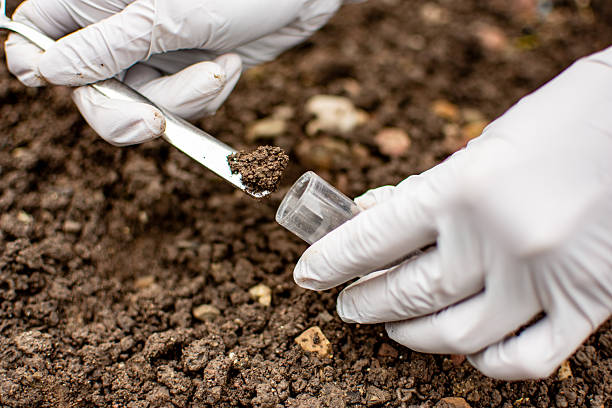
Measuring the carbon in a soil sample is a solved problem. The sample is burned in an analyser and the CO₂ released is measured. Send the same sample twice and the two answers will be close. I have written separately about how the main lab methods compare.
The difficulty comes before the sample reaches the lab.
You are not measuring the carbon in a sample. You are measuring the carbon in a field, then measuring it again years later, then deciding whether the difference is real.
Soil Varies Across a Single Field
Soil is different from one part of a field to another.
It differs with small dips and rises, because water runs downhill and collects. It differs where tractors have compacted the ground. It differs at old field edges, where a manure heap once sat, where a hedge was removed forty years ago. It differs with the rock underneath, which can change within a few metres.
Carbon content differs with all of these. Two samples taken ten metres apart can give different numbers. Neither is wrong. Both are correct readings of two different pieces of ground.
One sample gives you a number for one spot. A number for the whole field takes many samples, and how many depends on how varied that field is.
The Change Is Smaller Than the Variation
Soil carbon builds slowly. Better farming might add a fraction of one percent over several years.
That change is smaller than the natural variation already present across the field.
Work published in Environmental Research Letters sets this out. Many soil cores are needed, because the yearly change in soil carbon is small next to how much soil varies from place to place, and small next to the error in the measurement.
Each extra sample narrows the uncertainty. Detecting a very small change takes a great many samples.
A review in Carbon Management gives the 650 figure, along with the cost side. Returning to measure a second time does not pay for itself unless a project covers something like five thousand fields. Below that, the sampling costs more than the carbon is worth.
What My Own Experiment Needed
My experiment was not about carbon stocks. The same problem applied at a smaller scale.
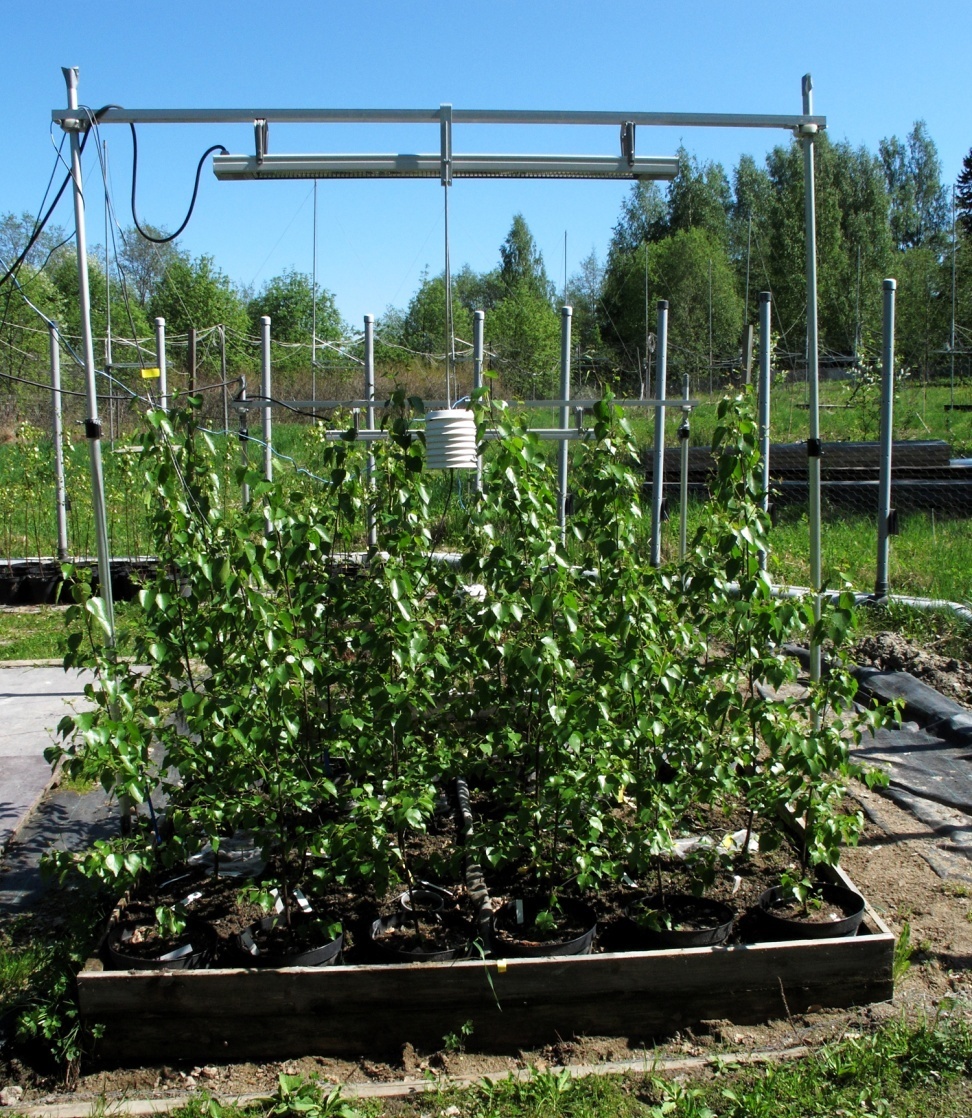
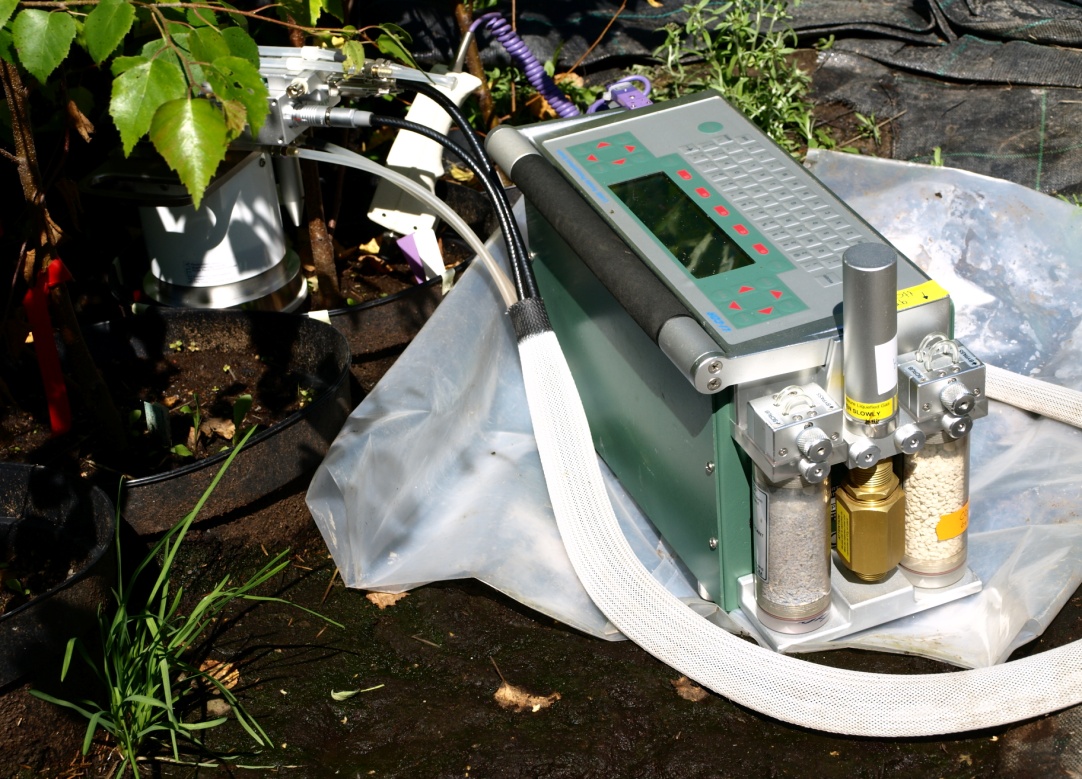
I was measuring how warming and ozone changed birch growth and soil CO₂ release. The effects were small. Soil varies. So the design had to reduce that variation before the experiment began.
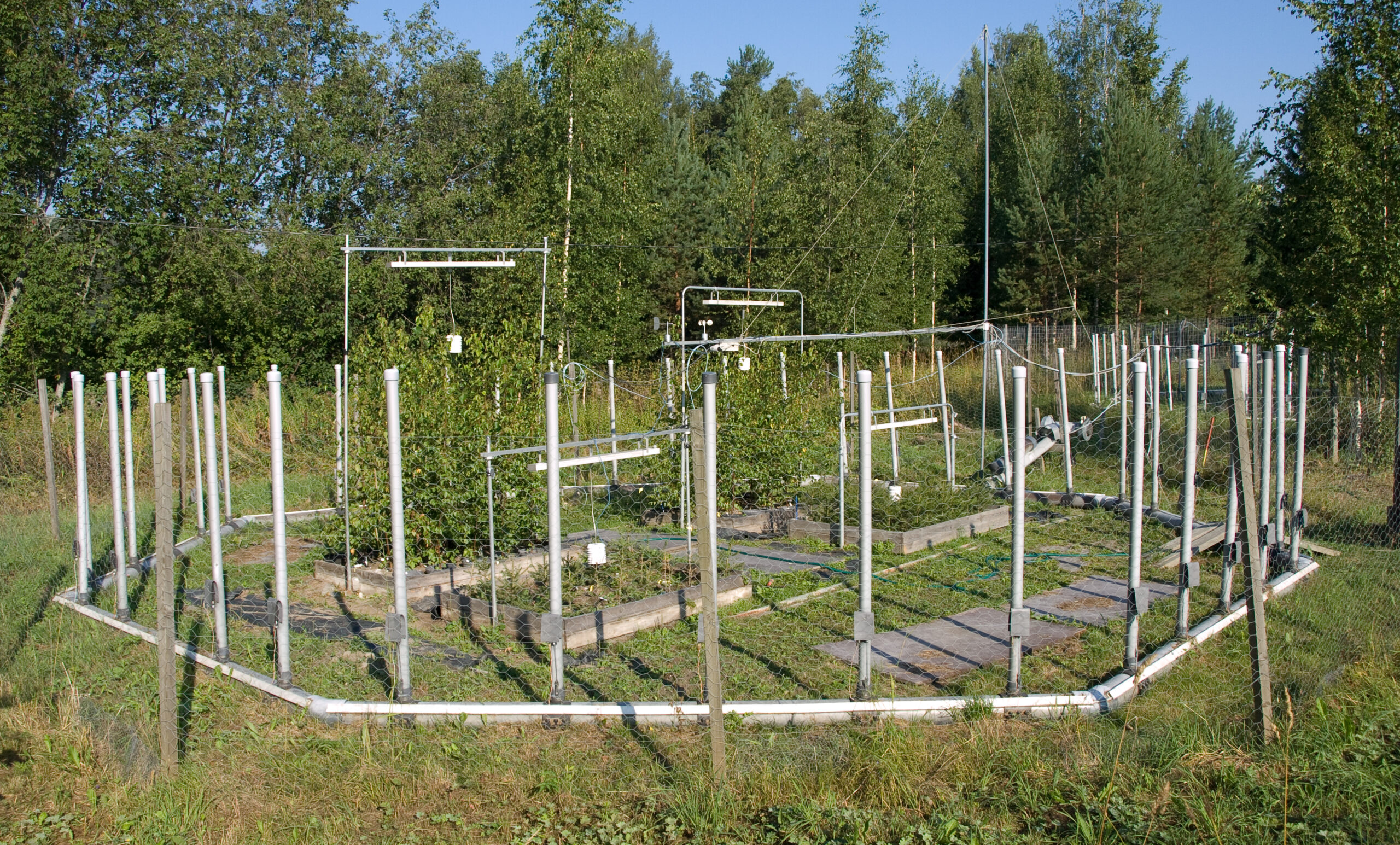
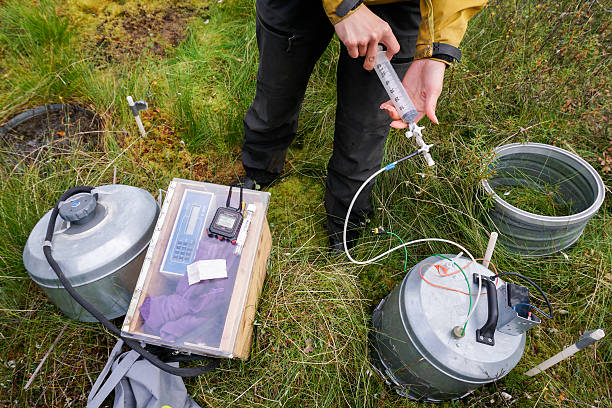
The soil was built rather than used as found. Each subplot had a thirty centimetre layer of mull and sand inside a wooden frame, so every plot started the same.
A root barrier cloth ran between the two tree types, so roots from one could not grow into the other’s soil.
The analysis then used a linear mixed model with plot identity as a random factor. That allows for the fact that plots differ for reasons nobody measured, and corrects for it before any result is trusted.
We built the soil, separated the treatments physically, and still corrected for differences between plots afterwards.
A project on real farmland has none of those options. It takes the field as it is, with whatever history is in the ground. It has to detect a smaller change than we were looking for, over more years, at a cost that leaves it worth doing.
Each Visit Adds Error
The measurement is not one number. It is two numbers taken years apart, with one subtracted from the other.
Each visit introduces error. Where the samples came from. How the cores were handled. How they were dried. Which lab ran them, and on which day.
Subtracting two numbers that both carry error gives an answer with more error than either one.
The difference between two visits is less certain than either visit was. That difference is what gets sold.
Everything about the second visit has to match the first. Same spots, same depths, same handling, same lab, same method. Any change adds a difference that has nothing to do with carbon.
What the Number Represents
Soil carbon does go up. The farming practices that build it are worth doing whether or not anyone pays for them.
Proving it went up, on one field, well enough to sell, is much harder than it looks.
This is why computer models, satellite images and fast scanning methods are used in place of digging more holes. All three are ways around a sampling cost that will not come down far enough.
The number attached to a tonne of soil carbon is an estimate. It carries more uncertainty than most numbers, for reasons that come from soil itself. Anyone buying or selling should ask how it was calculated and how many samples sit behind it.
There is a second question. Even with enough samples, you have to decide what you measure against: a fixed depth, or a fixed mass of soil. That choice alone can change the answer, and it is the subject of the next piece.