


Why does a compost bin you have fed for months still look exactly like the day you filled it?
You lift the lid expecting dark crumbly compost, and instead you find the same eggshells, the same twigs, the same recognisable peelings, just sitting there. Not rotten, not smelly, just stuck. It feels like nothing is happening at all, because nothing is.
Let me tell you what is going on, because a stalled compost heap is almost never broken. It is missing something. Composting is done by living microbes, and like anything alive they need certain conditions to work. Take one away and they slow right down or stop. Your job is to find the missing piece, and there are only four to check.
Your Compost Is Not Rotting Because the Microbes Have Stopped
Here is the thing to understand first. You are not really making compost. Microbes are, billions of bacteria and fungi eating your waste and breaking it down. Compost is just what they leave behind.
So when nothing is breaking down, it means those microbes are not working. They are either asleep, starved, thirsty, or suffocated. Everything below is about waking them back up, and the science points to four specific things they need.
The conditions are well established. Cornell’s composting research sets out that microbes need adequate moisture, around 50 to 60 percent, enough surface area to work on, and air to breathe, and that when a pile is too dry, too packed, or starved of one of these, microbial activity and decomposition slow right down. A cold, stalled heap is simply one where the microbes have been switched off. Let me show you how to switch them back on.
The Four Things Microbes Need
Run through these. Your stalled heap is almost always short of one.
1. Moisture.
This is the most common cause of a stuck heap. Microbes live in a film of water, and if the pile is too dry they simply cannot work. Reach in. If it feels dry and dusty, that is your answer. It should feel like a wrung-out sponge, damp but not dripping.
2. Nitrogen (the greens).
Microbes need nitrogen to multiply. A heap that is all dry brown material, cardboard, leaves, woody stems, has plenty of carbon but nothing to fuel microbial growth. If your bin is mostly dry browns, it will just sit there. It needs green, wet, nitrogen-rich material to fire up.
3. Air.
Composting microbes need oxygen. If the heap is packed tight, sodden, or compressed into a dense mass, air cannot get in and the microbes stall. A heap that is wet but still not rotting is usually airless.
4. Warmth and size.
Microbes work faster when warm, and a heap generates its own heat once it gets going, but only if it is big enough to hold that warmth. A tiny cold heap in winter can sit frozen and dormant for months, then spring back to life as it warms.
How to Work Out Which One Is Missing
You do not have to guess. A quick look and feel tells you.
Reach in and squeeze a handful.
Dry and dusty, nothing clumps → it needs moisture, and probably greens.
So wet it drips, maybe a sour smell → it is waterlogged and airless, it needs dry browns and turning.
Nicely damp but still not rotting → it likely needs air (turn it) or nitrogen (add greens).
Look at what is in it.
Mostly dry leaves, cardboard, woody stems → short of nitrogen, add greens.
Mostly wet grass and food scraps in a slimy mass → short of air and carbon, add browns and turn.
Think about size and season.
Small heap, cold weather → it may just be too small and cold to get going. Build it up and wait for warmth.
How to Get It Going Again
Match the fix to what you found.
-If it is dry, water it and add greens. Dampen the heap until it feels like a wrung-out sponge, and mix in nitrogen-rich green material, grass clippings, fresh kitchen scraps, to feed the microbes. This alone restarts most dry, stalled heaps.
-If it is all browns, add nitrogen. Mix in greens, or even a handful of general fertiliser or fresh manure, to give the microbes the nitrogen they need to multiply. Then turn it through.
If it is wet and airless, add browns and turn it. Fork in dry material, shredded cardboard, straw, dead leaves, to soak up water and open the texture, then turn the whole heap to get air in.
-Chop everything smaller. Microbes work on surfaces, so big lumps break down slowly. Cutting or crushing material into smaller pieces gives them far more surface to attack, and speeds everything up. Do not go so fine that it packs down and blocks the air, though.
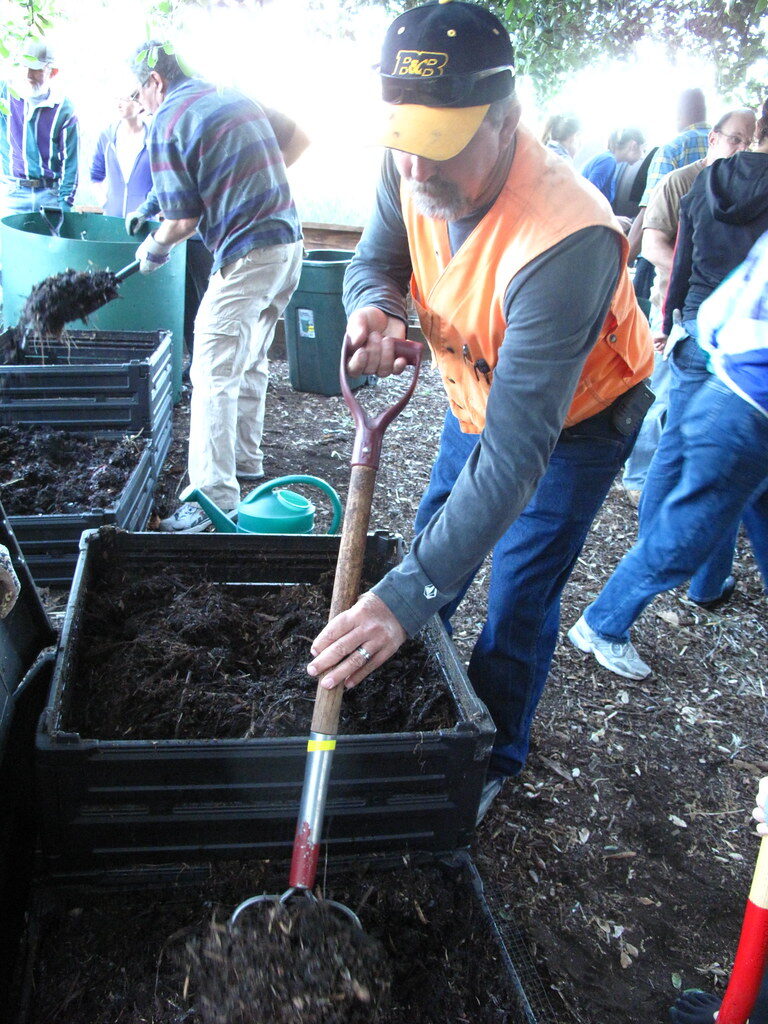
-Turn it regularly. A fork through every week or two adds air and mixes everything, and it is the single most reliable way to keep a heap active. A turned heap rots far faster than one left alone.
-Build it up and give it bulk. A bigger heap holds its own warmth and gets going faster. If yours is small, add more material, and be patient through cold weather, since it will speed up as things warm.

Why I Can Tell You This
My background is in biogeochemistry, which is partly the study of how organic material breaks down and how carbon and nitrogen cycle through living systems. A compost heap is that exact process, happening in a box in your garden.
When I look at a stalled heap, I do not see rubbish that has failed to rot. I see a microbe population that has been switched off, and the interesting question is which of its needs is missing.
That is the shift I want to leave you with. You are not managing a bin of waste. You are keeping a living culture alive, and it needs the same four things anything alive needs: water, food, air, and warmth. Give it those and it cannot help but work. The microbes do the rest, every time.
Frequently Asked Questions
Why is my compost not breaking down?
The microbes that do the work have stalled, usually because they are missing one of four things: moisture, nitrogen-rich green material, air, or warmth. Find which is short, add it, and the heap restarts.
How do I speed up composting?
Keep it damp like a wrung-out sponge, balance dry browns with wet greens, turn it regularly for air, and chop material smaller to give microbes more surface to work on. A bigger heap also holds heat and works faster.
My compost is dry and nothing is happening. What do I do?
Water it until it feels like a wrung-out sponge and mix in fresh green material like grass or kitchen scraps. Dryness is the most common reason a heap stalls, and adding moisture and nitrogen usually restarts it quickly.
My compost is wet but still not rotting. Why?
It is probably waterlogged and airless, so the microbes cannot breathe. Fork in dry browns like cardboard or leaves to absorb water and open it up, then turn the whole heap to get air in.
Does compost break down in winter?
More slowly, and a small heap can sit almost dormant in the cold. Microbes work far faster when warm, so many heaps stall over winter and then spring back to life as the weather warms. Building a bigger heap helps it hold its own heat.
How long should compost take?
Anywhere from a couple of months to a year, depending on what is in it, how often you turn it, the particle size, and the warmth. A well-balanced, regularly turned heap can be ready in a few months. A neglected one takes far longer.
Do I need a compost activator?
Usually not. Most stalled heaps just need moisture, greens, air or warmth, not a bought product. A handful of fresh grass, manure, or even finished compost adds plenty of active microbes for free.