



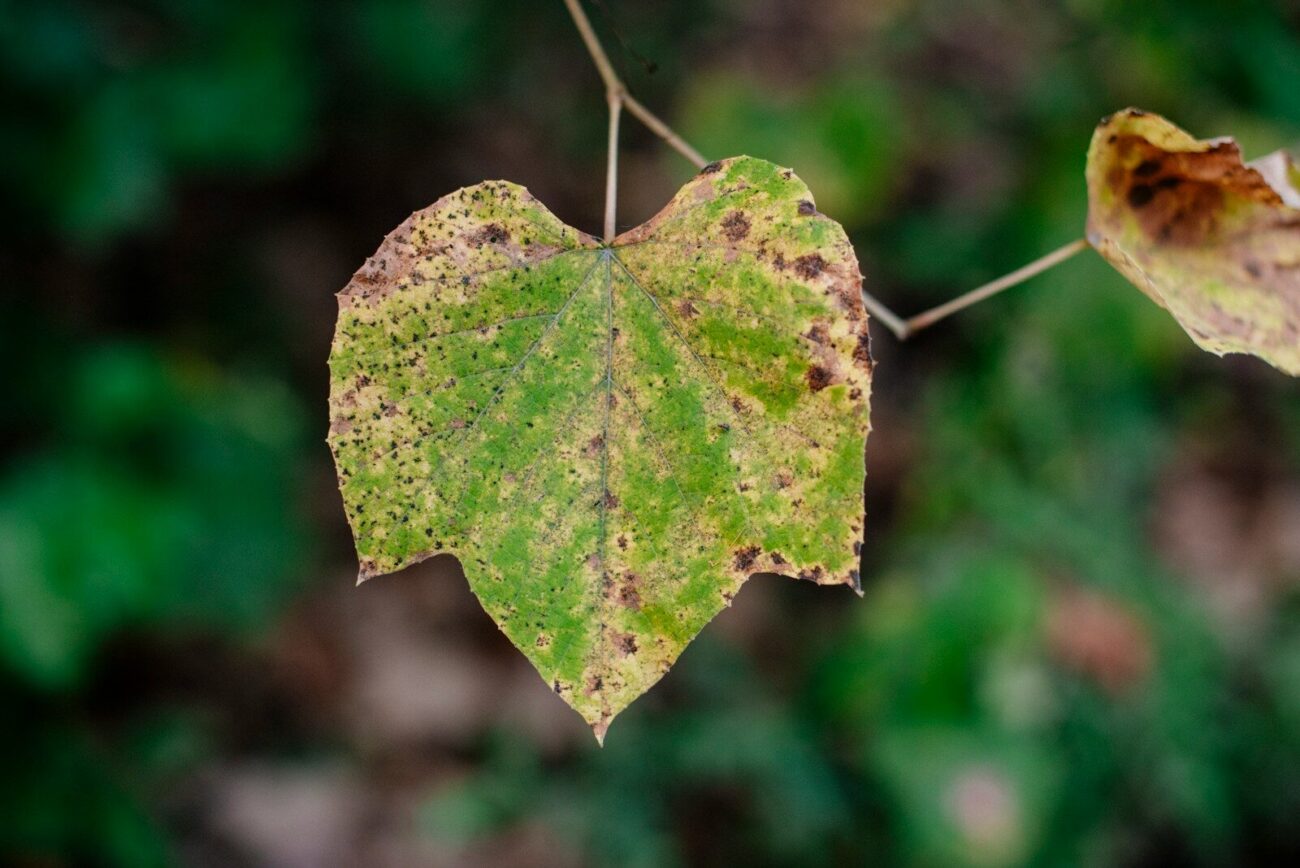
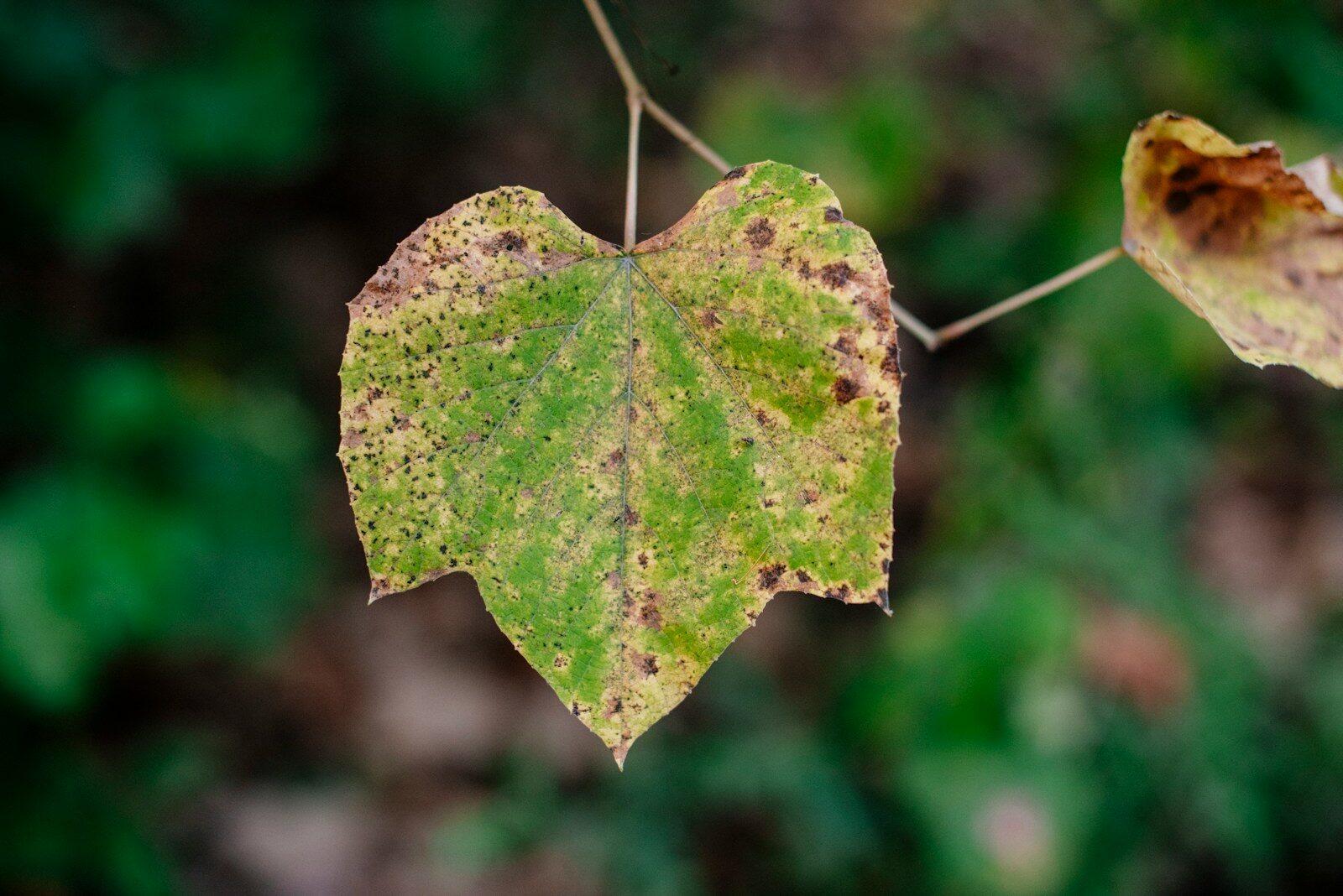
You go out after a run of hot, still, sunny days and the leaves have changed.
Brown or bronze marks have appeared on the top surface. You have not changed anything. You water the same. The plant looked fine a fortnight ago.
So you search for an answer and every result tells you the same three things. Fungus. Sunburn. Overwatering. You buy a spray, you use it, and nothing improves.
I want to offer you a fourth possibility, because I have worked with it directly. I am an environmental biologist.
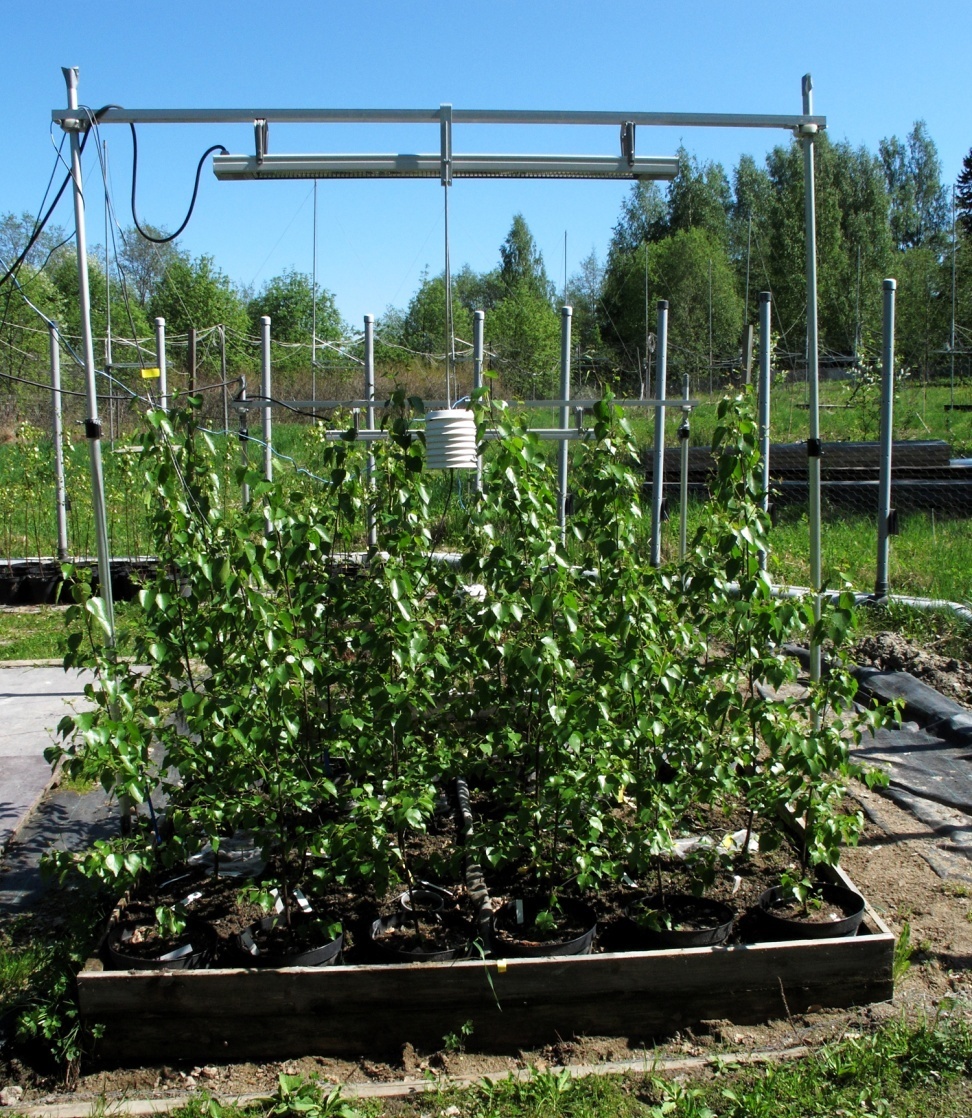
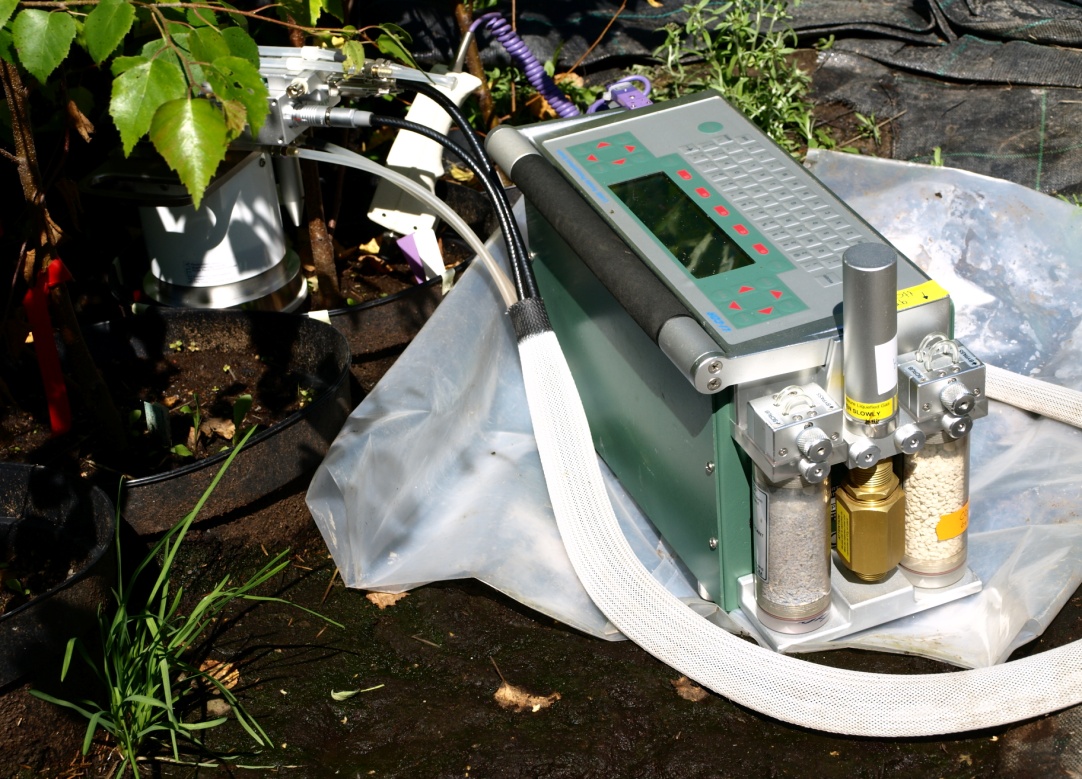
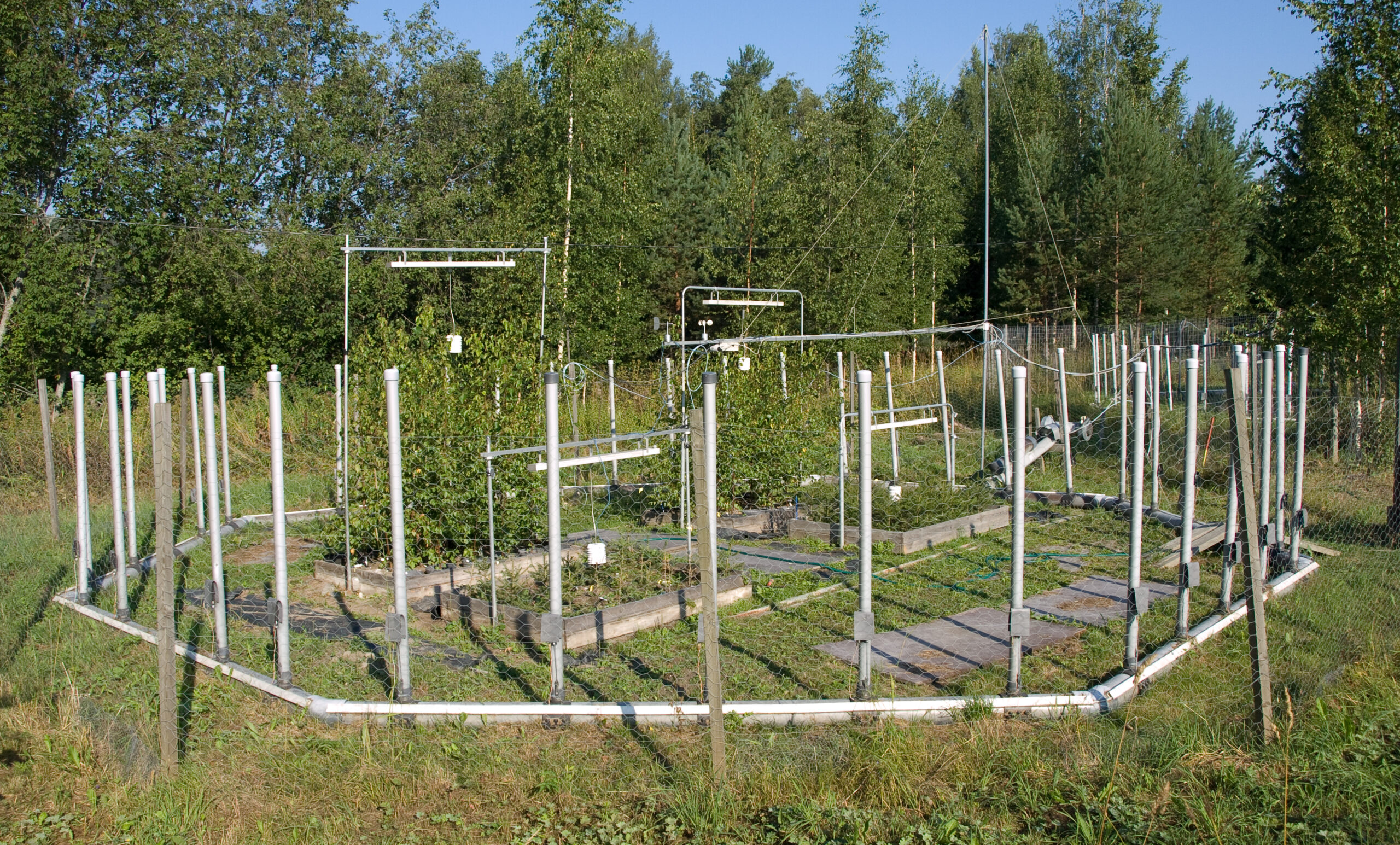
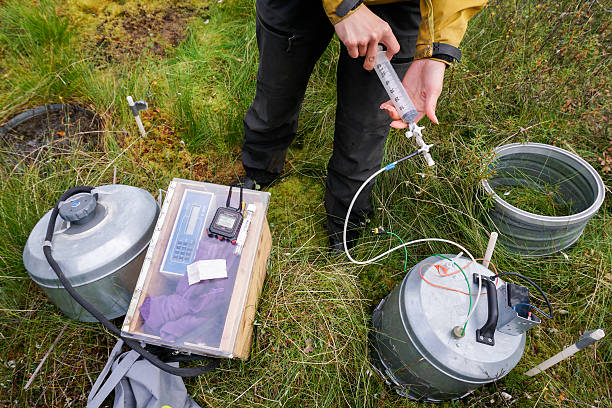
For my postgraduate research I ran an open-air field experiment where trees were exposed to raised levels of ozone, and I measured those trees through a full growing season. What I learned in that plot is the reason I do not assume fungus when I see brown marks appear in a heatwave.
First, Is Your Plant Indoors or Outdoors?
This matters more than anything else, so let me settle it before we go further.
If your brown spots are on a houseplant, a monstera, a peace lily, a fiddle leaf fig, then what I am about to describe is almost certainly not your problem. Indoor air holds very little ozone. Your likely causes are overwatering, dry indoor air, fluoride or salts in tap water, or a fungal infection in soil that stays wet. Let the top of the compost dry out, use filtered or stood water, improve airflow, and stop feeding for a few weeks.
If your plants are outdoors, keep reading. Outdoor air in summer contains something that indoor air does not, and it is a common cause of exactly the marks you are looking at.
What Is Happening Outside
There is a gas called ground-level ozone. It is not the ozone layer high in the sky that shields us from the sun. That one is useful. This one sits down at plant height, in the air you breathe while you garden, and it damages living tissue.
Ground-level ozone is not released by anything directly. It gets built in the air. Traffic, boilers, engines and solvents put out nitrogen oxides and volatile organic compounds. Sunlight drives a reaction between them, and ozone is what comes out.
That is why this is a hot weather problem. Sunlight is the ingredient. On a bright, warm, windless afternoon, ozone climbs steadily. On a cool, cloudy, breezy day it does not.
Now here is the part that catches people out. Ozone is often higher in villages, suburbs and open countryside than in the middle of a busy city. Fresh exhaust right beside a road destroys ozone almost as fast as it forms. The ozone builds up over hours as that air drifts away from the source. So a quiet rural garden can be sitting in more ozone than a city centre street, and the owner has no idea.
How Ozone Damages a Leaf
A leaf is not sealed. Its surface is covered in thousands of tiny pores called stomata, and the plant has to open them to take in carbon dioxide. Without that, no photosynthesis, no growth, no food.
Ozone goes in through those same open pores. Once inside the leaf it breaks down into highly reactive molecules that attack cell membranes. Groups of cells sitting just below the upper surface collapse and die.
Those dead cells are the brown marks you are looking at. This is the thing I most want you to take away. The damage is not on the leaf. It is in the leaf. Nothing landed on it. Nothing is growing on it. The leaf breathed the damage in.
Researchers have documented this carefully. A 2022 study in PLOS ONE followed wayfaring tree, a plant known to be ozone sensitive, at a high-ozone site in northern Italy. They describe the signature symptom as reddish to brownish stippling on the upper leaf surface, sitting between the smaller veins, and worse on older leaves lower down the plant.
What struck me about that study is not the numbers. It is their warning at the end. Even inside a single small site, and even on one individual plant, damage varied enormously depending on light, shading and leaf age. That is precisely why this problem feels so random to a gardener. Two plants side by side. One marked, one clean. No obvious reason. There is a reason, and it is how much light each one was getting, because light is what opens the stomata.
How I Tell Ozone Damage From Everything Else
Take a leaf. Hold it up to good light. Look at the top surface. Then work through these four.
Ozone injury. Fine stippling or flecking, made of many small dots rather than one solid patch. Reddish, bronze or brown. Upper surface only. It falls between the small veins and leaves the veins themselves clean. Worse on older leaves, worse on sun-exposed leaves. Shaded leaves on the same plant can be almost untouched. Appears after hot, bright, still weather.
Sun scorch. Solid areas, not dots. Starts at leaf edges and tips. Often bleached, pale or papery rather than speckled. Hits the most exposed leaves hardest, usually after a plant is moved into full sun or after a sudden heatwave.
Fungal disease. Defined spots, often round, sometimes with a ring or a yellow halo. Spots may run straight across the veins rather than stopping at them. Gets worse in warm, wet, humid weather, not in dry heat. You may find growth on the underside.
Spider mites. These fool people, because they also cause fine stippling. The difference is that mite stippling is pale or silvery rather than brown, it shows on both surfaces of the leaf, and if you turn the leaf over you will usually find fine webbing and the mites themselves.
If your marks are fine brown or bronze dots, on the upper side of older sun-exposed leaves, between the veins, appearing after hot bright weather, on outdoor plants, then ozone is the most likely answer on that list.
The Clue Almost Nobody Mentions
Ask yourself one question.
Is it spreading?
A fungal or bacterial disease spreads. It moves from leaf to leaf. It jumps to the plant next to it. It gets worse in wet weather. There is something alive in there, and living things multiply.
Ozone damage does not spread, because nothing is infecting the plant. Every marked leaf was marked by the air it was breathing, on its own. New leaves that grow during cool cloudy weather come through clean, even sitting right next to a badly damaged one.
So if your marks appear across several different species at once, in a hot spell, and then simply stop when the weather breaks, and never spread from plant to plant, you are not looking at a disease. You are looking at the air. That pattern is the strongest free diagnostic you have, and it costs you nothing but attention.
What to Do About It
Let me be clear with you first…
You cannot reduce the ozone in your garden. It forms across an entire region over hours. No spray, no feed and no soil treatment will change it.
Anyone selling you a cure for this is selling you something that does not work.
What you can control is how much of it your plants take in.
– Put the fungicide down.
If this is ozone, a fungicide does nothing at all. You have spent money and put a chemical into your garden for no benefit. Diagnose before you treat.
– Check your local air quality index on hot days.
Most countries publish one free, and it includes ozone. Look at it on hot, bright, windless afternoons, which is when ozone peaks. After a few weeks you will start to see your garden’s damage line up with those days.
– Shade the sensitive plants in the afternoon.
This is the most effective thing you can do. Ozone enters through open stomata, and stomata open widest in bright light. Shade cloth over beans, lettuce, spinach and squash during a hot spell cuts the light, cuts the leaf temperature, and cuts the ozone going in.
– Do not withhold water to try to fix it.
A drought-stressed plant closes its stomata and takes in less ozone. That sounds clever until you realise you have simply given it drought stress instead, and it does worse overall. Keep watering normally.
– Move your most sensitive plants.
Beans, spinach, lettuce, potato, squash and grapes are all known to be ozone sensitive. If you have a spot with morning sun and afternoon shade, that is where they belong.
– Plant a dense hedge between the road and the garden.
It will not clean the air across your region, but it does absorb pollutants and slow the air moving into your growing space.
– Change when you garden.
If your eyes or throat sting on hot sunny afternoons, that is not hay fever. Ozone peaks in mid to late afternoon and it irritates human airways as well as leaves. Do the heavy work early or late.
What Working With Ozone Taught Me
For my research, I worked on an open-air experiment where silver birch trees were exposed to ozone at around 1.4 times the level of the surrounding air. That is not a laboratory dose. It is not a dramatic increase. It is roughly what a hot summer in a polluted region already delivers to your garden.
I was in that plot regularly through the growing season, measuring the same trees over and over.
By mid-season, leaves on the ozone treatment plots had developed fine bronze speckling on the upper surface. Not dramatic. Not the kind of thing you would notice walking past. But when you are measuring the same trees every three weeks and you know what to look for, it was there.
That is the lesson from that field site. Ozone damage does not announce itself. It does not kill a plant in front of you. It just quietly takes a percentage off everything, in air that looks completely clean.
My coursework included a module on the cell biology of air pollution damage in plants, and once you understand that the injury happens inside the leaf, through the stomata, diagnosis stops being guesswork. You stop asking what landed on the leaf. You start asking what the leaf breathed in.
Your plants are not just standing in your garden. They are breathing it.
Frequently Asked Questions
Should I cut off leaves with brown spots?
If the damage is ozone, there is no urgency, because there is nothing to contain. Removing badly marked leaves is fine for appearance, but do not strip the plant, because even a damaged leaf still does useful work. If you suspect fungus, then yes, remove affected leaves and bin them rather than composting.
Will brown spots on leaves go away?
Not on the leaf itself. Those cells are dead and the mark is permanent, and heavily damaged leaves tend to drop early. The plant does recover though, because new growth that appears in cooler, cloudier conditions comes through clean.
Does overwatering cause brown spots on leaves?
Indoors, very often yes. Outdoors, in free-draining ground, it is a much less common cause than people assume. If your brown marks appear during hot bright weather rather than wet weather, overwatering is unlikely to be your answer.
What is the best spray for brown spots on plants?
If the cause is ozone, there is no spray that helps, and I would rather tell you that than sell you a bottle. Sprays treat living organisms, and ozone damage is not caused by one. Shade and plant placement are your real tools here.
Can brown spots spread to other plants?
Not if it is ozone. Nothing is infecting the plant, so nothing is transmitted. That is a valuable clue in itself. If the marks are spreading from plant to plant, especially in damp weather, you are dealing with a disease instead.
What causes brown spots on tree leaves?
Trees get the same four suspects, and ozone is a genuine and underrated one, especially for birch, poplar, ash and cherry. Check the upper surface of older, sun-exposed leaves for fine stippling between the veins. Leaves in the shaded interior of the crown staying clean while the outer sunlit leaves are marked is a strong signal.
Can brown leaves be saved?
The individual leaf, no. The plant, almost always yes. Ozone damage reduces performance rather than killing outright, so with sensible shading and normal watering your plant will keep growing and new foliage will be unmarked.
Is ground-level ozone the same as the hole in the ozone layer?
No, and they are close to opposites. The ozone layer sits high in the atmosphere and protects us from ultraviolet radiation. Ground-level ozone forms at the surface from pollution and sunlight, and it harms both plants and human lungs.