



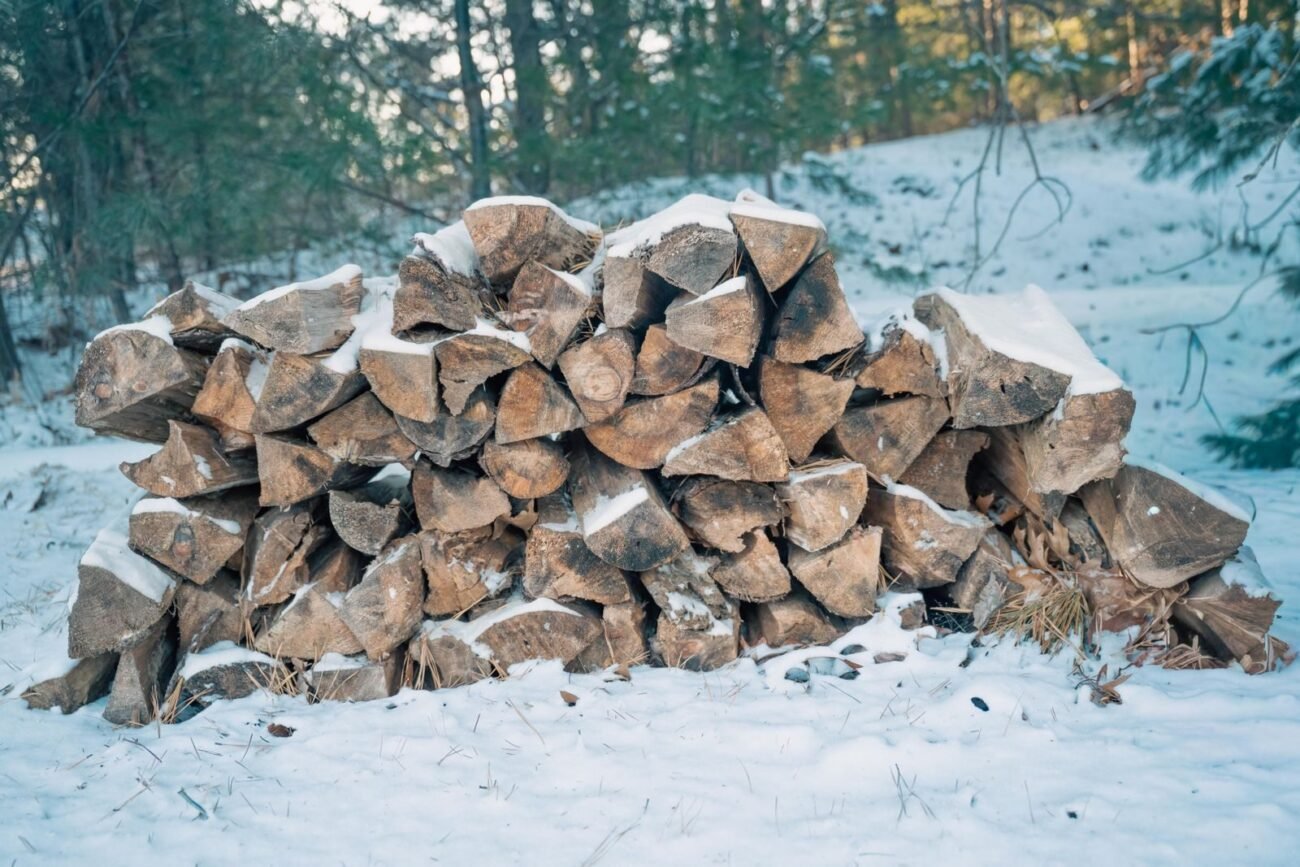
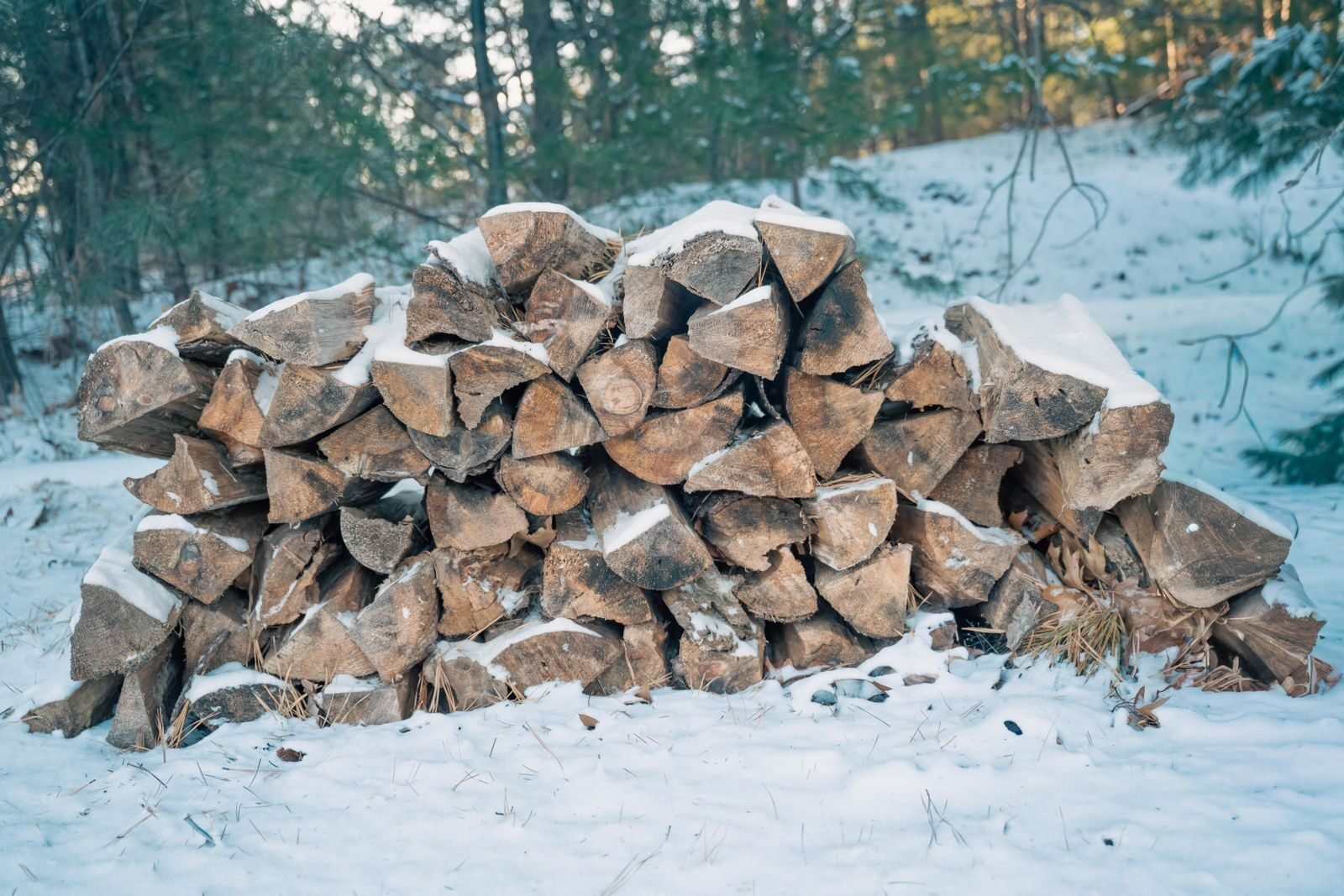
You split a log from the stack on a frosty morning, push your moisture meter into it, and read 17%. Dry enough to burn.
Then you look it up and find three answers that disagree. Cold makes meters read low. Cold makes no difference. Frozen wood reads high once it thaws.
The first one is closest, but not for the reason most people give.
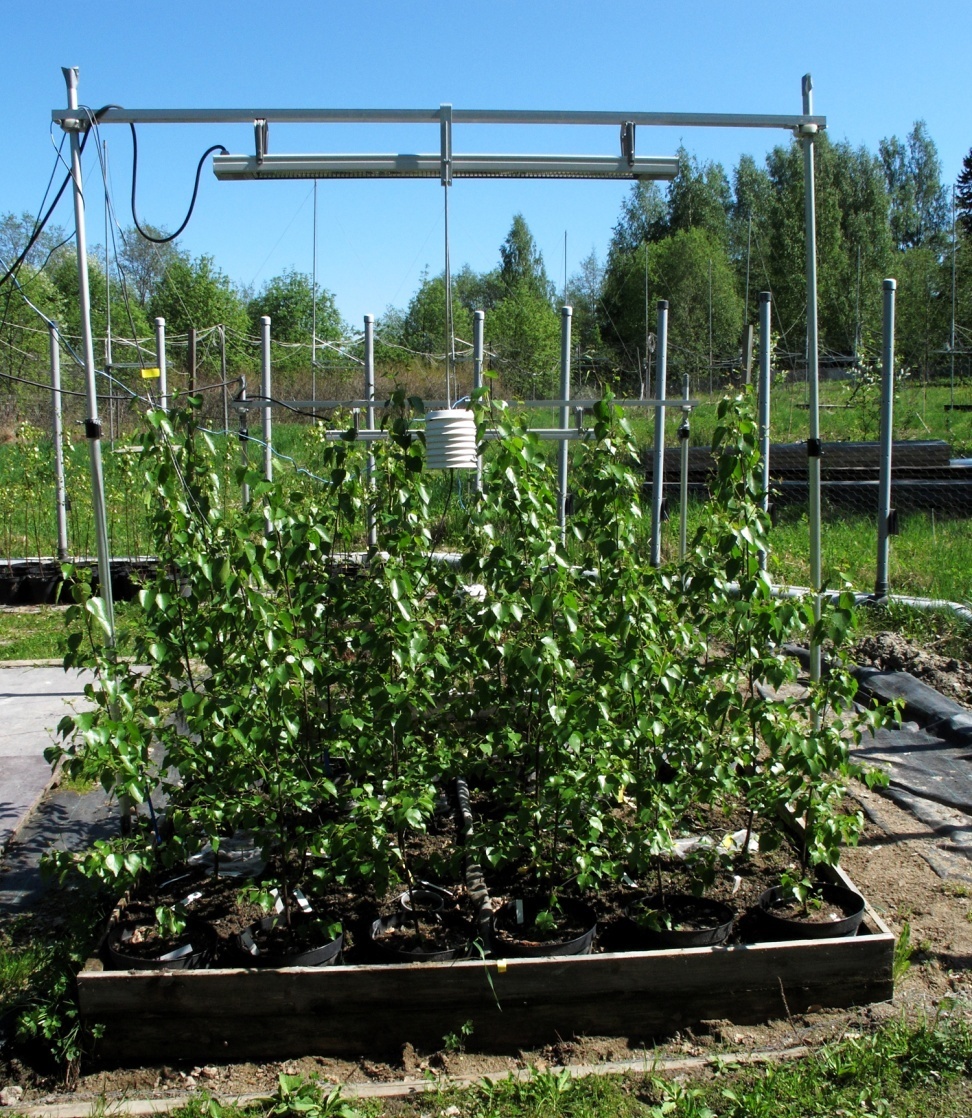
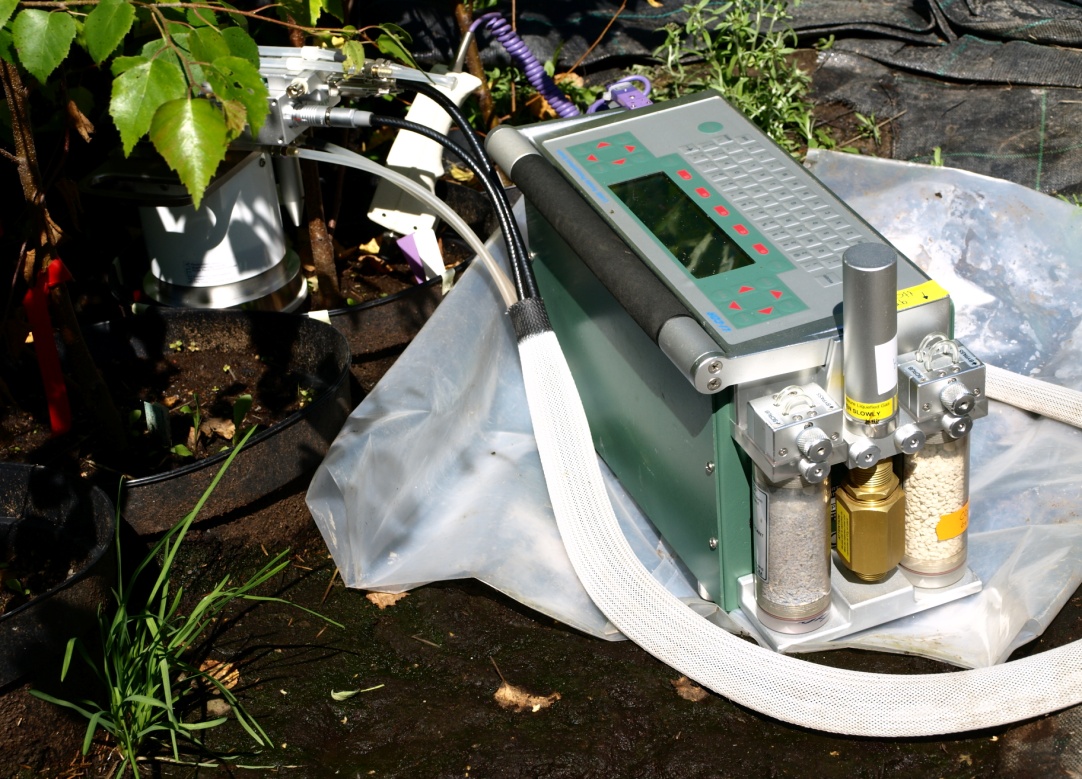
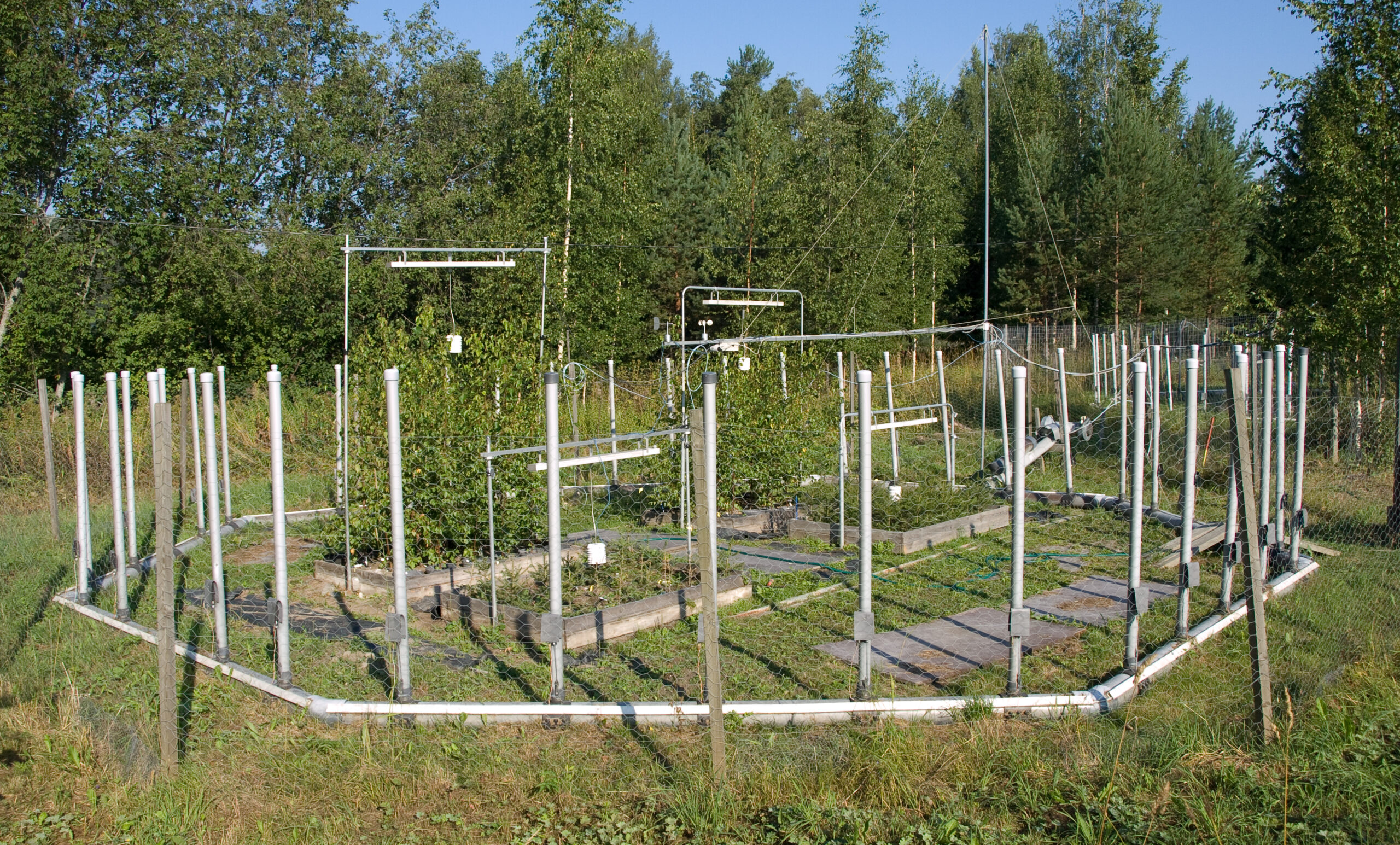
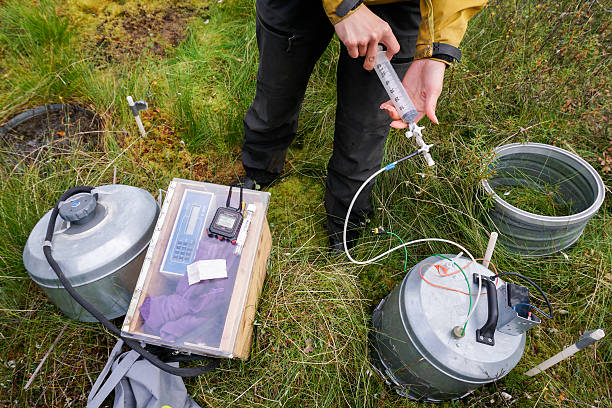
In my field research, I worked in an open-air experiment where infrared heaters warmed some plots by less than one degree Celsius. That small change raised soil respiration by 24 to 36%, depending on the birch genotype. Over the same season I measured the height and stem diameter of 192 silver birch trees every three weeks.
The lesson that stayed with me was simple: outdoors, temperature sits behind almost every number you record. Every soil respiration reading I took was paired with soil temperature and soil moisture, because a reading without its temperature cannot be compared with anything.
Your firewood meter needs the same habit. Here is how I would think about it.
Why the Answers Online Disagree
When I looked into this question, I found forum threads, a meter maker’s blog, and an AI summary, all pointing different ways. One widely shared forum test found readings only about 1% apart between frozen and thawed logs, and concluded that cold makes no difference. Other sources say cold makes meters read falsely low.
My reading is that both are partly right. The effect exists and it always pushes in the same direction, but it is only a few percentage points. Small enough to miss in a quick test. Large enough to fool you when your wood sits close to 20%, the level the US Environmental Protection Agency says wood should be under before you burn it.
A single test on a single day is exactly the kind of result I learned not to trust in the field. One reading tells you about that moment. A pattern only shows up when you repeat the measurement under known conditions.
How a Pin Meter Works
A pin meter does not measure water directly. It passes a small electric current between its two pins and measures how easily the current flows through the wood.
Water carries current far better than dry wood fibre. Wetter wood conducts more, and the meter turns that into a moisture percentage.
The catch is that conductance depends on temperature too. Current moves more easily through warm wood and less easily through cold wood, even at exactly the same moisture content.
I find it helps to think of the meter as reporting “how easily current flows,” with moisture as its best guess behind that number. Anything else that changes the current, temperature included, changes the guess.
What Cold Does to Your Reading
Cold wood conducts less, so a pin meter reads it as drier than it is. The meter sees less current and assumes less water.
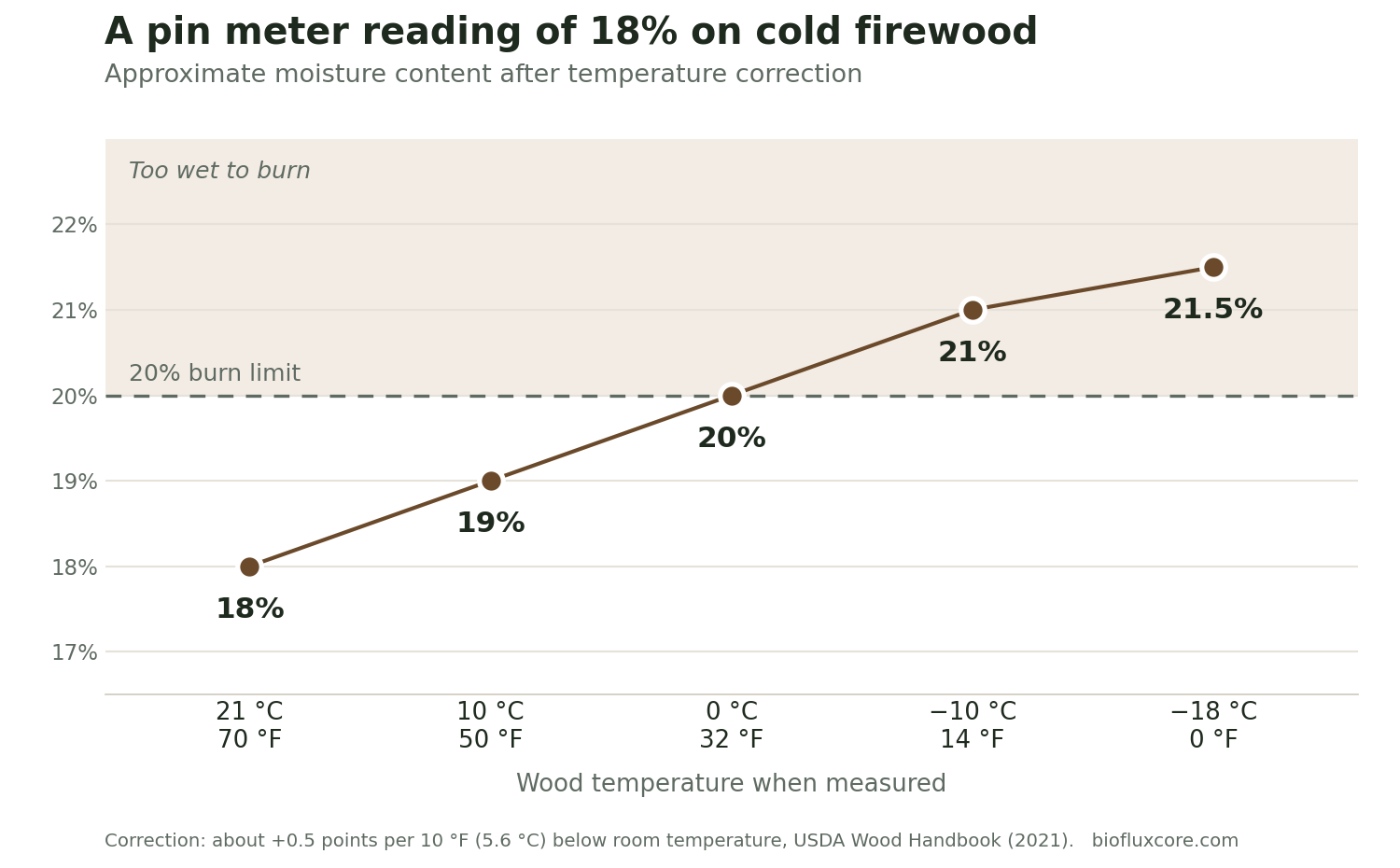
The USDA Forest Products Laboratory puts a number on this in the 2021 Wood Handbook. For pin meters, the correction is about 0.5 percentage points for every 10 °F (5.6 °C) the wood differs from the meter’s calibration temperature. You add it when the wood is colder, and subtract it when warmer.
Most pin meters are calibrated at room temperature, around 20 °C (68 to 70 °F), but check your meter’s manual, since models vary.
Here is what that means for firewood straight from an outdoor stack:
| Wood temperature | Add to your reading | A reading of 18% is closer to |
|---|---|---|
| 21 °C (70 °F) | 0 | 18% |
| 10 °C (50 °F) | +1 | 19% |
| 0 °C (32 °F) | +2 | 20% |
| −10 °C (14 °F) | +3 | 21% |
| −18 °C (0 °F) | +3.5 | about 21.5% |
The bottom rows are the ones I would watch. A log that reads a comfortable 18% on a cold morning may sit just above 20%. That is the whole problem in one table: a few points of error, right where you decide to burn or wait.
I would treat the coldest rows as estimates. The handbook’s rule is an approximation, and meters differ at very low temperatures. That is why I recommend the warm-up test below whenever a reading lands near 20%.
Why “Frozen” Is Not the Problem in Seasoned Wood
It is natural to assume the water in cold firewood turns to ice and confuses the meter. In seasoned wood, that is not what happens.
Wood holds water in two ways. As Oregon State University Extension explains, free water sits as liquid in the hollow cavities of the wood cells, while bound water is part of the cell walls themselves. Below the fibre saturation point, which for most species falls between 25% and 30% moisture content, nearly all the water left is bound water.
Bound water does not behave like ordinary water in the cold. A 2016 study from the USDA Forest Products Laboratory, published in Wood Science and Technology, found no melting peak for water in wood below the fibre saturation point, only above it. The water in seasoned firewood does not freeze and thaw the way free water does.
This is the part I think most answers online miss. For firewood in the range you care about, roughly 15% to 25%, the error comes from temperature, not from ice. The wood can sit well below freezing and still give a usable reading, as long as you account for how cold it is.
When Your Meter Cannot Help at All
There is one case where cold is the least of your worries: fresh, unseasoned wood.
The same Wood Handbook gives the reliable range of pin meters as about 6% to 30%, and says readings above 30% “must be considered only qualitative.”
Green firewood often starts well above 30%, and it does contain free water that can freeze. If your meter reads 30% or more, frozen or not, my advice is to take only one message from it: “still wet.” Keep it stacked and check again later.
The Warm-Up Test
In the field, I could not bring a plot indoors. So I recorded soil temperature with every reading, kept soil moisture as steady as possible by watering when needed, and compared like with like. With firewood you have an easier option: bring the wood to the temperature your meter expects.
When a cold reading lands anywhere near 20%, I would skip the arithmetic and let the wood warm up.
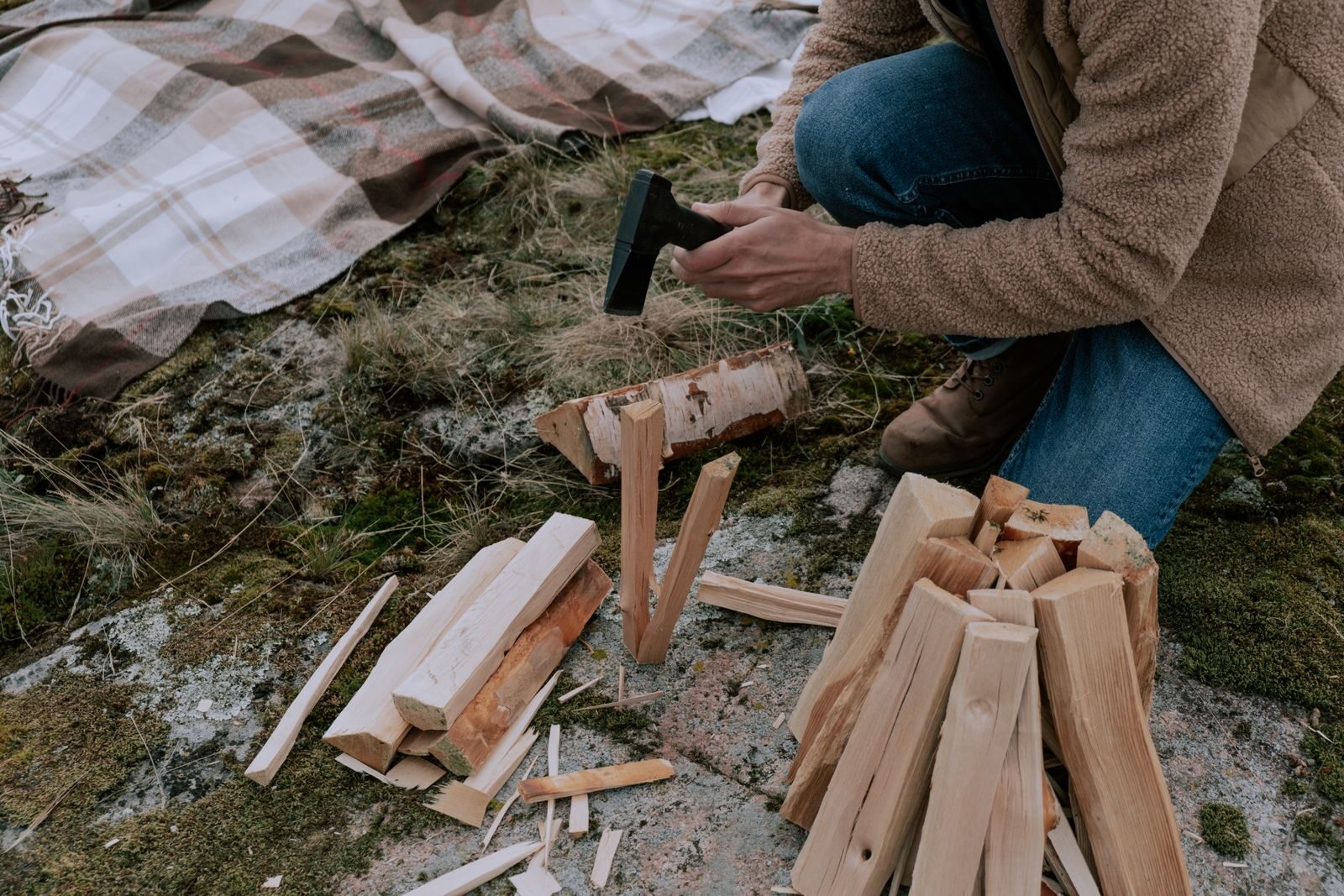
- Pick a representative piece. Take a log from the middle of the stack, not the top or the ends, which dry faster.
- Bring it indoors. Leave it at room temperature for several hours, ideally overnight, so the inside warms up and not just the surface.
- Split it again. Make a fresh split just before measuring. The outside of a log is always drier than the core, and cold wood brought into a warm room can pick up surface condensation, which pushes the reading up.
- Measure the fresh face. Push the pins into the centre of the new face, across the grain, as deep as they go.
- Take three readings and average them. One reading can land on a knot or a crack. Three give you a number worth acting on.
- Write down the temperature. Note the room temperature with your reading, so next time you compare like with like.
The last two steps come straight from how I measured in the field. When I measured those 192 birch stems with vernier calipers, every tree was measured at a marked point, so each reading hit the same spot as the last. Consistency is what turns a number into something you can compare.
If the warmed reading is under 20%, burn it. If it is over, the cold reading was flattering your wood.
Quick Rules for Winter Readings
These are the rules I would follow:
Cold wood reads drier than it is on a pin meter, never wetter.
Add roughly 0.5 points for every 10 °F (5.6 °C) below room temperature, about 2 points at freezing.
In seasoned wood the water does not freeze, so the cold itself is the issue, not ice.
Above 30%, readings only tell you “wet,” whatever the temperature.
Near the 20% line, trust a warmed, freshly split reading over a cold one.
Want to know whether your warmed reading means the wood is ready? Enter it in my free Firewood Moisture Target Checker. If it is still too wet, my Firewood Seasoning Time Estimator gives you an idea of how much longer it needs. And if you are still choosing a meter, my guide to firewood moisture meters covers which type to buy and how to use it.
Common Questions
Does frozen firewood give false moisture readings?
It gives low readings, not random ones. Cold reduces how well wood conducts electricity, so a pin meter reads cold wood as drier than it is, by about 2 points at freezing and around 3 points at −10 °C.
Can I burn firewood that reads 18% in winter?
If the reading was taken on cold wood straight from the stack, it may be closer to 20% or 21%. I would bring a piece indoors, let it warm, split it fresh and measure again before deciding.
Do pinless moisture meters have the same problem?
Pinless meters work differently, and many newer models correct for temperature inside the meter. Check your meter’s manual to see whether it compensates for temperature, and at what range.
Why does my firewood read higher after bringing it inside?
Two reasons. The warm wood conducts better, so the reading moves back toward the true value, and cold wood can collect condensation on its surface in a warm room. A fresh split avoids the surface moisture.
Read It Warm, Burn It Dry
A moisture meter is only as good as the conditions you use it in. That was true of every instrument I used in the field, and it is true of the one in your shed.
On a cold morning, take the number as a first hint, not a final answer. If it is anywhere near 20%, bring a piece inside, let it warm, split it fresh, and let the warmed reading make the call.