






I did not expect the numbers to be that dramatic.
When I set up warmed experimental plots and started measuring soil CO₂ efflux month after month, I knew warming would increase respiration. That part was not surprising. What surprised me was how much and how fast. A temperature increase of just 0.9°C pushed soil CO₂ efflux up by 24% in one tree genotype and 36% in another. Less than one degree. Over one growing season.
That result stayed with me. It is one thing to read about warming and soil carbon in a journal. It is another to watch the numbers climb on your own instrument in your own experimental plots.
This article explains why soil respiration responds so strongly to temperature, what the science says about the mechanism behind it, and why the answer matters far beyond academic research.
What Is Soil Respiration and Why Does It Matter?
Soil respiration is the process by which CO₂ is released from the soil surface into the atmosphere. It comes from two sources working simultaneously underground.
Microbial respiration is the bigger contributor. Billions of bacteria and fungi in every handful of soil are constantly breaking down organic matter, dead roots, leaf litter, old humus, and releasing CO₂ as a metabolic byproduct. Root respiration adds to this, as living roots consume oxygen and release CO₂ just like any other living tissue.
Together these two processes make soil one of the largest sources of CO₂ flux in terrestrial ecosystems, releasing an estimated 60 billion tonnes of carbon per year globally. To put that in context, that is roughly six times the annual CO₂ emissions from fossil fuels. The difference is that healthy soils also absorb carbon through plant growth and organic matter accumulation, keeping the system roughly balanced. Warming tips that balance.
The Mechanism: Why Warmer Soil Means More CO₂
The core reason is enzyme kinetics. Microbial decomposition is driven by enzymes, and enzymes work faster at higher temperatures, up to a point.
Scientists use a measure called Q10 to describe this relationship. Q10 is the factor by which a biological process speeds up for every 10°C increase in temperature. For soil respiration, Q10 values typically fall between 1.5 and 3.5. A Q10 of 2 means that for every 10°C of warming, respiration rate doubles.
My 0.9°C warming treatment was small relative to a 10°C change. But it was enough to produce the 24 to 36% efflux increases I recorded across the growing season. At low baseline temperatures, which is exactly the condition in the kind of open-air experiment I ran, the Q10 effect is strongest. Research confirms that Q10 values are highest at low temperatures and decline as temperature rises. So the same amount of warming produces a proportionally larger response in a cool system than in a warm one.
This is particularly concerning for high-latitude ecosystems, boreal forests, tundra, peatlands, where soils are cool, organic matter stocks are enormous, and even modest warming triggers disproportionately large respiration responses.
What I Actually Measured in My Field Experiment
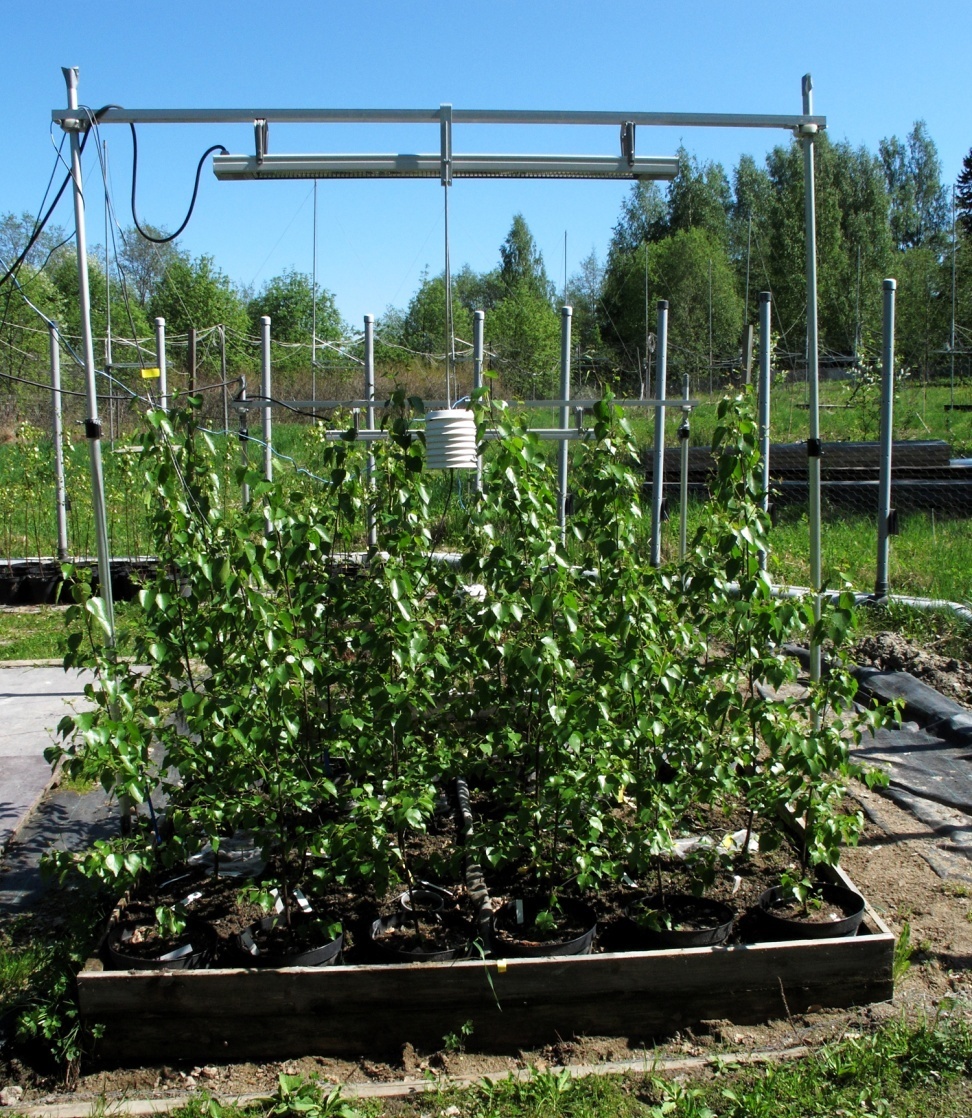
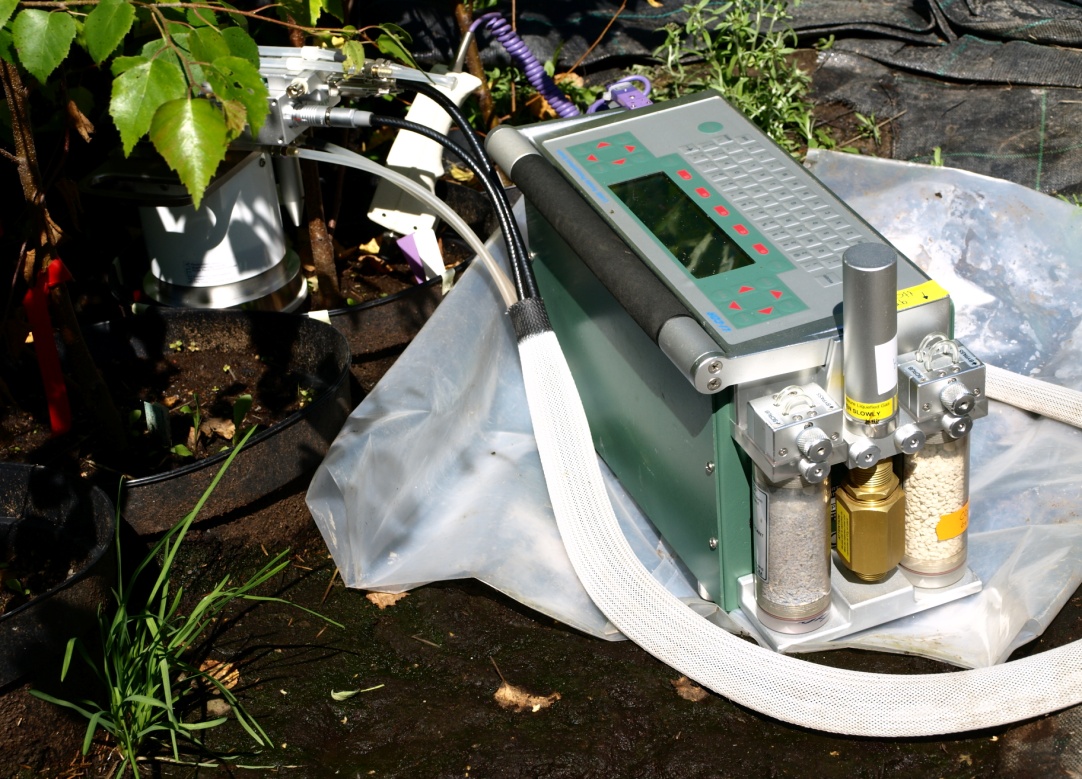
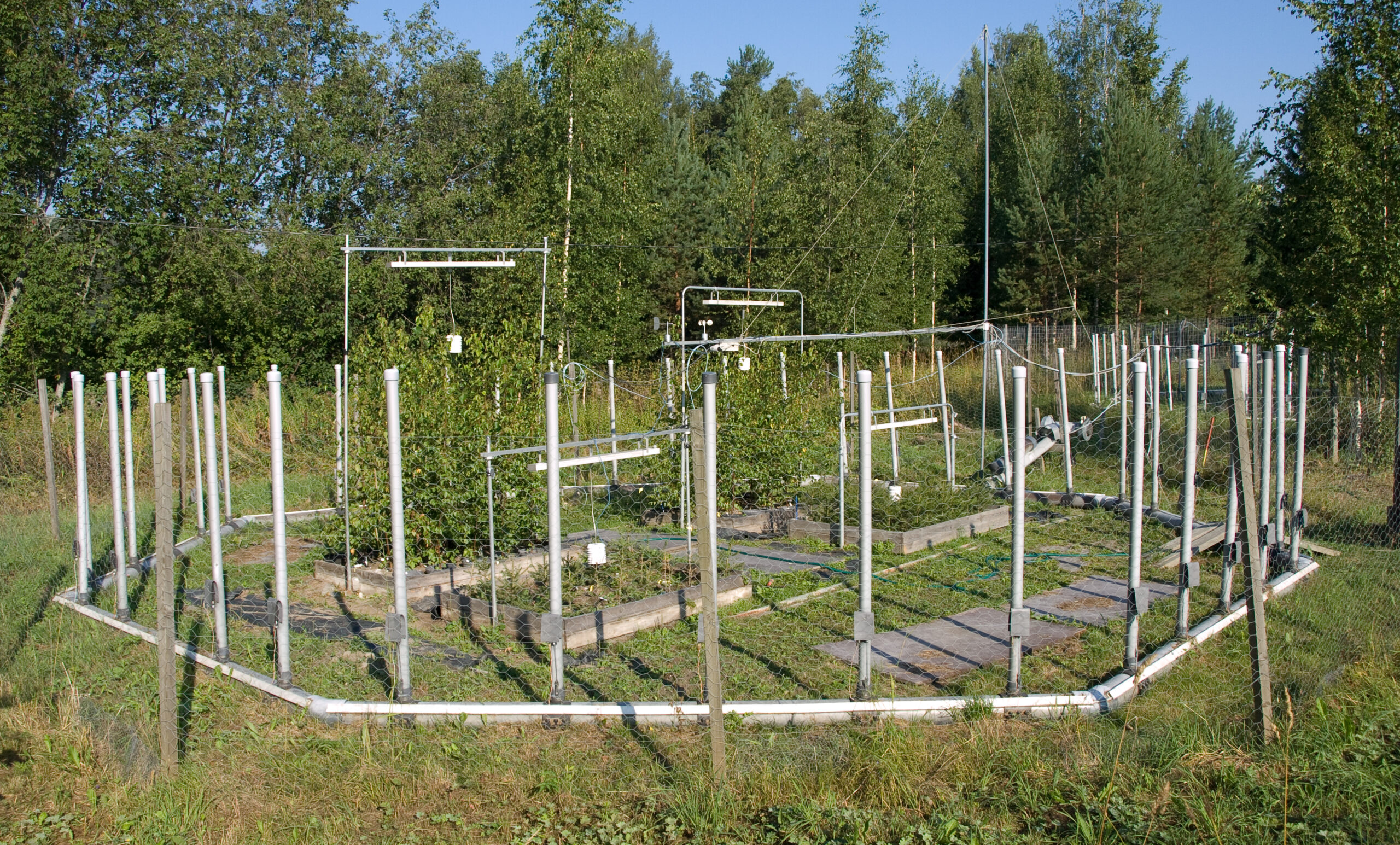
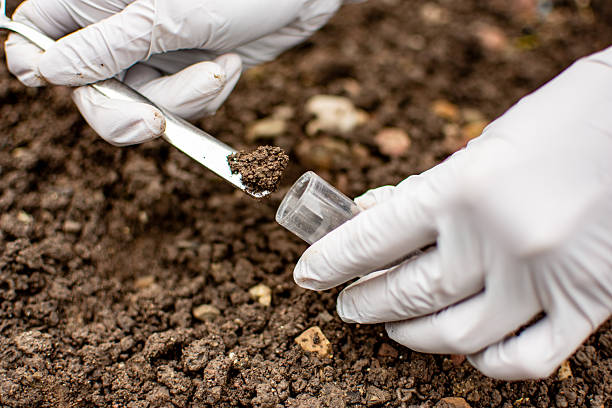
I used a LICOR 6400-09 soil respiration chamber to measure CO₂ efflux monthly across eight experimental plots. Half the plots had infrared heaters raising air temperature by 0.9°C. The other half were unheated controls. Two silver birch genotypes, gt14 and gt15, grew in separate sections of each plot.
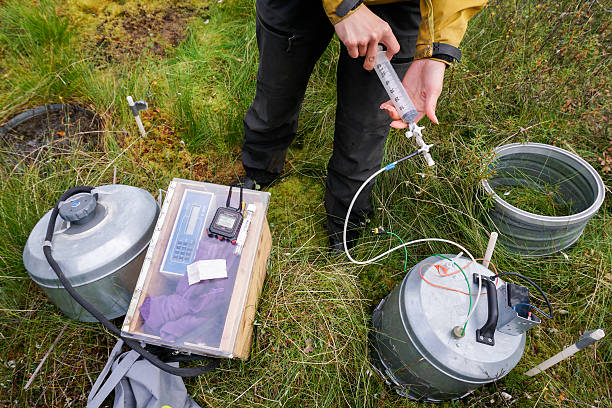
Every measurement, I placed the chamber collar on the soil surface, waited for the system to stabilise, and recorded CO₂ efflux alongside soil temperature and moisture at 2 cm depth.
The pattern that emerged was consistent. Warmed plots respired more than control plots across every measurement date throughout the growing season. But the magnitude differed between genotypes. Gt15 showed a 36% average increase under warming. Gt14 showed 24%. Same temperature treatment, same soil type, different trees above the soil, and measurably different respiration responses below it.
That genotype difference pointed to something beyond simple temperature-enzyme kinetics. The trees themselves were influencing the soil. Through root exudates, root turnover, and carbon allocation patterns, each genotype was creating a slightly different underground environment. The soil microbes responded to both the temperature and the quality and quantity of carbon the trees were feeding them.
Moisture Complicates Everything
Temperature is the dominant driver of short-term soil respiration variation. But moisture is always in the background, and ignoring it leads to misinterpretation.
Soil respiration peaks at intermediate moisture levels. Dry soil limits microbial activity because there is not enough water to support diffusion of substrates to microbial cells. Waterlogged soil limits it because oxygen becomes scarce and aerobic decomposition slows dramatically.
I recorded soil moisture alongside every flux measurement precisely because of this. On dry measurement days the temperature effect was often masked by moisture limitation. On days after rainfall, the combination of warmth and adequate moisture produced the highest efflux readings.
This interaction between temperature and moisture is one reason why projecting future soil carbon losses under climate change is so difficult. Warming and drying often go together in many regions, which can partially suppress the respiration increase that temperature alone would predict. But in wetter warming scenarios, the two effects compound each other.
How Does Global Warming Affect Soil Respiration at Scale?
What I observed in a small field experiment reflects a process happening across every warmed soil on Earth right now.
As global temperatures rise, microbial communities in soils worldwide are becoming more active. They are breaking down organic matter faster. Releasing CO₂ that was previously stable. This creates a feedback loop, warming increases soil respiration, which adds more CO₂ to the atmosphere, which drives more warming.
The size of this feedback is one of the most actively debated questions in climate science. Some research suggests microbial communities eventually acclimate to warmer temperatures, reducing their Q10 response over time. Other studies find that acclimation is partial and that the net effect remains a significant carbon release over multi-decade timescales.
What my field data contributed to this picture was a genotype-level demonstration that the trees growing above the soil modulate the response. This is not captured in most large-scale models, which treat soil respiration as a function of temperature and moisture alone without accounting for the influence of plant species composition and genetic variation.
What Is a Good Soil Respiration Rate?
This question comes up a lot and the honest answer is that there is no single good rate, it depends entirely on the ecosystem, season, and what you are trying to assess.
In temperate and boreal forest soils during the growing season, typical values range from around 1 to 6 micromoles of CO₂ per square metre per second. Agricultural soils in warm conditions can go higher. Peatlands and cold forest soils are typically at the lower end.
What matters more than the absolute rate is the direction of change and the relationship between efflux and carbon inputs. A high respiration rate in a productive forest with high litter inputs may be perfectly healthy. The same rate in a degraded soil with low organic matter inputs signals net carbon loss.
In my experimental plots, the warmed plots had higher absolute respiration rates. Whether that represented a problem or just an adjustment depended on whether the trees above were fixing enough extra carbon through enhanced growth to compensate. That balance, between carbon in and carbon out, is the real measure of whether a soil is a net sink or source.
Frequently Asked Questions
Why does soil respiration increase with temperature?
Because the enzymes driving microbial decomposition work faster at higher temperatures. More enzyme activity means more organic matter broken down and more CO₂ released. I measured a 24 to 36% increase in CO₂ efflux with just 0.9°C of warming in my field experiment, which shows how sensitive this relationship is even at small temperature changes.
What is Q10 in soil respiration?
Q10 is the factor by which soil respiration speeds up for every 10°C increase in temperature. Values typically range from 1.5 to 3.5 for most soils. At low temperatures, Q10 values are highest, meaning cool soils like those in boreal forests are disproportionately sensitive to warming.
What is a good soil respiration rate?
There is no universal good rate. In temperate and boreal forests during the growing season, typical values range from 1 to 6 micromoles of CO₂ per square metre per second. What matters more is whether respiration is in balance with carbon inputs from plant growth and organic matter accumulation.
How does global warming affect soil respiration? Warming accelerates microbial activity, increasing the rate at which organic matter is decomposed and CO₂ is released. This creates a feedback loop where warming drives more respiration, which releases more CO₂, which drives more warming. The size of this feedback is one of the most important and contested questions in climate science.
Does soil moisture affect respiration as much as temperature?
Yes, and the two interact. Respiration peaks at intermediate moisture levels. Very dry soil limits microbial activity. Waterlogged soil limits oxygen availability and slows aerobic decomposition. In practice, temperature and moisture need to be measured together to interpret respiration data correctly.
Why did the two genotypes in your experiment respond differently?
The trees influence their own soil environment through root exudates and carbon allocation. Gt15 and gt14 have different root characteristics and carbon allocation strategies, which creates different conditions for soil microbes even under identical temperature treatments. This shows that the plant community above ground shapes soil carbon dynamics below ground in ways that simple temperature models do not capture.
Is soil respiration bad for the climate?
Not inherently. Soil respiration is a natural part of the carbon cycle and has been in rough balance with carbon inputs for millennia. The concern is that warming is accelerating respiration faster than plant growth can compensate, tipping the balance toward net carbon release. That is the feedback scientists are trying to quantify.