




The soil beneath a northern bog can hold carbon that has been accumulating for ten thousand years. That is not a figure from a climate report. It is the direct result of a biological process so slow and so precise that it has been quietly outpacing decomposition since the last ice age.
I studied how carbon moves through soil and organic matter as part of my postgraduate biogeochemistry training. Peat formation and peatland carbon dynamics were central topics in that curriculum precisely because peatlands represent one of the most concentrated carbon stores on the planet.
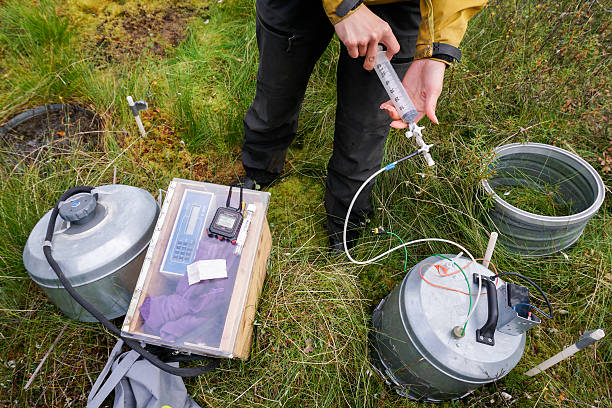
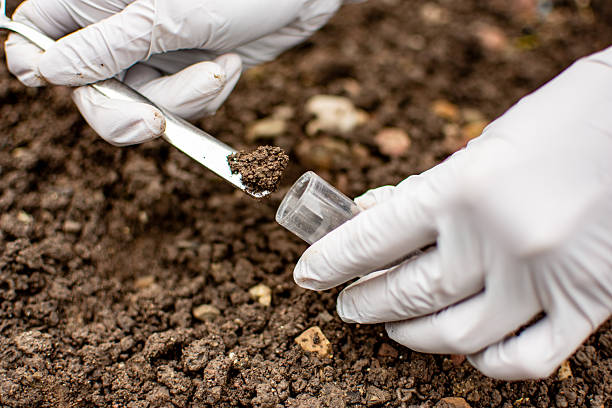
I also visited peatlands with my research group to measure greenhouse gas fluxes directly from the peat surface, using closed chambers and syringe sampling at timed intervals. That experience gave me a very concrete understanding of what peatland carbon storage actually means at ground level.
What I learned through both study and fieldwork has become increasingly relevant as peatland destruction has moved from a niche ecological concern to a mainstream climate issue. This article explains what peat actually is, how peatlands accumulate and store carbon, what happens when they are disturbed, and why they matter in the context of the broader carbon cycle.
What Is Peat?
Peat is partially decomposed organic matter that has accumulated over thousands of years in waterlogged, oxygen-poor conditions. It is made up primarily of dead plant material, mosses, sedges, grasses, and the remains of other wetland vegetation, that has not fully broken down because the anaerobic conditions in waterlogged soil slow decomposition to a near standstill.
In most terrestrial soils organic matter decomposes relatively quickly. Bacteria and fungi break down dead plant material and release the carbon it contains back into the atmosphere as CO₂. In a peatland the waterlogged conditions starve those decomposer organisms of the oxygen they need. Decomposition slows by orders of magnitude. Organic matter accumulates layer by layer, year by year, century by century.
The result is a thick deposit of partially decomposed organic material that can reach several metres in depth in undisturbed systems. In the oldest and deepest peat deposits, the material at the bottom was deposited thousands of years ago and has been slowly compressed and chemically altered ever since while new material continues to accumulate at the surface.
Peat is therefore not just soil. It is a geological archive of organic carbon that represents millennia of net carbon removal from the atmosphere stored in a single landscape feature.
What Is a Peatland Ecosystem?
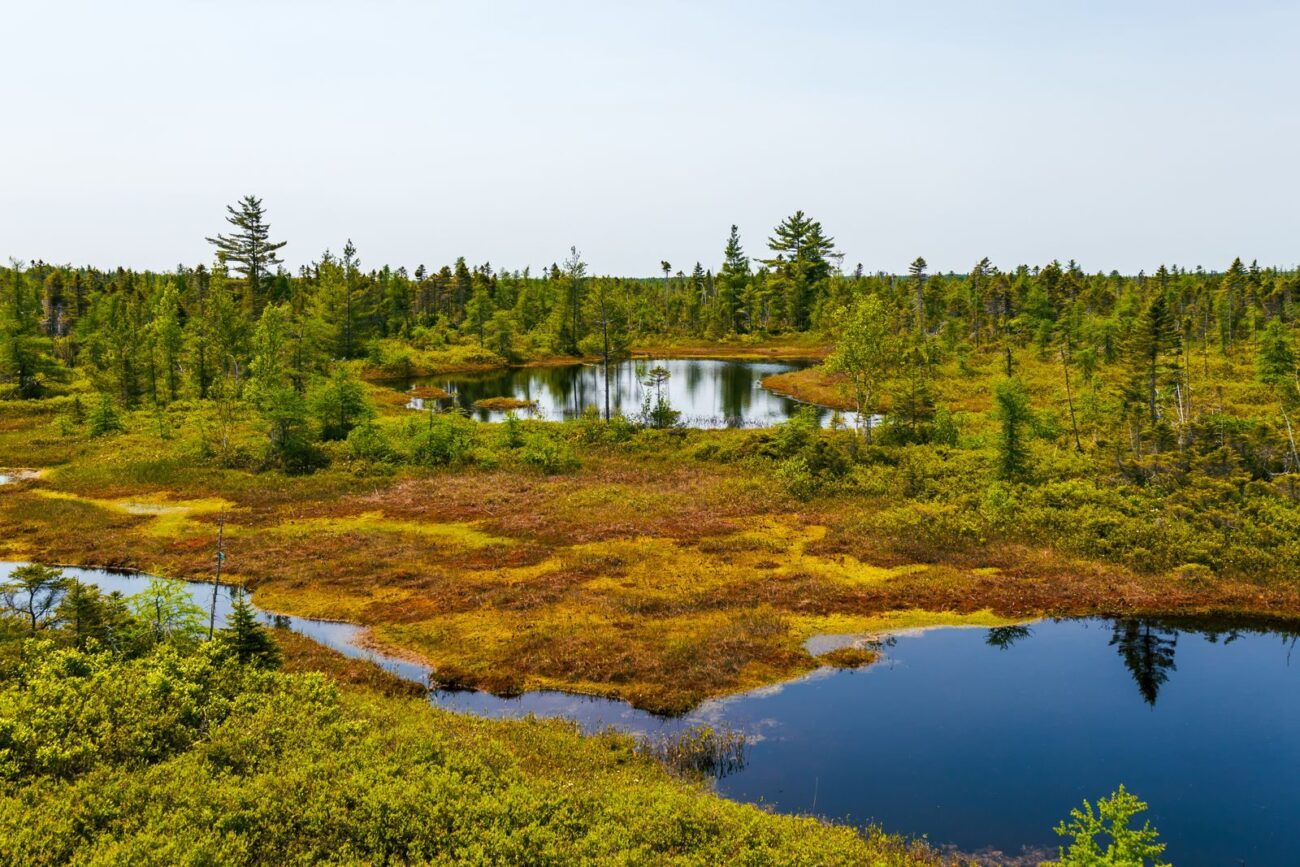
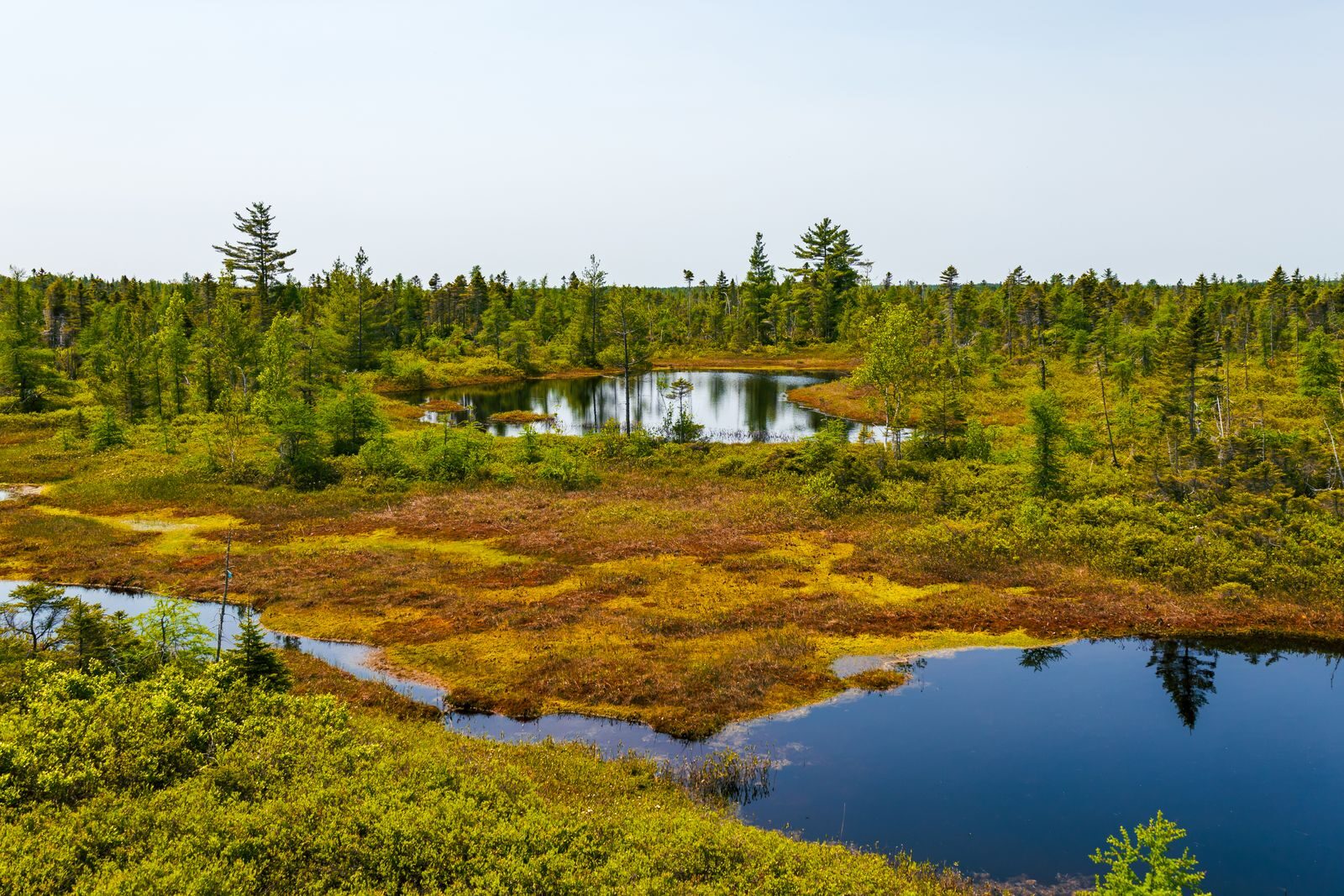
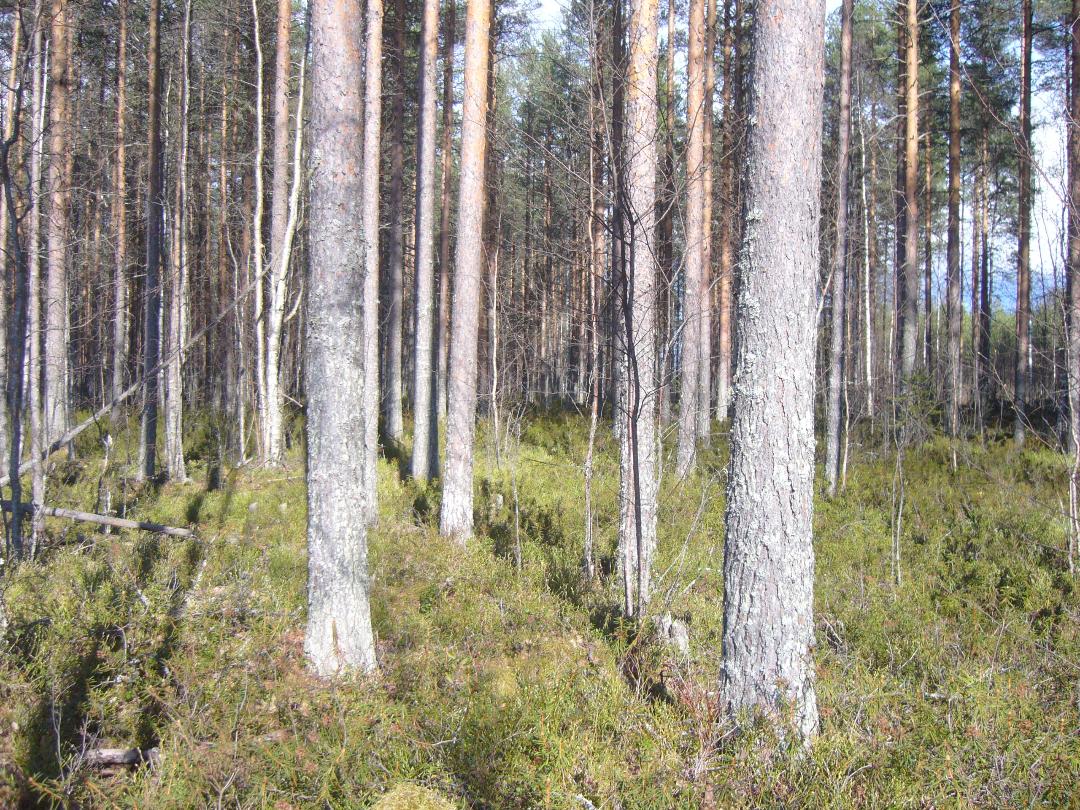
A peatland is any ecosystem where peat has formed and continues to accumulate. They go by many names depending on location and vegetation type. Bogs, fens, mires, moors, muskegs, and pocosins are all types of peatland with specific ecological characteristics, but they share the fundamental feature of waterlogged conditions that allow peat to form.
Bogs are the most carbon-rich type. They receive water only from rainfall rather than groundwater, which makes them highly acidic and nutrient-poor. Sphagnum mosses dominate most bog ecosystems and are the primary peat-forming plants. Sphagnum is remarkable because it actively creates the conditions for peat accumulation. It holds large quantities of water in its cell structure, keeps the surface waterlogged, releases acidic compounds that further slow decomposition, and produces biomass that resists breakdown even more than most plant material.
Fens receive water from groundwater as well as rainfall, making them less acidic and more nutrient-rich than bogs. They support a wider range of plant species but accumulate peat through the same basic mechanism of waterlogged slow decomposition.
Peatlands are found across the world but are most extensive in high-latitude regions. The boreal zone across Canada, Russia, and Scandinavia holds the largest peatland areas on Earth. Tropical peatlands in Southeast Asia, the Congo Basin, and the Amazon are smaller in total area but can be extremely deep and carbon-dense.
How Do Peatlands Store Carbon?
The carbon storage mechanism in peatlands is elegantly simple. Plants absorb CO₂ from the atmosphere through photosynthesis and build that carbon into their tissues. When those plants die in a peatland, the waterlogged anaerobic conditions prevent the decomposer organisms from breaking those tissues down completely. The carbon stays in the peat rather than returning to the atmosphere.
This process has been running continuously since the end of the last ice age in most northern peatlands. Over ten thousand years of continuous accumulation has produced peat deposits that store extraordinary quantities of carbon in a relatively small land area.
The numbers are striking. Peatlands cover only about three percent of the Earth’s land surface but store approximately 30 percent of all the carbon held in terrestrial soils globally. Some estimates put the total carbon stored in peatlands at around 550 to 600 billion tonnes, which is roughly equivalent to 75 years of current global fossil fuel emissions.
During my postgraduate studies I visited peatlands with my research group to measure greenhouse gas fluxes directly from the peat surface. The method involved placing closed chambers on the peat and collecting gas samples using syringes at set time intervals. Those samples were then analysed to quantify how much CO₂ and methane the peat was releasing.
Standing on the surface of a peat bog, pushing chambers into the ground and drawing off gas samples, gives you a very different understanding of what peatlands actually are compared to reading about them. The ground moves slightly under your feet. The surface is saturated. And the gas flux data coming out of those chambers makes the carbon storage concept completely concrete.
In my biogeochemistry training this disproportionate carbon storage relative to land area was one of the most striking features of peatland ecosystems. When you understand how soil carbon cycling works, which I had studied directly through measuring CO₂ efflux in experimental plots, the peatland mechanism becomes even more striking. In a normal soil, organic matter turns over in years to decades. In a peatland, carbon deposited ten thousand years ago is still sitting in the ground. The timescale is completely different.
Do Peatlands Store More Carbon Than Forests?
Yes, per unit area, peatlands store significantly more carbon than forests in most comparisons.
A temperate or boreal forest stores most of its carbon in above-ground biomass, the wood, branches, and leaves of living trees. That carbon is relatively vulnerable. A fire, a storm, a disease outbreak, or a harvesting operation can release it back to the atmosphere within years or decades.
A peatland stores its carbon primarily in the peat itself, below ground, where it has been accumulating for thousands of years. The carbon density of deep peat is extremely high and the stability of that storage under natural conditions is far greater than above-ground forest carbon.
Research has estimated that a single hectare of peat can store between 500 and 1000 tonnes of carbon depending on depth and age, compared to a temperate forest which might store 100 to 200 tonnes of carbon per hectare above ground. The peatland advantage is even greater when you account for the age and stability of the stored carbon rather than just the quantity.
This does not mean forests are unimportant for carbon storage. Forests and peatlands often coexist and interact, with boreal forests growing on or adjacent to peat-forming wetlands in many high-latitude landscapes. But when comparing carbon storage per hectare, peatlands are in a category of their own.
How Long Does Carbon Stay in Peat?
Under natural undisturbed conditions, carbon in peat can remain stored for thousands of years. The peat at the base of a deep bog in northern latitudes may have been deposited eight to ten thousand years ago and has remained in the ground ever since.
This exceptional long-term stability is what makes peatland carbon so significant for climate. It is not just that peatlands store a lot of carbon. It is that they store it in a form that persists on geological timescales rather than ecological ones.
The stability depends entirely on the waterlogged conditions being maintained. As long as the water table remains high enough to keep the peat anaerobic, decomposition stays extremely slow and the carbon remains locked in place. This is why anything that lowers the water table in a peatland, drainage, extraction, drought, or land use change, fundamentally threatens the stability of that stored carbon.
How Do Peatlands Release Carbon?
When peatlands are drained, burned, or degraded, the carbon storage mechanism reverses. The oxygen that waterlogging previously excluded can now reach the peat. Decomposer organisms reactivate. Decomposition accelerates. And the carbon that took thousands of years to accumulate begins releasing back to the atmosphere as CO₂ and methane.
This is something the syringe sampling method I used in the field captures directly. On degraded or disturbed peat surfaces, the gas flux readings from the chambers are measurably higher than on intact peat. You can see in the data how disturbance shifts the peatland from a carbon sink to a carbon source. That shift is not gradual. It can be rapid.
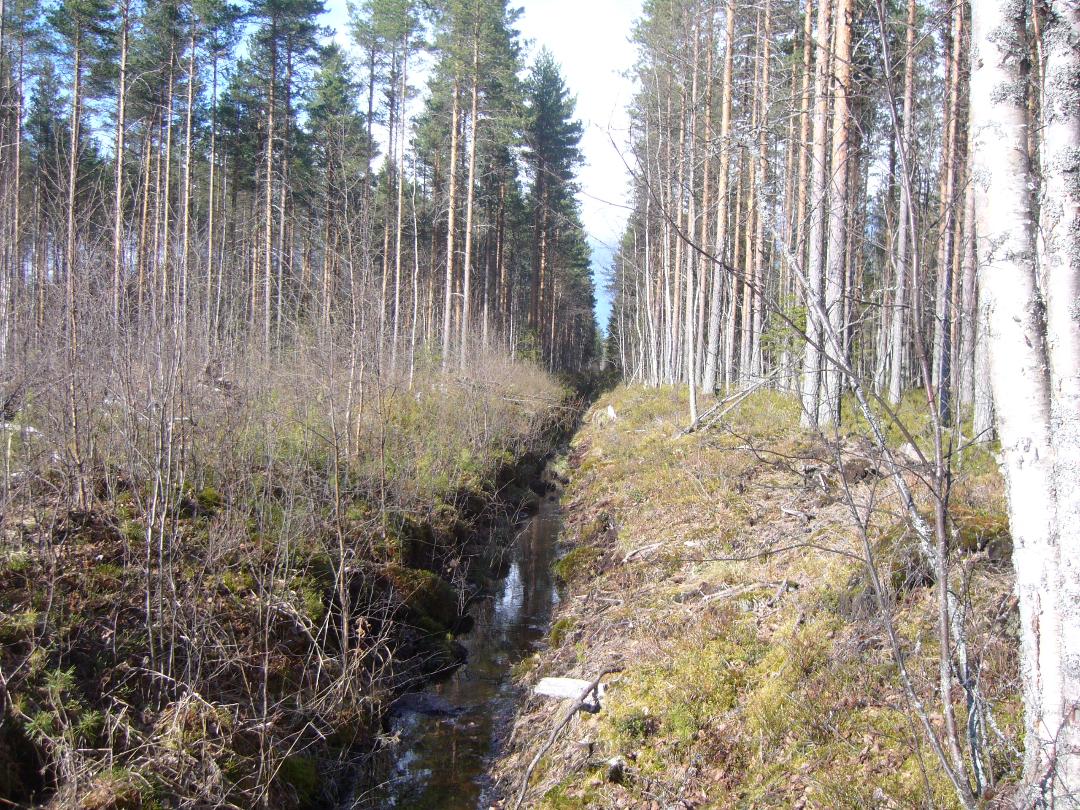
Drainage for agriculture and forestry is the most widespread cause of peatland carbon release globally. When the water table is lowered, the upper peat layers dry out and become aerobic. Microbial activity accelerates and CO₂ emissions from drained peatlands can be substantial. Drained tropical peatlands in Southeast Asia are among the largest single sources of land use related greenhouse gas emissions globally.
Peatland fires represent a particularly rapid and dramatic carbon release pathway. When dry peat ignites, the fire can burn underground through the peat itself rather than just the surface vegetation. These underground peat fires can smoulder for months or years, releasing enormous quantities of carbon that took millennia to accumulate.
The asymmetry here is important. Peatlands accumulate carbon at roughly one to two millimetres of peat per year under natural conditions. They can release that same carbon over years or decades when disturbed. The accumulation timescale is geological. The release timescale is human.
Why Are Peatlands Important in the Context of Climate Change?
Peatlands sit at the intersection of two of the most important questions in climate science. How much carbon can natural ecosystems store and how stable is that storage under changing conditions.
As global temperatures rise, peatlands face threats from multiple directions simultaneously. Warming accelerates decomposition in surface peat layers, increasing CO₂ emissions. Drying increases fire risk. Permafrost thaw in high-latitude peatlands destabilises deep peat deposits that have been frozen for thousands of years and begins releasing the carbon they contain. And human land use continues to drain and convert peatlands for agriculture, forestry, and fuel extraction.
I saw this connection between warming and gas flux directly in my own research. In my field experiment measuring soil CO₂ efflux under warming treatments, just 0.9°C of warming increased soil respiration by 24 to 36 percent depending on tree genotype. Peatlands face the same principle at a far larger scale. Warmer temperatures mean faster decomposition. Faster decomposition means more carbon release. And because peatlands hold so much carbon, even a small acceleration in that release rate matters enormously for the global carbon budget.
Research published in Nature Communications has shown that drained peatlands worldwide will cumulatively release 80 billion tonnes of carbon if no restoration action is taken, with current annual emissions from degraded peatlands already reaching nearly 2 billion tonnes of CO₂ equivalent per year. That is the scale of what is at stake.
At the same time, peatlands are one of the few natural carbon stores where targeted protection and restoration can deliver genuine climate benefits on meaningful timescales. Rewetting drained peatlands can restore the anaerobic conditions that slow decomposition and eventually allow peat to begin accumulating again. Protecting intact peatlands prevents the release of carbon stocks that took millennia to build.
Understanding peatland carbon dynamics is not just an academic exercise. It is essential knowledge for anyone working in carbon accounting, land management, environmental policy, or ecosystem restoration.
What Is Peatland Restoration?
Peatland restoration refers to the process of returning a degraded or drained peatland to conditions where peat can form and accumulate again. The most common and effective restoration technique is rewetting, which involves blocking the drainage channels that have been lowering the water table and allowing the water level to rise back toward the peat surface.
When rewetting is successful, the anaerobic conditions that prevented decomposition are restored. Sphagnum and other peat-forming plants can recolonise the surface. CO₂ emissions from the peatland decline. And over decades to centuries the peat can begin accumulating again.
Restoration does not immediately reverse the carbon losses from degradation. A peatland that has been drained for decades will have lost significant carbon and the structural changes to the peat cannot be undone quickly. But successful rewetting can stop the ongoing carbon loss and begin the slow process of returning the peatland to a carbon sink.
Frequently Asked Questions
What is peat?
Peat is partially decomposed organic matter that has accumulated over thousands of years in waterlogged, oxygen-poor conditions. The lack of oxygen prevents decomposer organisms from breaking down dead plant material completely, so carbon accumulates in the peat rather than returning to the atmosphere.
How do peatlands store carbon?
Plants absorb CO₂ through photosynthesis and incorporate that carbon into their tissues. When those plants die in a waterlogged peatland the anaerobic conditions slow decomposition to near zero. The carbon stays in the peat rather than being released. Over thousands of years this produces extremely carbon-dense deposits that can be several metres deep. I measured gas fluxes from peat surfaces directly during field visits in my postgraduate studies and the difference between intact and disturbed peat is immediately visible in the data.
Do peatlands store more carbon than forests?
Yes per unit area. A single hectare of peat can store between 500 and 1000 tonnes of carbon depending on depth and age, significantly more than most forest types store above ground. Peatlands cover only three percent of the Earth’s land surface but hold approximately 30 percent of all terrestrial soil carbon.
How long does carbon stay in peat?
Under natural undisturbed conditions, thousands of years. The peat at the base of a deep northern bog may have been deposited ten thousand years ago. This long-term stability depends entirely on the waterlogged anaerobic conditions being maintained. Drainage or disturbance can destabilise the carbon and begin releasing it within years.
How do peatlands release carbon?
When drainage, fire, or land use change lowers the water table, oxygen reaches the previously anaerobic peat. Decomposer organisms reactivate and carbon begins releasing as CO₂ and methane. The release can be rapid compared to the thousands of years it took to accumulate. Underground peat fires can smoulder for months releasing carbon continuously.
Are peatlands wetlands?
All peatlands are wetlands but not all wetlands are peatlands. A peatland is specifically a wetland where waterlogged conditions have allowed peat to form and accumulate over time. Other wetland types like marshes and swamps may not have significant peat deposits.
Why are peatlands important for climate change?
Because they store an enormous quantity of carbon in a form that is stable over thousands of years under natural conditions. Protecting intact peatlands prevents the release of this carbon. Restoring degraded peatlands can stop ongoing carbon loss and eventually allow accumulation to resume. Peatland protection is one of the most cost-effective nature-based climate solutions available.
What is peatland restoration?
The process of returning a degraded or drained peatland to conditions where peat can form and accumulate again. The most common technique is rewetting, blocking drainage channels to raise the water table back toward the peat surface. Successful rewetting restores anaerobic conditions, reduces CO₂ emissions, and over time allows peat-forming vegetation to recolonise.