



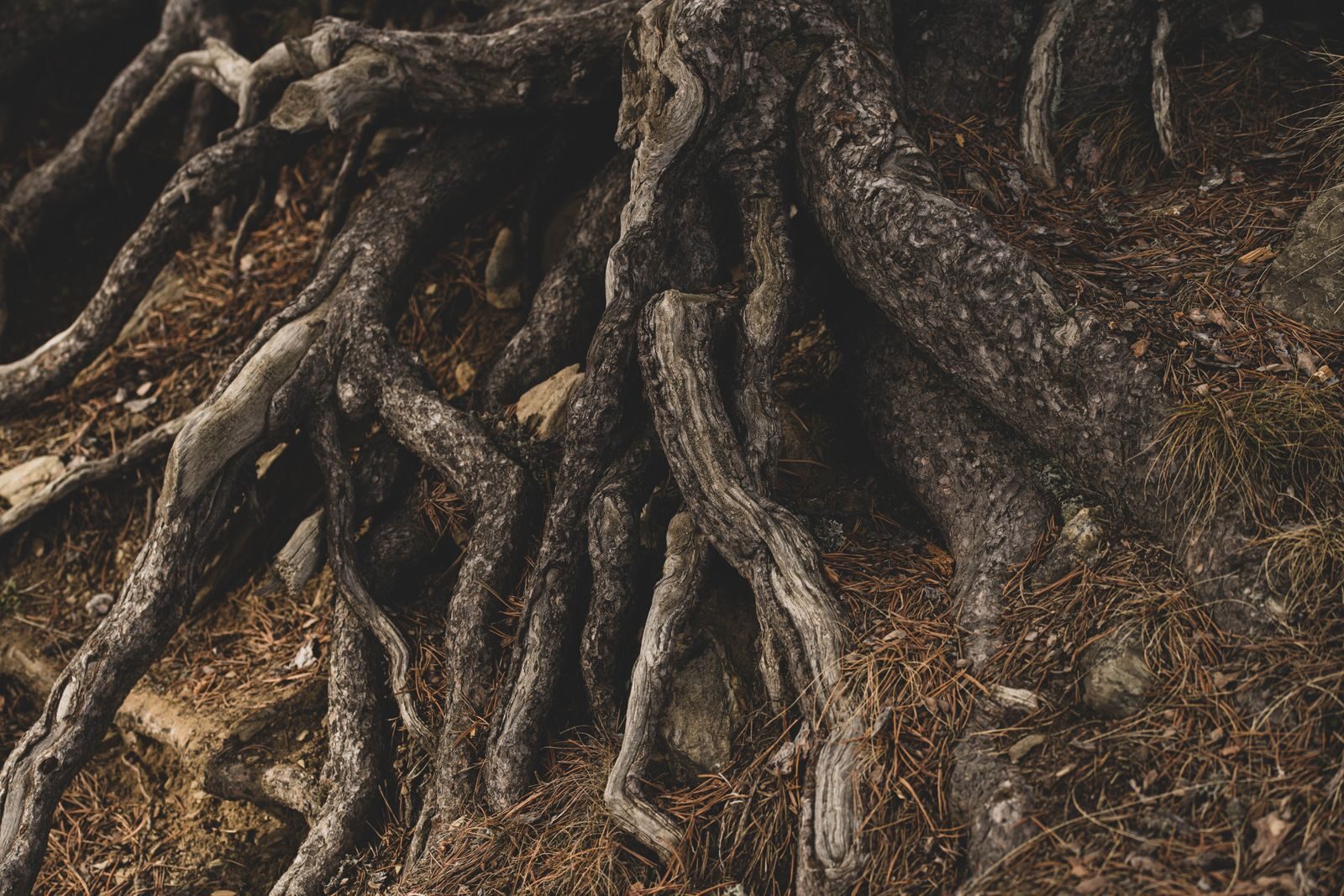
A forest can grow for centuries in the same soil without ever running out of nutrients. That fact alone should make you curious about what is happening underground.
The answer is not simple and it is not the same for every nutrient. For nitrogen there is a continuous supply from the atmosphere through biological fixation and rainfall. But for phosphorus there is nothing coming in from above. Every atom of phosphorus a forest tree uses today has been cycling through that same soil for decades, sometimes centuries, passed from rock to microbe to root and back again in a loop that never stops.
Most people studying forest ecology focus on nitrogen. It is the nutrient that comes up most in research, the one most commonly limiting tree growth in temperate forests, and the one with the most straightforward entry point from the atmosphere. But in my biogeochemistry training, phosphorus was always the nutrient that made me think harder.
Phosphorus plays by completely different rules. There is no atmospheric reservoir. No biological process pulls it from the air. Every atom available to a forest tree came from somewhere in the ground, and once it leaves the system it is very hard to get back. That makes phosphorus one of the most important and least forgiving nutrients in forest ecology.
In my postgraduate biogeochemistry training I studied how soil nutrient availability, including phosphorus, directly influences what trees do with the carbon they fix above ground. Trees in nutrient-poor conditions invest more carbon in roots and fungal partnerships rather than in above-ground growth. Phosphorus is one of the key drivers of exactly that kind of response and understanding how it cycles helps explain patterns I have seen across forest research.
This article walks you through how phosphorus moves through forest ecosystems, why trees cannot function without it, and what happens when the cycle is disrupted.
What Is Phosphorus and Why Do Forest Trees Need It?
Phosphorus is a chemical element that every living organism needs to survive. In trees it does three things that nothing else can replace.
First it is a structural part of DNA and RNA, the molecules that carry genetic information in every cell. Second it forms the backbone of ATP, the molecule that transfers energy inside cells and powers everything from photosynthesis to root growth. Third it builds the membranes that surround every cell in the tree.
Without enough phosphorus trees cannot grow properly, cannot photosynthesize efficiently, and cannot reproduce. You see it in the plant. Leaves turn dark green or purplish. Growth slows. Root development suffers. In forests where phosphorus is scarce it becomes the main limit on how productive the whole system can be.
This is the key difference from nitrogen. Nitrogen enters forest systems continuously through biological fixation and rainfall. Phosphorus does not. It has no atmospheric source. It comes from rock weathering, and in old soils that have been weathering for millions of years the original mineral supply is largely gone. What remains has to be recycled over and over again by the forest itself.
How Does Phosphorus Cycle in a Forest?
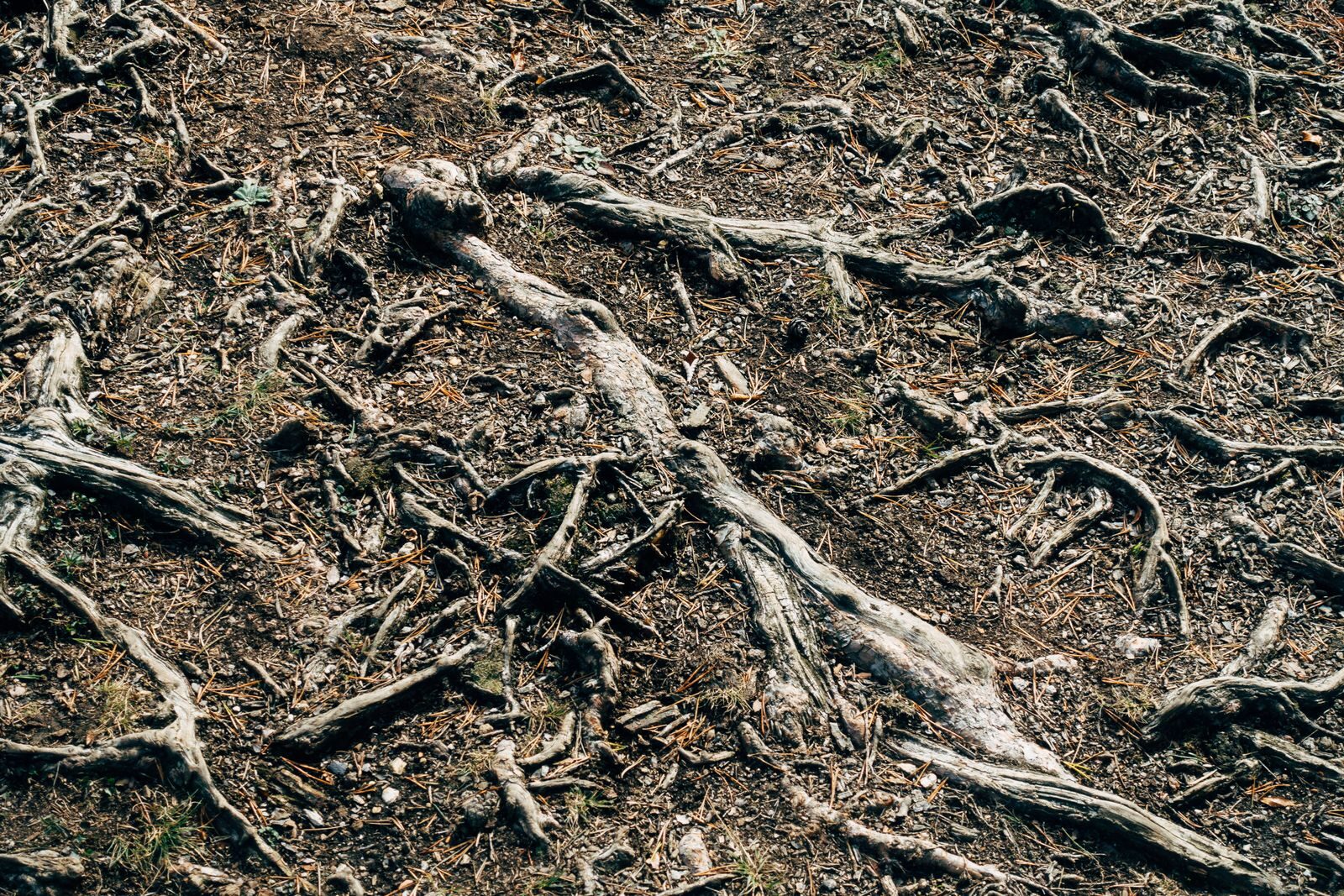
The phosphorus cycle in a forest is almost entirely closed. What comes in stays in unless something physically removes it through leaching, erosion, fire, or harvesting. That is what makes it so different from the nitrogen cycle and so vulnerable to disruption.
Here is how it works step by step.
It starts with rock weathering. Phosphorus is locked into rock minerals and released very slowly as those minerals break down over decades and centuries. In young soils on fresh rock this can provide useful inputs. In old heavily weathered soils it barely contributes anything.
Once phosphorus enters the soil as phosphate it can go one of several ways. Tree roots take it up directly. Soil microbes absorb it. It binds to mineral surfaces in the soil, particularly iron and aluminium compounds, where it becomes locked up and unavailable to plants. Or it leaches downward with water movement and leaves the system entirely.
In mature forests the most important pathway by far is internal recycling. When leaves fall, when roots die, when any organic material decomposes, the phosphorus inside it is released back into the soil by decomposer organisms. This is called mineralisation and it is how most forest trees get the phosphorus they need year after year.
How fast this recycling happens matters enormously. In warm tropical forests decomposition is rapid and phosphorus moves quickly through the system. In cold boreal forests decomposition is slow, organic matter builds up, and phosphorus can stay locked in organic forms for years before becoming available again. That slowness has real consequences for tree growth and carbon storage in high-latitude forests.
How Do Trees Get Phosphorus from the Soil?
This is the part most people do not know and it completely changed how I think about forests.
Phosphate ions move very slowly through soil water. They do not travel far from where they are released. A root tip can quickly use up all the phosphorus right around it and then find nothing more unless it keeps pushing into new soil. That is a serious problem for a large tree with high nutrient demands.
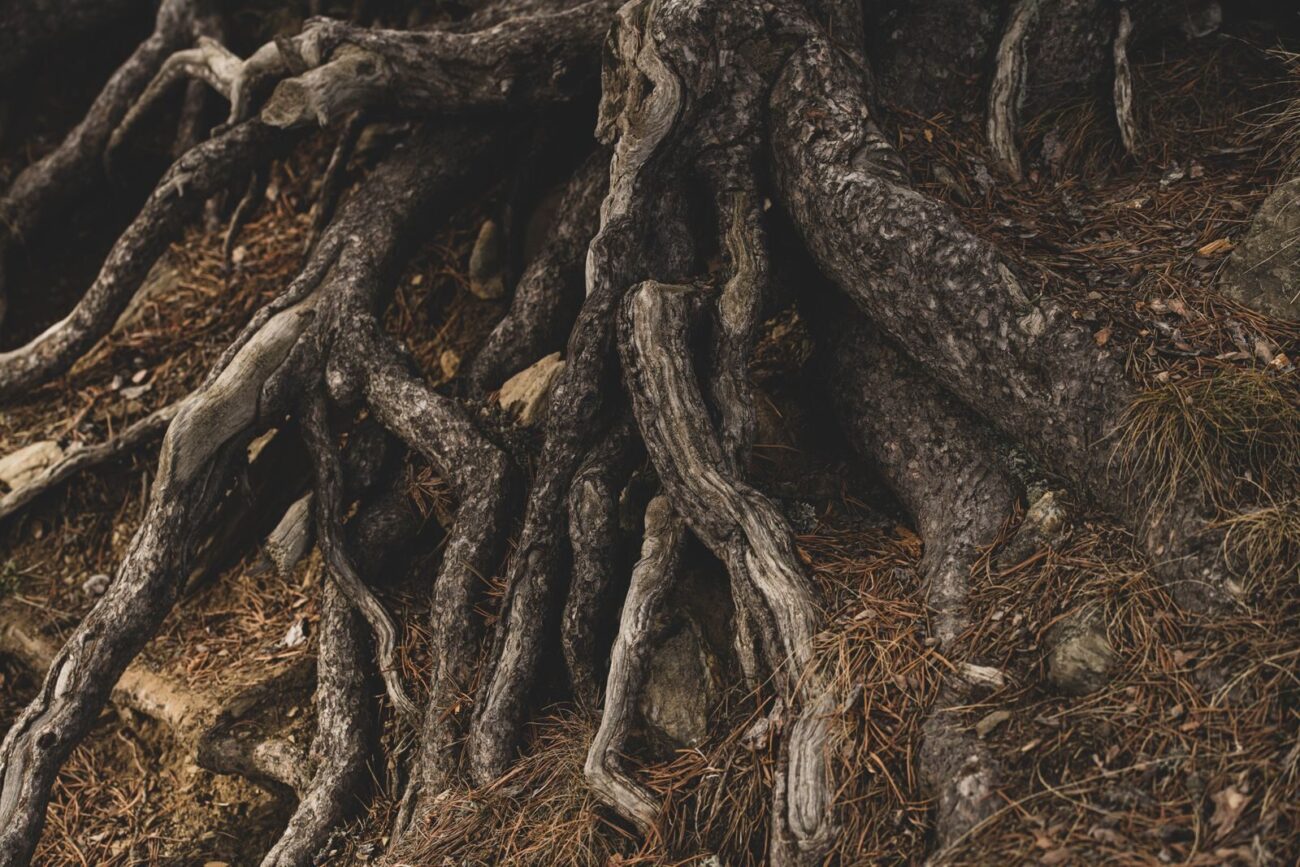
The solution most forest trees use is a partnership with mycorrhizal fungi. These fungi grow into and around tree roots and extend their threads far out into the soil, reaching phosphorus in places no root could access on its own. The fungi deliver phosphorus to the tree and in exchange the tree feeds the fungi with carbon sugars from photosynthesis.
This partnership is so important that most forest trees simply cannot survive without it. I covered the role of mycorrhizal networks in forest soil nutrition in detail in my article on what makes forest soil unique, and the phosphorus connection is central to that whole story.
What I want to highlight here is the carbon connection. In my field research I saw directly how nutrient scarcity changes what trees do with the carbon they fix. When phosphorus and other nutrients are limited, trees put more carbon into root growth and mycorrhizal relationships rather than into above-ground wood and leaves. That shift is a direct response to nutrient limitation and it connects the phosphorus cycle to the carbon cycle in ways that matter for how we understand forest productivity and carbon storage.
How Does Deforestation Affect the Phosphorus Cycle?
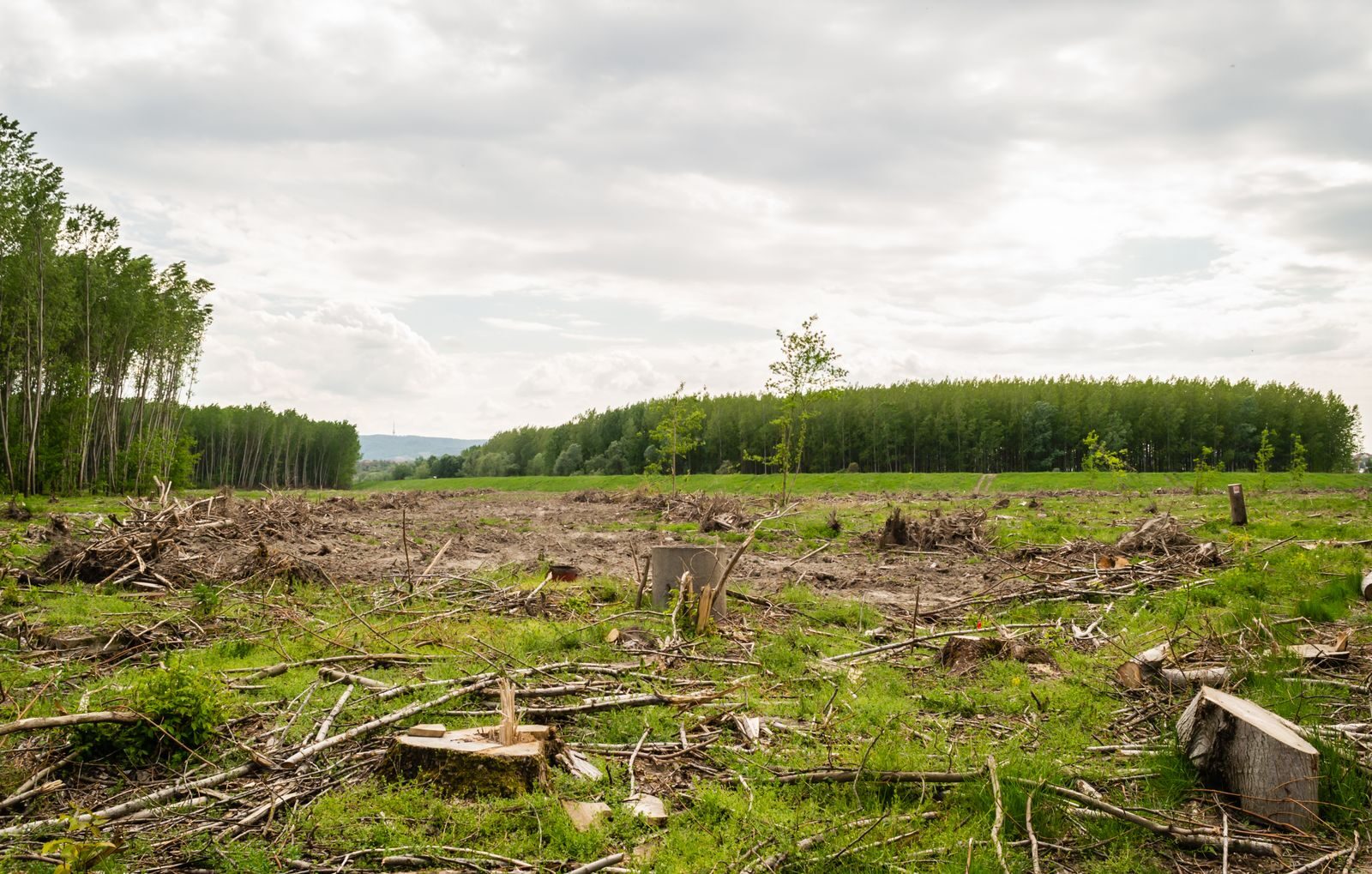
When a forest is cleared the phosphorus cycle breaks down fast and the damage is often permanent.
The organic matter that was slowly releasing phosphorus through decomposition is either removed with the timber, burned during clearing, or exposed to conditions that break it down much faster than the ecosystem can handle. A short-term pulse of phosphorus is released into the soil. This is why cleared tropical forest land can grow crops for a season or two. But once that pulse is used up there is nothing to replace it because the recycling system that produced it has been destroyed.
Without tree roots and mycorrhizal networks holding phosphorus in the system it leaches away with rainfall or runs off the surface. Research published in Nature has shown that in mature forests growing on phosphorus-depleted soils, soil microbes compete directly with tree roots for every available phosphate ion, leaving almost nothing to spare. When deforestation destroys that finely balanced system there is nothing left to rebuild it from.
The result is soil that looks intact but cannot support forest regrowth without external fertiliser inputs. This is one of the reasons tropical deforestation is so hard to reverse even when replanting efforts are made.
How Do Forest Fires Affect the Phosphorus Cycle?
Fire has a more complicated relationship with phosphorus than most people expect.
When organic matter burns the phosphorus locked inside plant tissue and soil organic matter converts to ash. Ash dissolves easily in water and releases phosphorus quickly into the soil. This creates a short-term pulse of available phosphorus that can actually help plants regenerate in the years right after a fire.
But fire also volatilises nitrogen, meaning nitrogen escapes into the atmosphere as gas while phosphorus stays in the ash. After a fire the soil often has more phosphorus relative to nitrogen than before, which shifts which nutrient limits recovery. Understanding that balance matters for predicting how a forest grows back after burning.
In boreal forests fire has historically been part of the natural disturbance cycle. The phosphorus dynamics of post-fire recovery are well studied in that context and are an important part of understanding how those forests rebuild themselves over time.
What Naturally Puts Phosphorus in Soil?
In natural forest systems phosphorus enters the soil through three pathways.
Rock weathering is the original source. As rock breaks down over geological time phosphorus is released from minerals and enters the soil system. This process is very slow and in old soils it has largely run its course.
Atmospheric deposition brings small amounts of phosphorus through dust and rainfall. In some regions this matters more than you might expect. Research published in Geophysical Research Letters has shown that approximately 22,000 tons of phosphorus carried in Saharan dust crosses the Atlantic Ocean every year and lands in the Amazon rainforest, replacing almost exactly the amount the forest loses through rainfall and flooding. Without that external input the Amazon’s already depleted soils would slowly run out of the nutrient entirely.
Decomposition of organic matter is by far the most important pathway in mature forests. Every leaf that falls, every root that dies, every organism that completes its life cycle returns phosphorus to the soil where it can be taken up again. This internal recycling is what keeps forests running for centuries without needing significant new inputs from outside.
How Do I Know If My Soil Needs Phosphorus?
If you manage forest land, a woodland garden, or a tree planting project this question is worth taking seriously.
Visual signs to look for in trees include unusually dark green or purplish leaves particularly on older lower leaves, growth that is slower than you would expect for the species and site, and poor root development when young trees are lifted or transplanted. These signs can have other causes too so they are a starting point not a diagnosis.
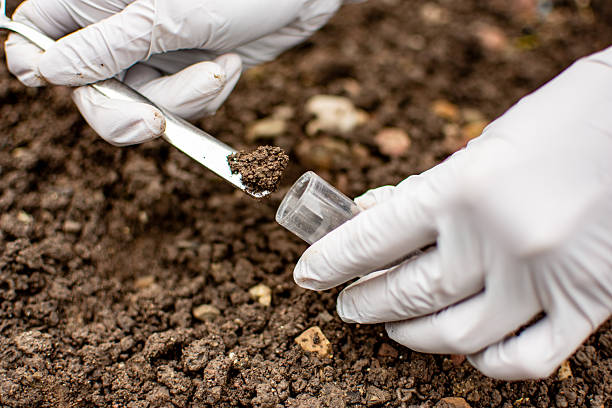
Soil testing gives you a clearer answer. A standard soil nutrient analysis will report available phosphorus, usually in parts per million or milligrams per kilogram. Values below 10 to 15 parts per million of available phosphorus are generally considered limiting for most tree species in temperate zones, though interpretation depends on soil type and species.
In natural forest management I would say the better question is not just whether phosphorus levels are low but whether the conditions for phosphorus cycling are healthy. A forest with intact organic matter layers, active decomposer communities, and established mycorrhizal networks will cycle phosphorus efficiently even when total levels look modest on paper. Compaction, waterlogging, acidification, and removal of organic matter all disrupt those biological processes and that disruption often matters more than the raw phosphorus number.
Frequently Asked Questions
What is the phosphorus cycle in forest ecosystems?
It is the movement of phosphorus through the forest from soil minerals and organic matter through plant uptake, through the food web, and back to the soil through decomposition. Unlike the nitrogen cycle there is no atmospheric reservoir so phosphorus is recycled tightly within the system with minimal inputs or losses.
How does phosphorus cycle in a forest?
Phosphorus is released from decomposing organic matter by soil microbes, taken up by tree roots with the help of mycorrhizal fungi, used in plant growth and metabolism, returned to the soil when leaves and roots die and decompose, and then taken up again. This cycle can repeat for centuries in a mature forest with minimal external inputs.
How do trees affect the phosphorus cycle?
Trees are the primary storage pool for phosphorus in most forest ecosystems. They drive phosphorus uptake through mycorrhizal partnerships and influence how quickly phosphorus cycles by controlling the quantity and quality of organic matter returned to the soil through leaf litter and root turnover.
How does deforestation affect the phosphorus cycle?
It breaks the recycling system that keeps phosphorus within the forest. Organic matter is removed or destroyed, roots and mycorrhizal networks that retain phosphorus are lost, and the nutrient leaches away or runs off in surface water. In heavily weathered soils this loss is very difficult to reverse.
What does phosphorus do for plants in soil?
It is essential for energy transfer within cells through ATP, for building DNA and RNA, and for constructing cell membranes. Without adequate phosphorus trees cannot grow, photosynthesize efficiently, or reproduce.
What naturally puts phosphorus in soil?
Rock weathering over geological time, small inputs through atmospheric dust and rainfall, and decomposition of organic matter. In mature forests decomposition and internal recycling is by far the most important source of plant available phosphorus.
How do I know if my soil needs phosphorus?
Visual signs in trees include dark or purplish leaves and slow growth. Soil testing for available phosphorus is the most reliable method. In natural forest management the health of the decomposer community and mycorrhizal network matters as much as the raw phosphorus level.