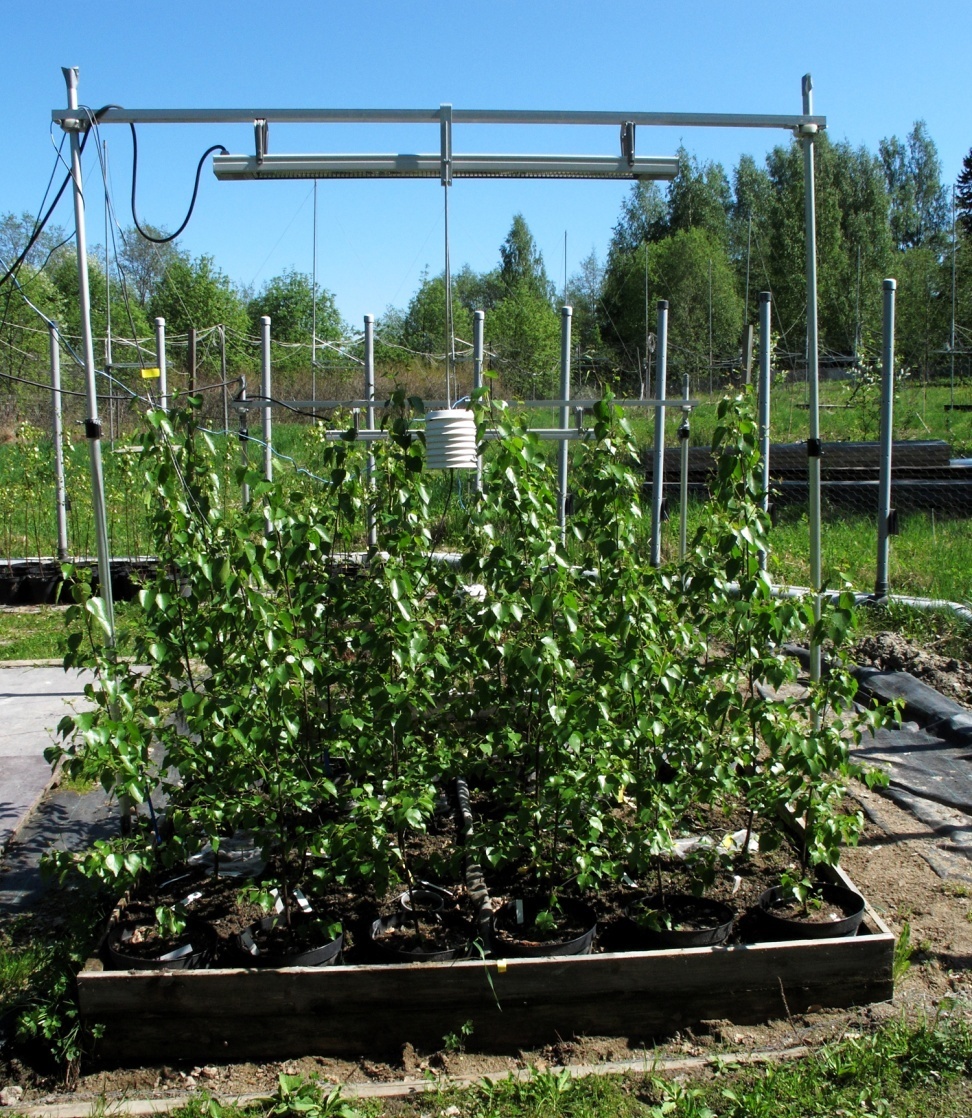



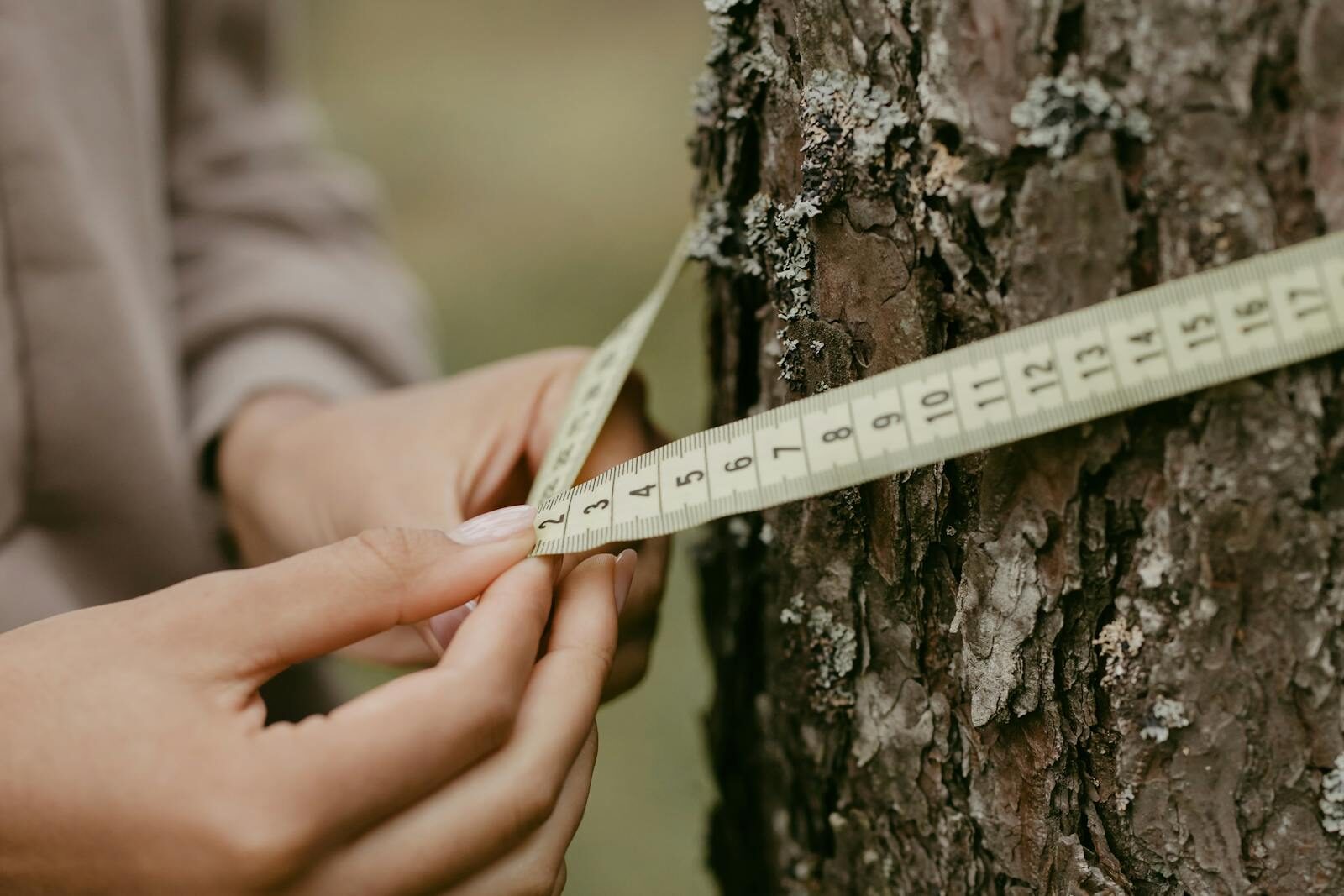
Every three weeks throughout a full growing season, I measured the stem diameter of 192 trees by hand. Vernier caliper. Marked measurement point on each tree. Record on a datasheet. Repeat across every plot. It took most of the day each time.
For my experiment it was the right approach. My trees were young silver birch saplings with small stem diameters, and a caliper at a fixed marked point gave me precise, reproducible readings that a band dendrometer on a small stem would not have matched. The caliper was the correct tool for what I was doing.
But working through that process gave me a very direct understanding of what automated dendrometers are designed to do in larger tree research. When I later learned properly about what a continuous dendrometer records at sub-hourly resolution while you are not even at the field site, the gap between what I could see in my periodic snapshots and what a dendrometer sees in real time became very clear.
This article explains what dendrometers are, how they work, what types are available, and when you actually need one rather than a manual caliper approach.
What Is a Dendrometer?
A dendrometer is used by researchers, growers, and foresters to measure the growth of a stem, trunk, branch, root, or fruit over time. The name comes from the Greek dendron meaning tree and metron meaning measure.
In its simplest form a dendrometer can be a graduated tape wrapped around a tree trunk and read periodically by hand. That is essentially what I was doing with my caliper, just at a single marked point rather than around the circumference. More precise automated dendrometers record stem radius at sub-hourly and micrometer resolution, with observed variations representing a combination of growth together with water transport and storage.
That last point is important. A dendrometer does not just measure growth. It also captures the daily shrinking and swelling of a stem as water moves in and out of the tree’s vascular tissue. On a hot dry day, a tree’s stem actually shrinks slightly as water demand exceeds supply. At night when transpiration stops, it swells back. A good dendrometer captures all of this in real time, giving researchers a window into the tree’s water status alongside its long-term growth trajectory.
Types of Dendrometers
There are two main categories of dendrometers: contact and noncontact. Contact dendrometers physically touch the stem to measure diameter. The vast majority of dendrometers used in forest research are contact types.
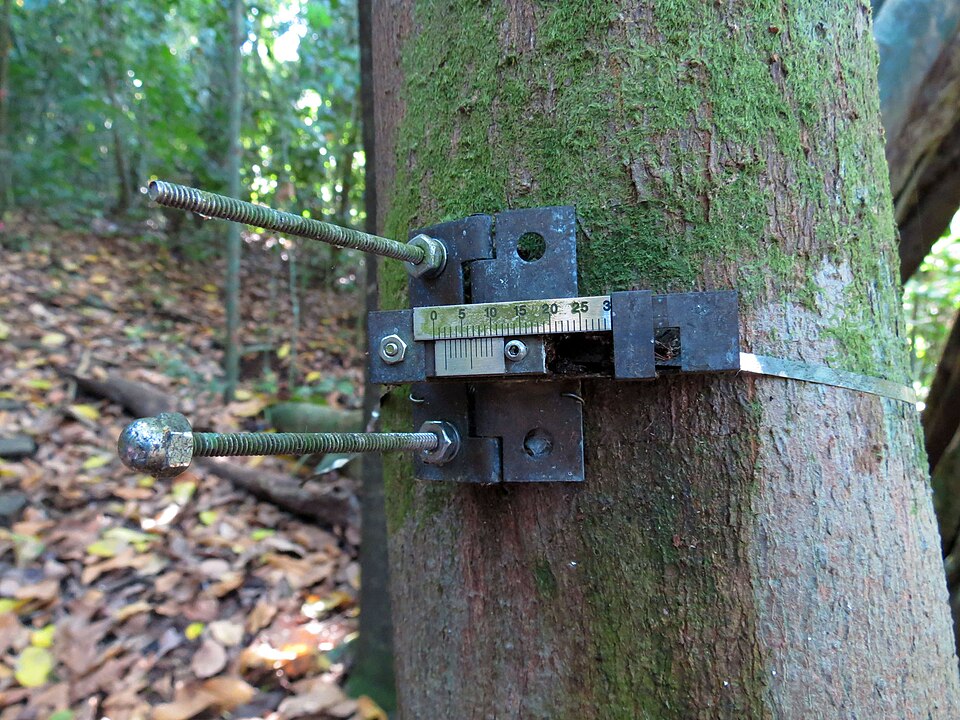
Band dendrometers are the most widely used type for forest research. A band dendrometer consists of a stainless steel band wrapped tightly around the circumference of a tree trunk. The band connects to a spring where the expansion and contraction is detected as a voltage and measured as growth. As the tree grows, the band expands and that expansion is recorded continuously by a sensor connected to a data logger. Band dendrometers are robust, suitable for long-term deployment, and can stay on a tree for years without damage.
Point dendrometers measure at a single point on the stem surface rather than around the full circumference. A probe rests against the bark at a fixed reference point, and any movement of that surface, inward or outward, is detected and recorded. Point dendrometers record stem radius at sub-hourly and micrometer resolution. They are particularly useful for detecting short-term fluctuations in stem water status alongside long-term growth.
Manual band dendrometers are the low-cost option. The D1 Dendrometer is a simple tool that enables manual measurement of changes in tree stem circumference over time, designed to be installed, left in place, and periodically visited to record changes. This is effectively what the Smithsonian Institution uses in its large-scale tree growth monitoring programmes, reading bands manually on thousands of trees across forest plots. Simple, inexpensive, and perfectly adequate for monthly or seasonal growth monitoring.
Open-source dendrometers have emerged more recently as a lower-cost alternative to commercial systems. Open-source dendrometers based on Arduino microcontrollers can monitor both radial growth and water potential, making them versatile for various plant types. For research programmes that need dense sensor networks at lower cost, these are worth considering, though they require more technical setup than commercial alternatives.
How Does a Dendrometer Connect to a Data Logger?
An automated dendrometer on its own just detects movement. It is the data logger that gives that detection meaning by timestamping every reading and storing it for later analysis.
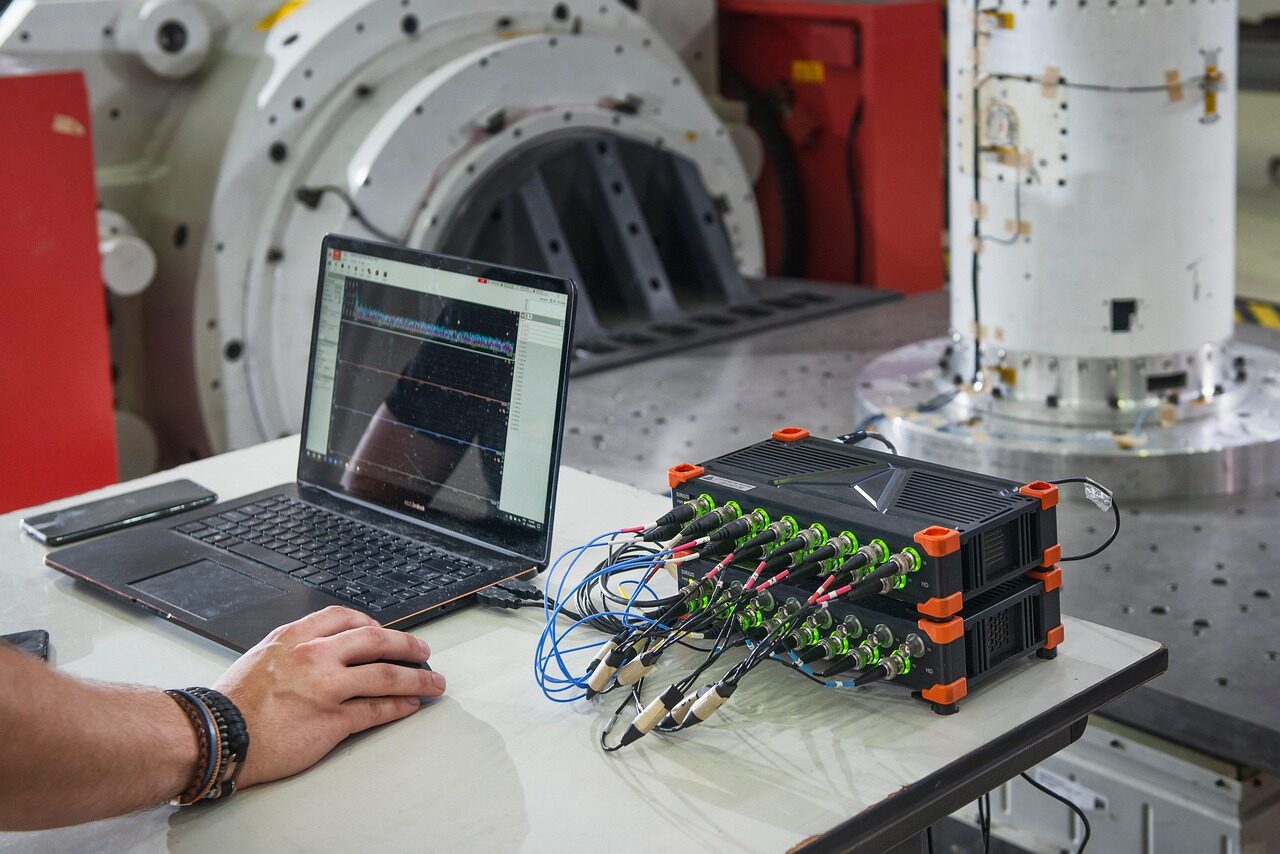
Most commercial band and point dendrometers output an analogue voltage signal that connects directly to a standard environmental data logger. The logger records the voltage at defined intervals, typically every 30 minutes for most research applications, and converts it to a stem radius or circumference change value using a calibration equation.
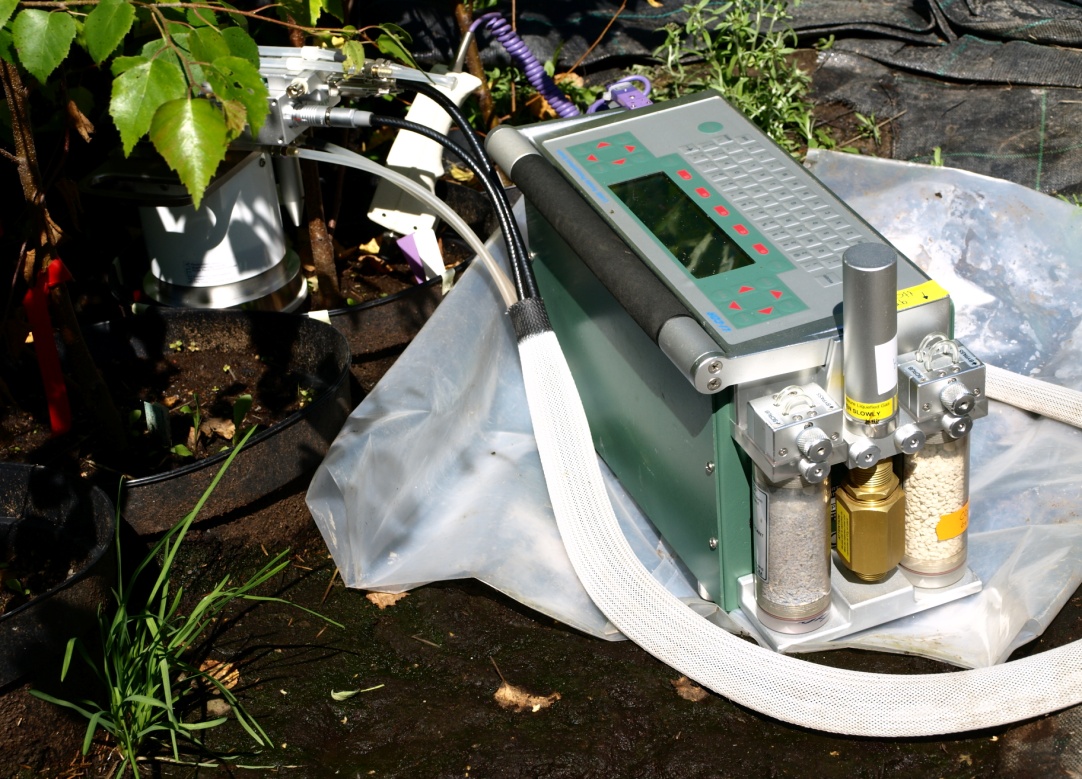
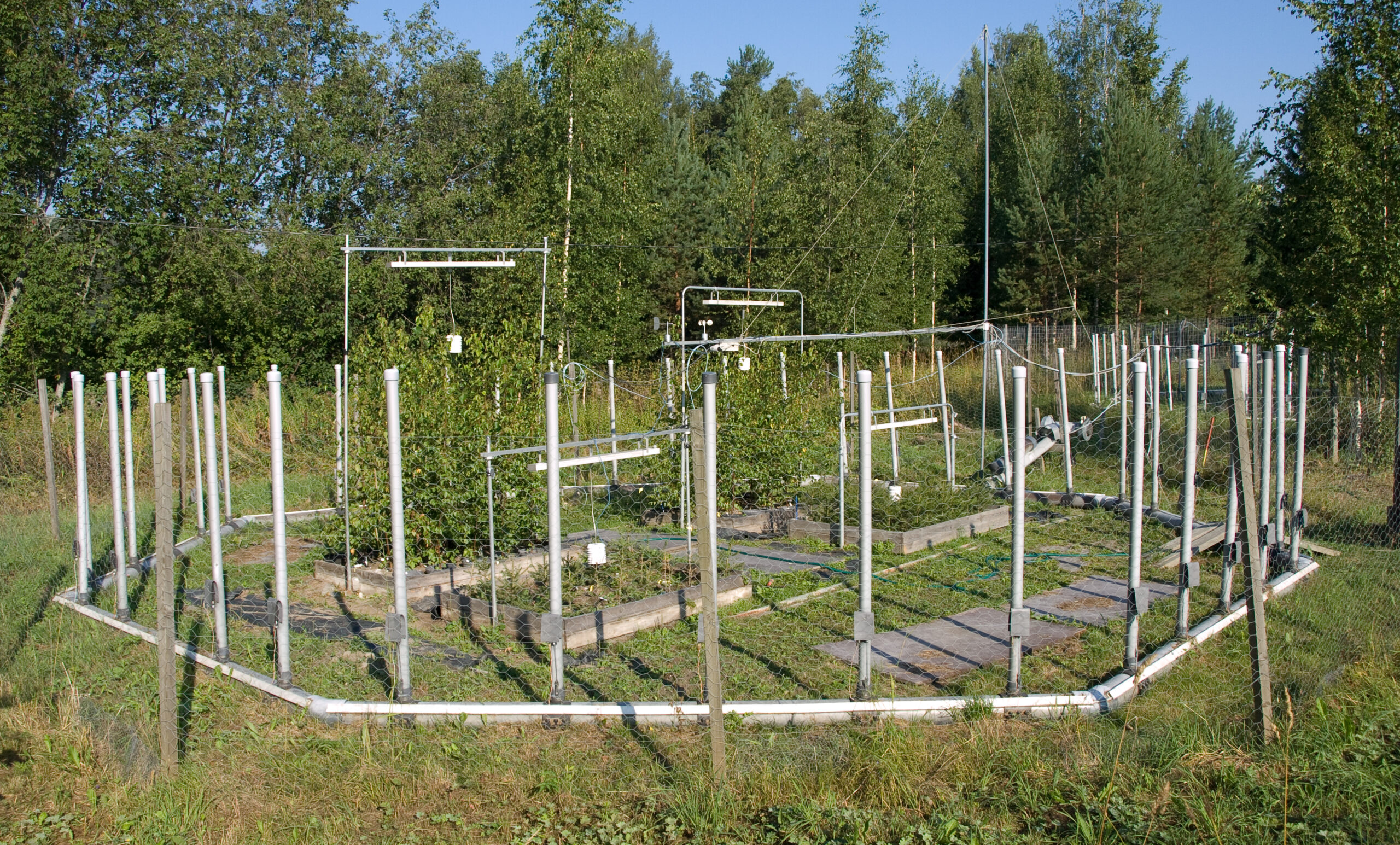
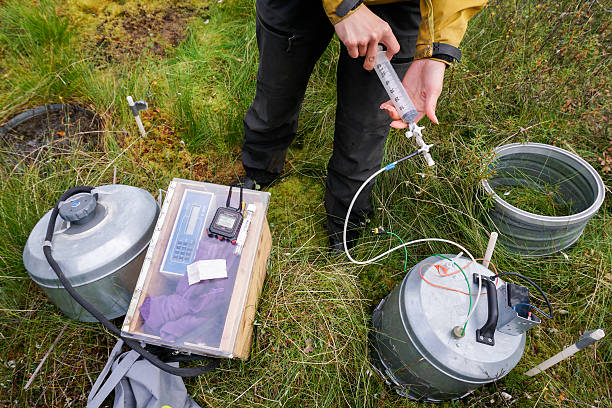
This is the same data logger infrastructure I used for continuous environmental monitoring in my field experiment. Soil temperature, soil moisture, humidity, wind, and ozone all fed into the central system from the field cabin. A dendrometer would have fitted seamlessly into that same setup, adding continuous stem growth data to the existing environmental record.
In hindsight, combining automated dendrometer readings with the manual measurements I was already taking would have produced a far more complete picture of how the trees were responding to warming and ozone treatments on a day-to-day basis.
Manual Measurements vs Dendrometers: What Is the Difference in Practice?
This is the comparison I am best placed to make from direct experience.
Manual measurements with a caliper or tape give you a precise value at a specific moment in time. If you measure every three weeks as I did, you get a time series with roughly 8 to 10 data points per growing season. That is enough to characterise seasonal growth trends and detect treatment differences at the end of the season. It is what most field experiments with limited budgets and student researcher time end up doing, and it produces valid and publishable results.
What it cannot tell you is what happened between those measurement dates. A tree might have shown a rapid growth response to a rainfall event two weeks before your measurement that had already slowed by the time you arrived with your caliper. Or a stress event might have caused a temporary stem shrinkage that fully recovered before your next visit. Those dynamics are invisible to periodic manual measurement.
Many studies have used records of stem radius variations from dendrometers to obtain information on wood growth, avoiding the intense field and lab work required by wood sampling methods. For research questions about the timing and dynamics of growth rather than just the cumulative amount, a dendrometer is the right tool.
The practical choice between the two comes down to research question, budget, and field site logistics. For detecting treatment differences over a growing season, manual measurements are sufficient and far cheaper. For understanding the daily and weekly dynamics of how trees respond to stress, water deficit, or temperature change, a dendrometer is the appropriate instrument.
When Should You Use a Dendrometer?
I would use a dendrometer in three situations.
First, when the timing of growth matters as much as the amount. If you are studying how trees respond to a specific weather event, drought period, or temperature threshold, continuous data captures that response in real time. My three-weekly manual measurements could tell me that warming increased stem growth over the season but could not tell me exactly when that growth acceleration began or ended.
Second, when you need to monitor tree water status alongside growth. The daily stem shrinkage and swelling pattern that automated dendrometers capture is a direct indicator of tree water stress. This is particularly valuable in forest research under drought conditions or in experiments manipulating water availability.
Third, when you are monitoring large numbers of trees in remote sites where frequent manual visits are impractical. Dendrometers are suitable for advanced scientific research projects and are currently used by scientists from the US Forest Service and multiple universities. For a long-term monitoring programme across multiple forest sites, automated systems are simply the only practical option.
A dendrometer follows how the stem thickens, but it tells you nothing about height. If you want to track height as well, I cover the methods and the two tools I recommend in Tree Height Measurement Methods Explained.
Frequently Asked Questions
What is a dendrometer used to measure?
Tree stem diameter or circumference changes over time. Automated dendrometers also capture the daily shrinking and swelling of the stem driven by water movement, giving information on both long-term growth and short-term water status.
What is the difference between a band dendrometer and a point dendrometer?
A band dendrometer wraps around the full circumference of the trunk and measures total girth change. A point dendrometer contacts a single point on the stem surface and measures radial movement at that location. Band dendrometers are more common for long-term forest monitoring. Point dendrometers offer higher resolution for short-term physiological studies.
How accurate are dendrometers?
Automated point and band dendrometers typically measure to micrometer resolution, detecting growth and shrinkage that no manual measurement could capture. Manual band dendrometers are less precise but adequate for seasonal growth monitoring.
Can a dendrometer measure tree height?
No. Dendrometers measure stem diameter or circumference only. Tree height requires a separate instrument such as a hypsometer or clinometer. In my field experiment I measured stem height separately using a measuring pole at marked points on each tree.
How is a dendrometer installed?
A band dendrometer is wrapped around the trunk at a fixed height and secured so the sensor can detect circumference changes. The installation point is usually marked and the surrounding bark is sometimes lightly cleared to ensure good contact. The sensor then connects to a data logger via a cable. Installation takes a few minutes per tree once you are familiar with the system.
Do dendrometers damage trees?
When installed correctly, no. Band dendrometers apply minimal pressure and are designed to accommodate growth without restricting the tree. They are routinely left on trees for multiple years in long-term monitoring programmes without causing measurable damage.