


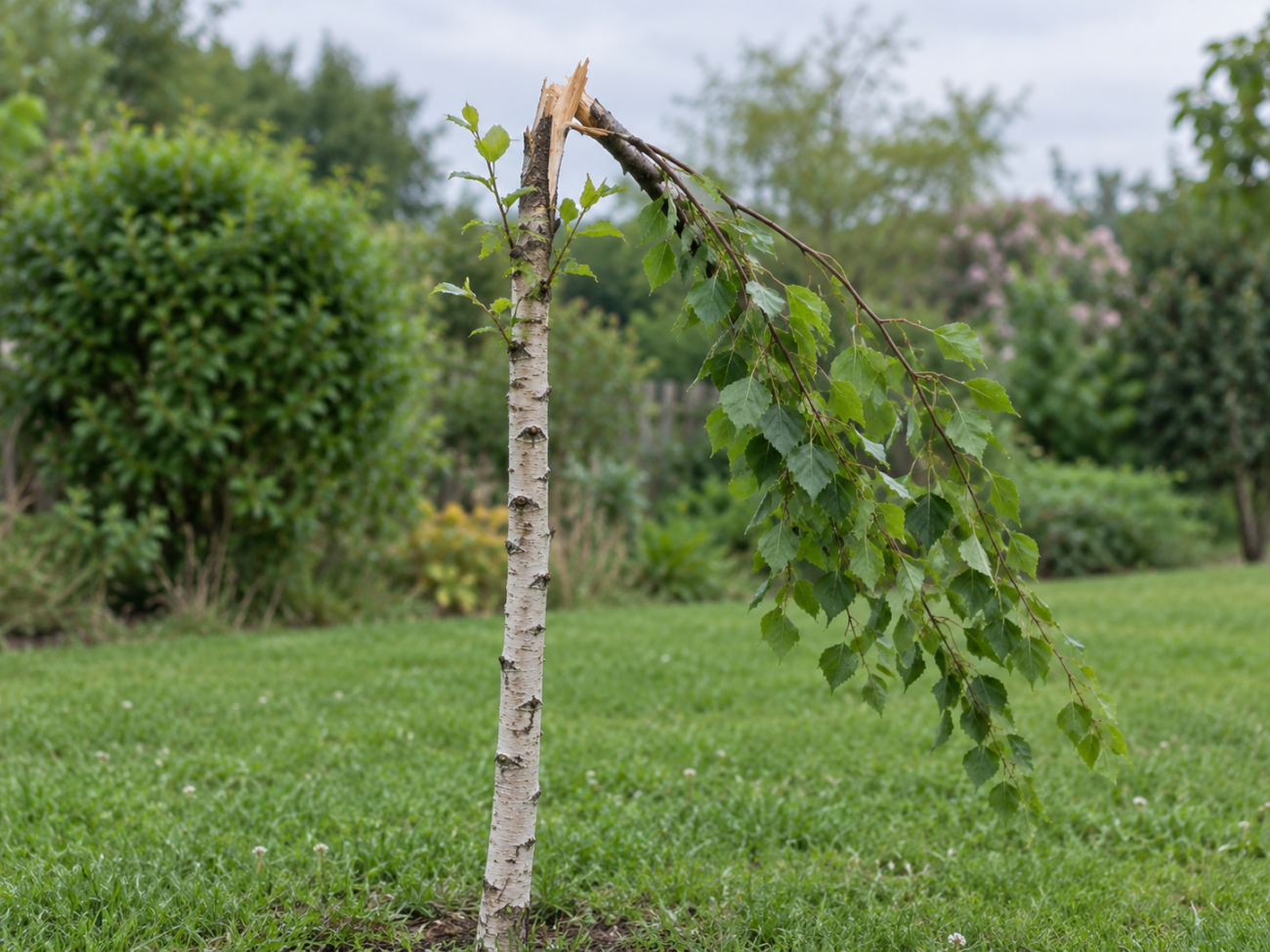
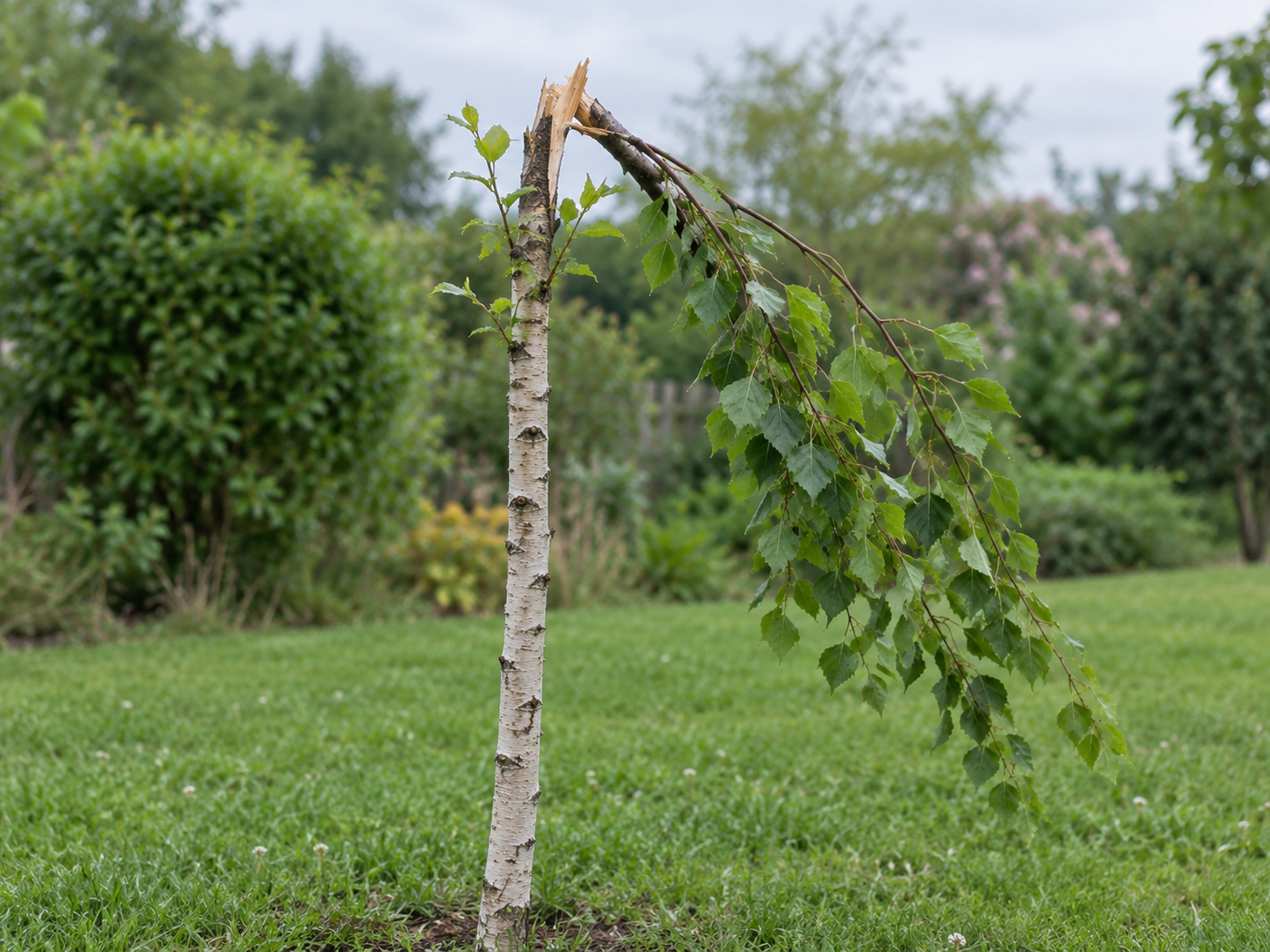
What do you do when the one part of your young tree that was growing upward is suddenly lying on the grass?
Maybe the wind snapped it. Maybe a deer chewed it, or the mower caught it. Either way, the tree now stops at a stump, and you want to know if it will ever grow taller again.
Yes, it can. A young tree grows a new top from the shoots just below the break. What you do in the next few weeks decides whether it grows back with one strong main stem or with several weak ones.
What happened with my own young birches
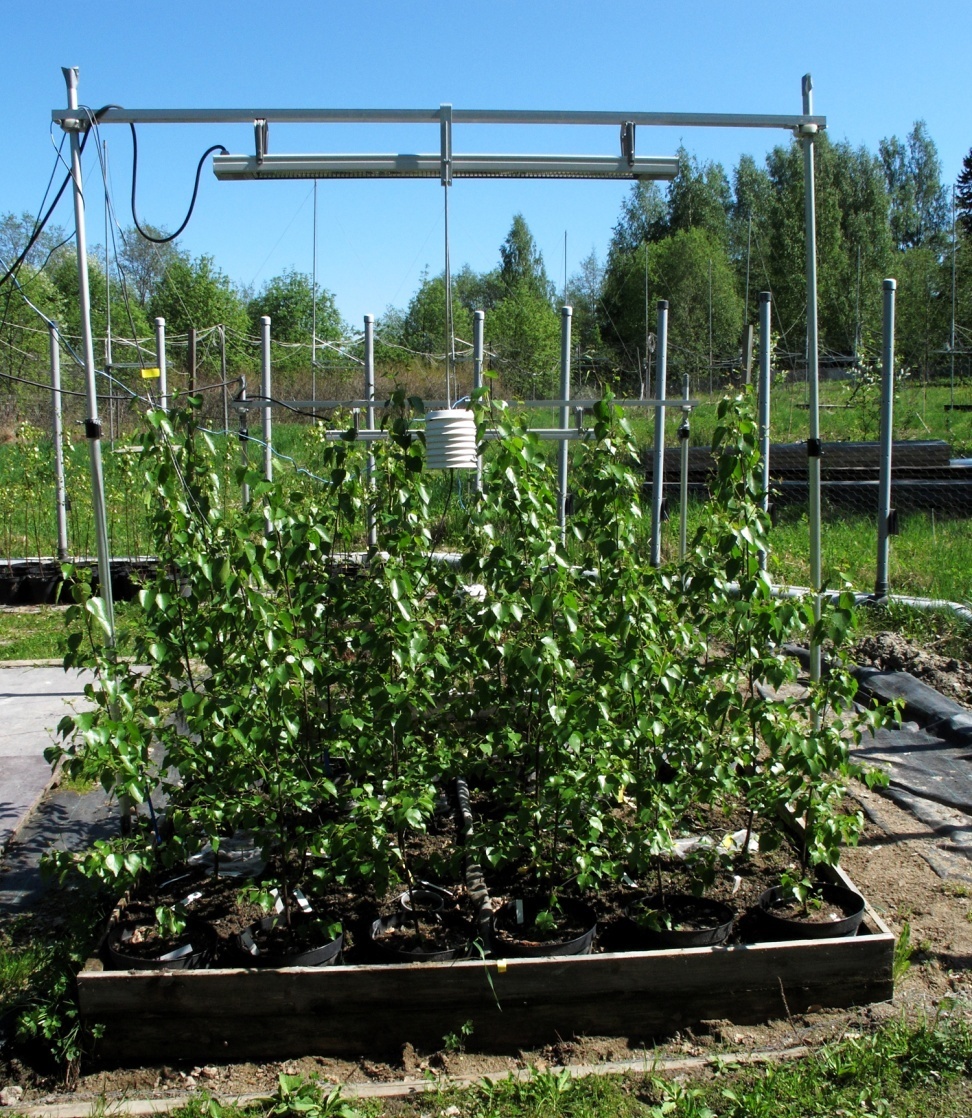
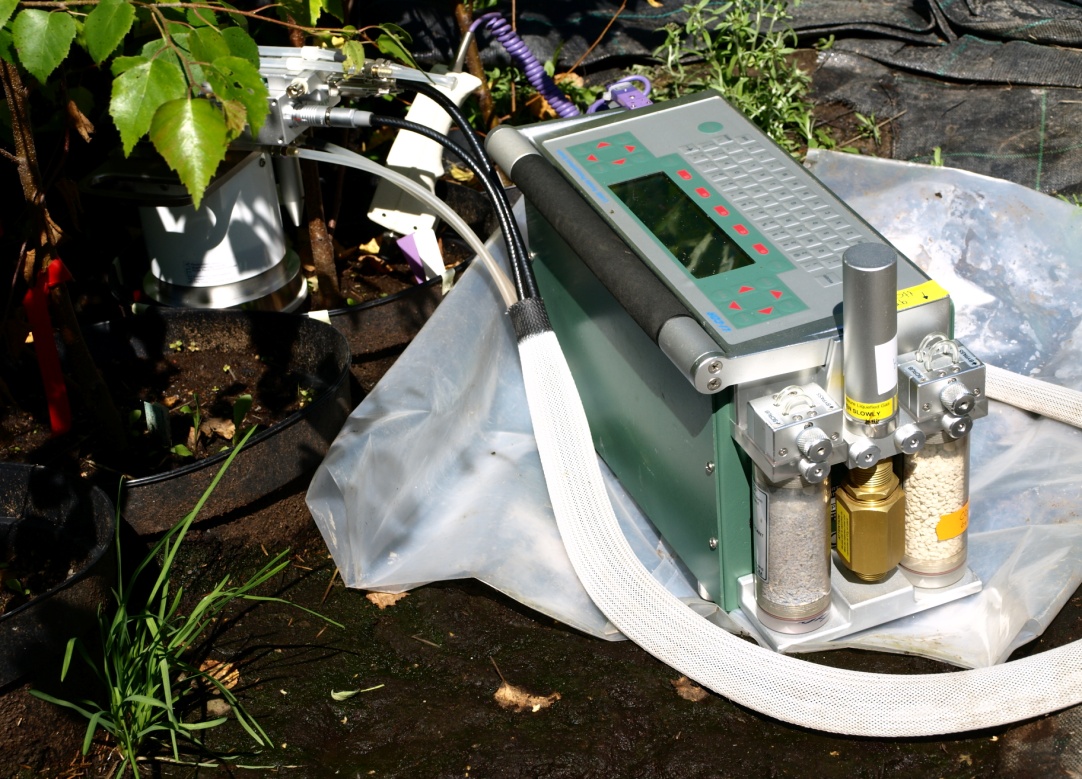
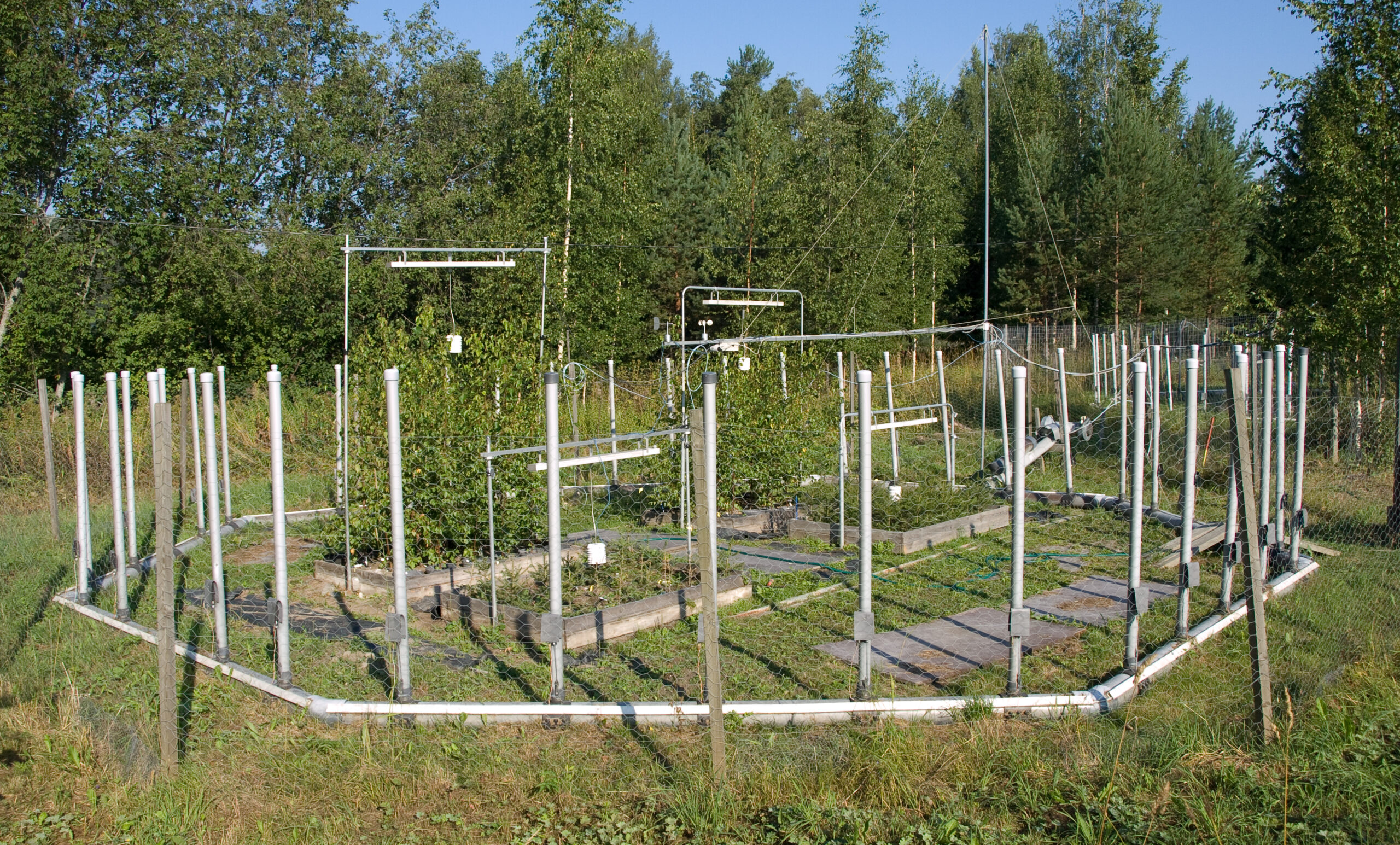
For a full growing season, I measured the height of 192 young silver birch trees every three weeks, from a pen mark at the base of the stem to the tip of the main stem. So the top of each tree was something I looked at closely on every visit.
Early on, a few of the saplings had weak stems that broke….
In an experiment, every tree has to be comparable with the others, and a tree that has lost its top grows differently from one that has not. So I replaced those saplings with spare trees of the same type, to keep the results fair.
In your garden you do not need to do that. You want the tree you have to recover, and in most cases it can.
Later in the season, I had the opposite problem…
Some of the trees had grown taller, and after wind and rain a few of them were bending over. I was in the middle of the experiment and could not replace them, so I supported them with a stick so they could keep growing upright. That is the same thing I would tell you to do with a new top shoot that is leaning.
My background is also in plant biology, and I have checked each step below against university extension guidance on repairing young trees.
What changes inside the tree when the top is gone
The top shoot of a young tree is called the leader. The bud at its tip does two jobs. It grows upward, and it releases a plant hormone that holds back the buds further down the stem. In plant biology this is called apical dominance. It is the reason a young tree normally has one main stem instead of many.
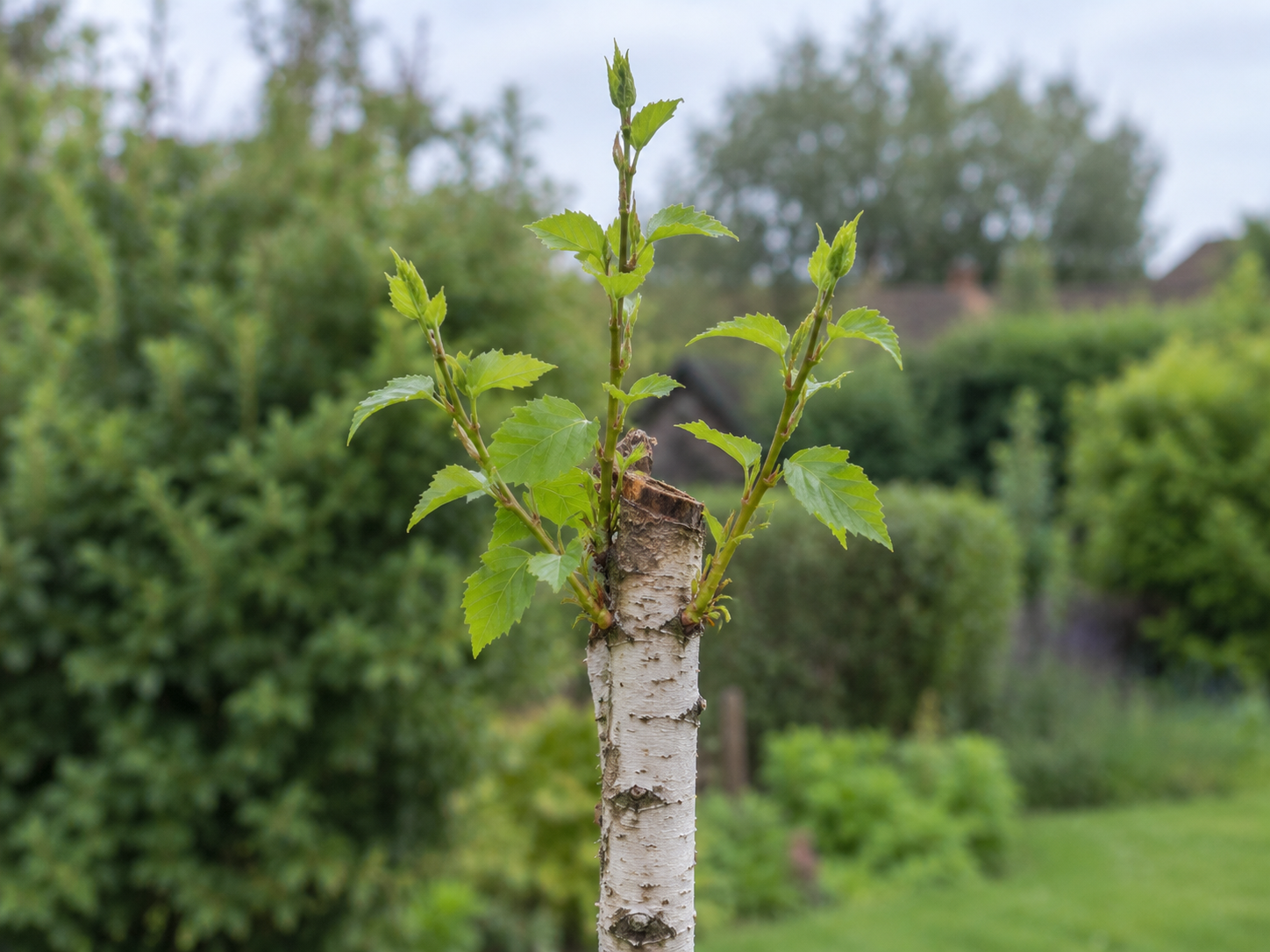
When the leader is lost, the hormone from the tip is gone too. The buds and shoots just below the break are no longer held back, so they start to grow faster. Very often, two, three or more of them turn upward at the same time.
If you leave them, they can grow into several main stems of the same size, all starting from the same point. Colorado State University Extension calls these codominant trunks a major structural defect, and says trees with them are more likely to be damaged or fail under snow and wind. It also says structural pruning works best on young trees, because their shape is still easy to change (Colorado State University Extension).
So losing the top is not the main problem. The main problem is what grows back if nobody steps in.
Today: clean up the break
Look at where the stem broke. If the end is torn, split or hanging, cut it off cleanly with sharp pruners, just above a healthy bud or side shoot. A clean cut closes over better than ragged wood.
Do not paint or seal the cut. Leave it open to the air.
Then water the tree if the soil is dry. The tree still has most of its leaves, and those leaves are what it will use to grow a new top.
Over the next few weeks: choose one new top
Once new shoots start growing below the break, pick the one you want to become the new leader. Iowa State University Extension advises choosing one healthy, upright shoot closest to the original leader (Iowa State University Extension). If two look equally good, the University of California guide says to choose the more vigorous one if it is growing upright, and otherwise the straighter one.
Now shorten the other upright shoots near the top, so the one you chose stays taller than them. I would cut them back by about half rather than removing them all at once. They still have leaves that feed the tree, and you can take them off completely later.
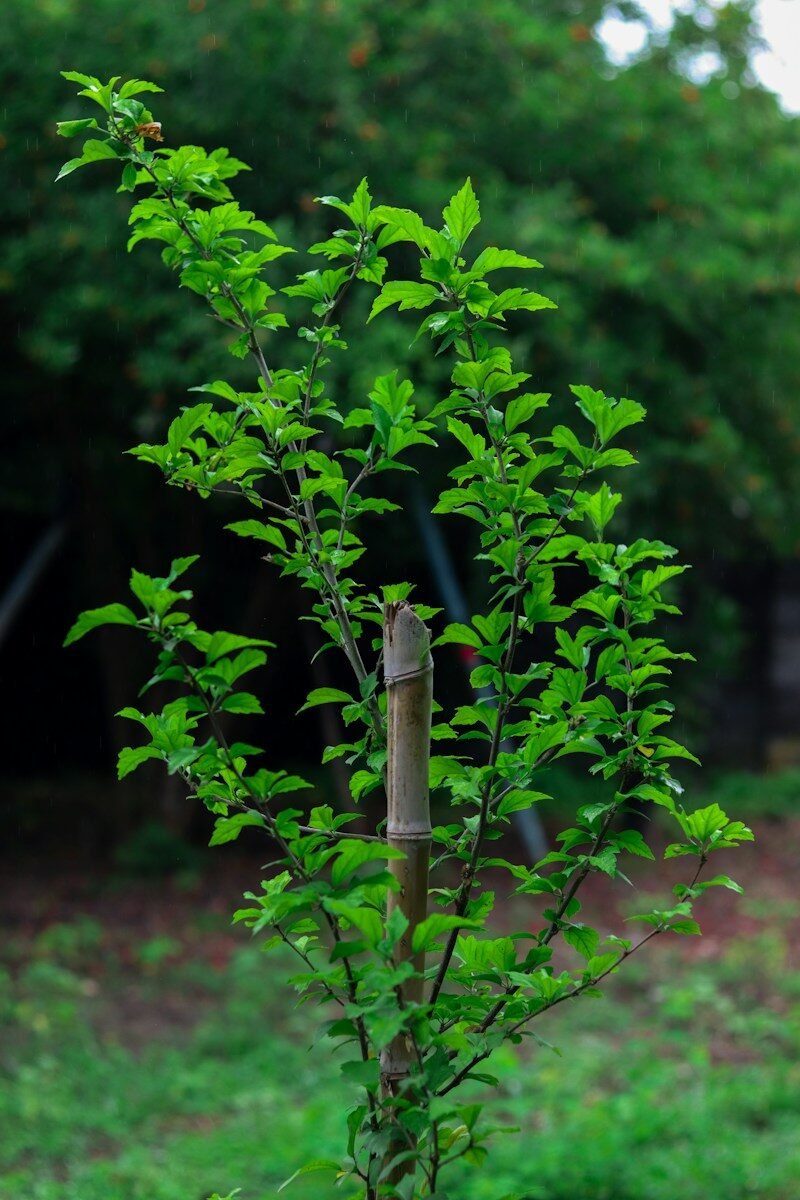
If your chosen shoot is leaning, support it, as I did with my bending birches. Tie it gently to a thin cane or small stake that lines up with the old trunk. Iowa State suggests soft, flexible ties and leaving the support on for one growing season. Look at the tie every few weeks, because a young shoot thickens quickly and a tight tie can cut into it.
If it is a pine, spruce or fir
Conifers work differently. Most broadleaf trees, like birch, maple, cherry or apple, grow new shoots from buds just below the break. Pines, spruces and firs usually do not grow new shoots from bare wood.
On these trees, look at the ring of branches just below the break. Choose one of those branches, bend it upward gently, and tie it to a small splint fixed along the trunk. Over the season it will start growing upward and take over as the new top. Take the splint off after one growing season.
Next spring: check what has grown
By the next spring, you should see which shoot has taken the lead. If you chose well, it will be clearly taller than the others.
This is the time to tidy up again. If any of the other shoots have caught up with your new leader, shorten them again. If the new leader is growing straight, take away the cane.
If you measure your tree’s height, it will have dropped when the top broke. I would write down the date and how much was lost, and from then on measure to the tip of the new leader. I would also measure the stem diameter at a marked spot near the base. The trunk keeps thickening while the top grows back, and seeing that number go up tells you the tree is doing fine even before it regains its height.
The next two years: what to expect
Iowa State says most young trees re-establish a strong central leader within a year or two. In that time, the new leader grows up past the old break, and after a few seasons the bend where it joined the old stem becomes hard to see.
The tree may end up a little shorter than it would have been, but it will keep growing taller for the rest of its life.
When I would call someone
I would ask a qualified arborist to look at the tree if the trunk is split down the middle rather than just snapped at the top, if the bark has been stripped all the way around the trunk, or if the tree is large enough that you cannot reach the break safely.
On a broadleaf tree, if no new shoots have appeared below the break by the following spring, the part above ground may have died back further than you can see. Scratch a twig with your thumbnail. Green underneath means it is still alive.
If your tree is tall and thin rather than broken, see My Young Tree Grew Tall but Stayed Thin. If it has hardly grown since you planted it, read I Planted a Tree Two Years Ago and It Is Not Growing.
FAQs
Will a tree grow taller if the top is broken off?
Yes. A young tree grows a new top from the shoots just below the break and keeps growing taller once one of them takes over.
What happens when a tree loses its top?
The shoots below the break are no longer held back by the top bud, so they start growing faster, and often several of them turn upward together.
How do I choose a new leader?
Pick one healthy, upright shoot closest to the old top. If two look equally good, choose the stronger one if it is upright, or the straighter one if not. Shorten the others.
Can a pine or spruce grow a new top?
Usually from the ring of branches just below the break. Bend one branch up gently and tie it to a splint along the trunk for one growing season.
How long does it take to recover?
Most young trees have a strong new leader within a year or two.
Is it bad for a tree to have two main stems?
Two equal stems starting at the same point can split apart as the tree gets bigger, so it is best to choose one leader while the tree is young.