


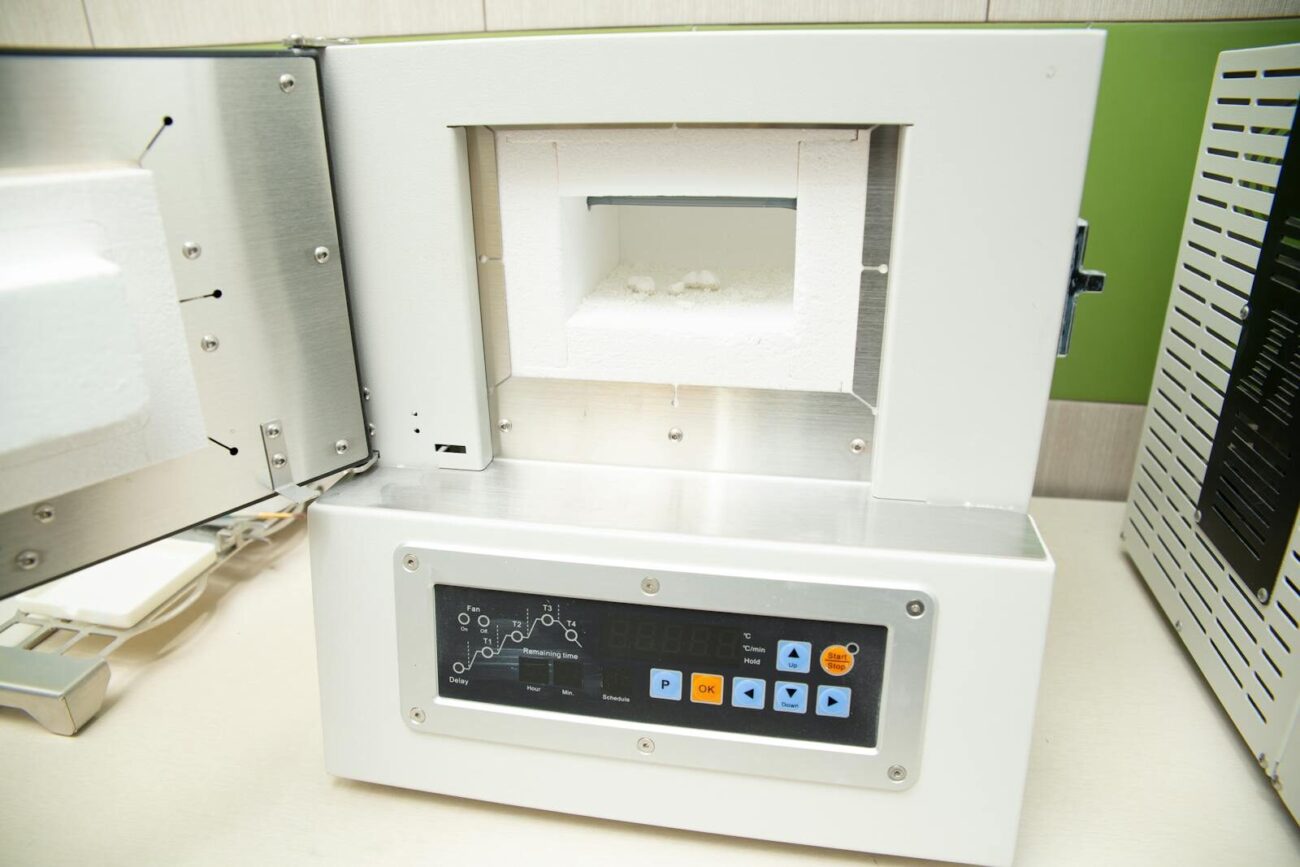
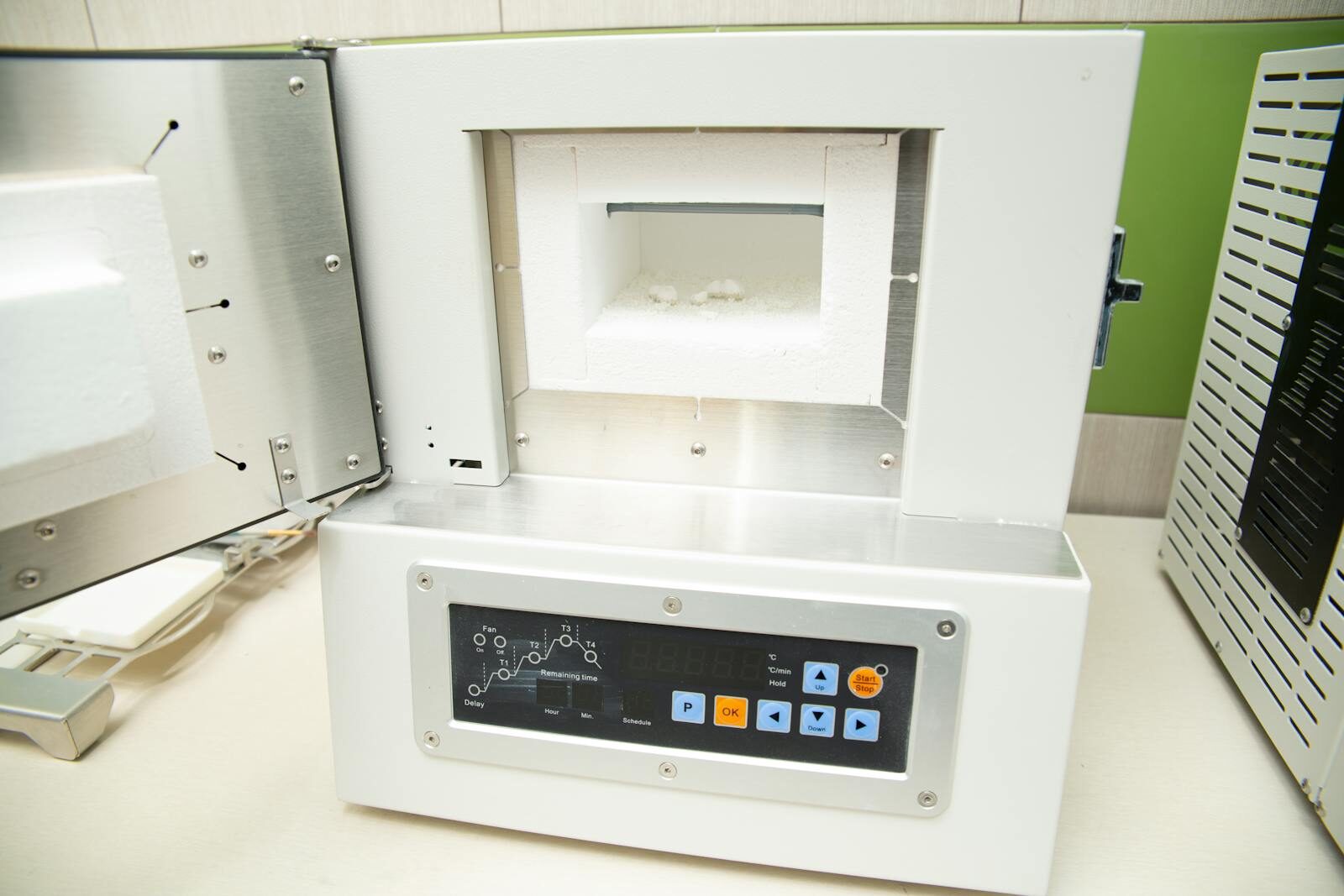
A laboratory drying oven is one of those pieces of equipment that looks completely unexciting until you realise how many analyses depend on it.
In my research I used a drying oven to dry leaf samples at around 60°C for three days to obtain dry weight measurements. Those dry weight values were essential for calculating specific leaf area and understanding how the trees were allocating resources under different treatment conditions. Without the oven, that part of the analysis simply could not have happened.
For soil research the oven is equally fundamental. Soil water content, bulk density, organic matter content by loss on ignition, and dry weight of soil samples for carbon analysis all require drying samples to a constant mass at a defined temperature. The oven is not a peripheral piece of equipment. It is central to the accuracy of your data.
What a Laboratory Drying Oven Does
A laboratory drying oven heats samples to a defined temperature and holds them there for long enough to drive off all free water. For soil water content determination the standard temperature is 105°C held for 24 hours. For organic matter loss on ignition the temperature is much higher, typically 400 to 550°C, which requires a muffle furnace rather than a standard drying oven.
For biological samples like leaves, roots, and plant tissue where you want to remove water without destroying organic compounds, lower temperatures are used. In my work I dried at 60°C, which removes water effectively while preserving the organic matter for subsequent analysis.
The key performance requirements for a laboratory drying oven are temperature accuracy, temperature uniformity across the chamber, and stability over time. A hotspot in one corner of the chamber means samples dried there reach a different final moisture content than samples elsewhere. For research where you are comparing dry weights across many samples, that kind of systematic error is unacceptable.
Types of Laboratory Drying Ovens
Gravity convection ovens use natural air circulation where hot air rises and cooler air falls. They are simple, affordable, and adequate for many routine drying applications. The trade-off is lower temperature uniformity compared to forced air designs, with temperature variation of several degrees possible between the top and bottom of the chamber.
Forced air convection ovens use a fan to circulate heated air throughout the chamber. This dramatically improves temperature uniformity and reduces drying time compared to gravity convection. For research requiring consistent results across many samples, forced air convection is the preferred choice. Most laboratory-grade ovens sold for scientific applications use forced air convection.
Vacuum ovens remove air from the chamber and dry under reduced pressure. This allows lower temperature drying for heat-sensitive materials and speeds up moisture removal significantly. For most soil and plant sample drying in ecological research, vacuum ovens are not necessary and standard forced air convection is sufficient.
What to Look for When Buying
Temperature range and accuracy. For soil water content at 105°C and plant tissue drying at 60°C, any oven with a range of 50°C to at least 200°C covers both applications. Look for stated temperature accuracy of plus or minus 1°C or better. Cheaper ovens may claim accuracy but deliver much wider variation in practice.
Chamber size. Depends entirely on your sample throughput. For occasional small-scale analyses, a bench-top oven with 20 to 50 litre capacity handles most research needs. For programmes drying large numbers of soil samples simultaneously, a larger chamber saves time over multiple drying cycles.
Digital temperature controller. A digital PID controller maintains temperature far more accurately than a simple dial thermostat. For research applications always choose digital control. The display should show actual chamber temperature not just set point.
Forced air circulation. As discussed above, forced air gives better uniformity than gravity convection. For research use, forced air is worth the modest additional cost.
Safety features. Ovens that operate unattended overnight need over-temperature protection that cuts power if the set temperature is exceeded. This protects both samples and the laboratory from overheating incidents.
Shelf configuration. Removable wire grid shelves that can be repositioned allow you to accommodate samples of different heights. Check how many shelves are included and whether additional shelves are available.
What I Would Tell Someone Setting Up a Small Research Lab
Based on my own experience with sample drying, a few practical points are worth knowing before you buy.
Load the oven evenly and avoid overcrowding. Air needs to circulate around samples for uniform drying. Stacking containers or pressing them against the oven walls reduces airflow and creates inconsistent drying.
Always dry samples to constant mass rather than assuming a fixed time is sufficient. Weigh periodically until the mass stops changing. Large or dense samples may need significantly longer than the standard protocol suggests.
Label containers clearly before they go in. Pencil writes well on most container surfaces even at high temperatures. Ink markers and adhesive labels can fail at 105°C and contaminate your samples or make them unidentifiable.
Keep a log of which samples went in, at what temperature, and when they came out. In a research context this is part of your data trail and matters for reproducibility.
Common Questions About Laboratory Drying Ovens
What temperature should I use for soil water content?
The standard for soil water content determination is 105°C for 24 hours. This drives off all free water without burning organic matter. For organic-rich soils, some protocols use 70°C to avoid driving off structural water from clay minerals, though 105°C remains the most widely used standard.
Can I use a kitchen oven for sample drying?
Not for research. Kitchen ovens lack the temperature accuracy, uniformity, and stability required for scientific measurements. Temperature variation of 20 to 30°C across the chamber is common in domestic ovens. A dedicated laboratory oven is a non-negotiable requirement for reproducible research data.
How long does it take to dry soil samples?
At 105°C, most mineral soil samples reach constant mass within 24 hours. Organic-rich samples, peat, and very large samples may need longer. The only reliable way to know is to weigh at intervals until the mass stabilises.
What size oven do I need?
For occasional small-scale research with samples in 50 to 200 ml containers, a 20 to 30 litre bench-top oven is usually sufficient. For programmes drying dozens of samples simultaneously, a 50 litre or larger chamber saves time. Measure your largest likely sample load before choosing.
Is a forced air oven worth the extra cost over gravity convection?
Yes for research applications. The improved temperature uniformity across the chamber directly affects the reproducibility of your measurements, particularly when comparing many samples dried in the same batch.