



The Importance of Diameter in Forest Biogeochemistry
Stem diameter is a critical indicator of total plant biomass. While height shows a tree’s competition for light in the canopy, diameter shows its ability to store nutrients and structural carbon.
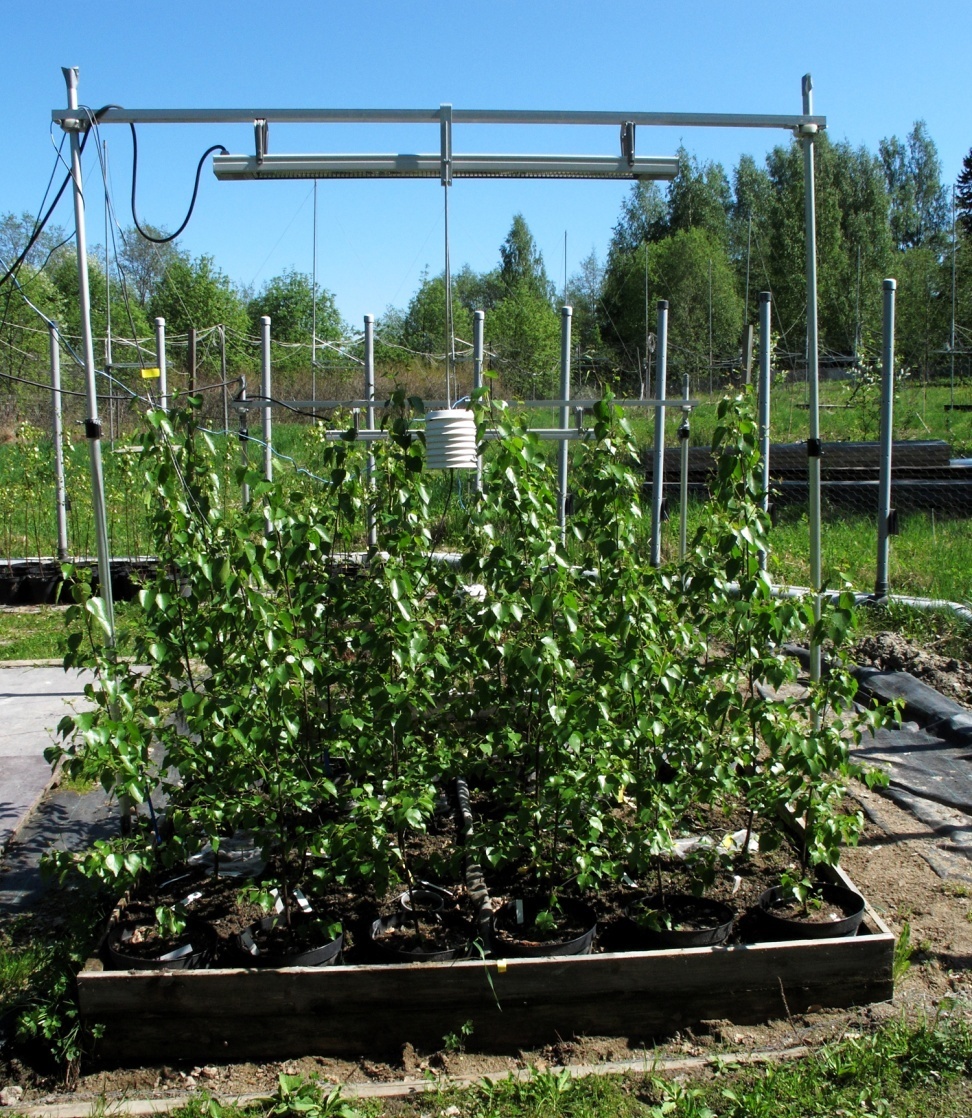
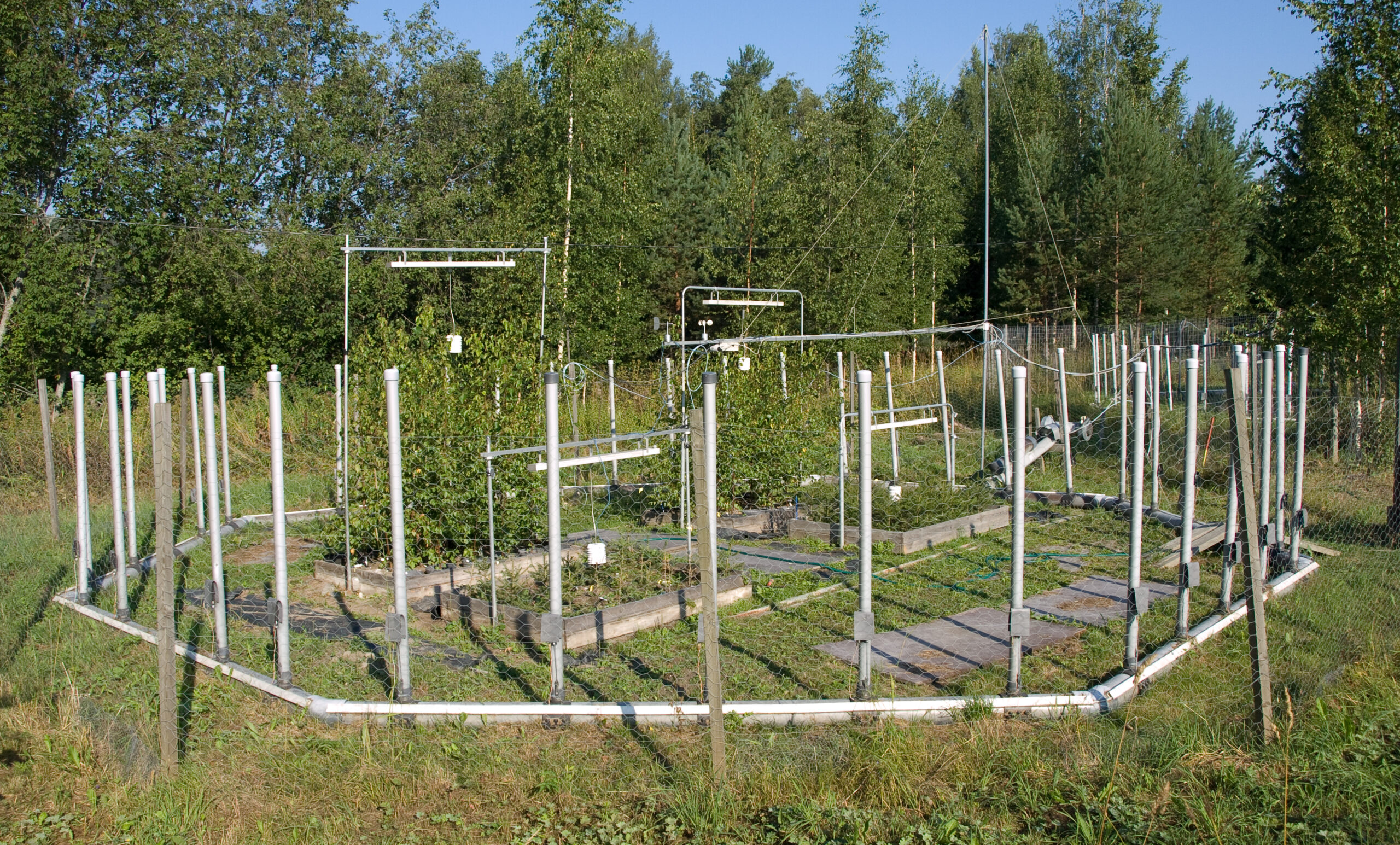
In my study on Silver Birch (Betula pendula), we examined how a moderate temperature increase of +0.9°C changed the way trees allocated their energy.
Using high-precision calipers, I was able to see small differences in growth between different tree types. Without accurate diameter data, the small “trade-offs” trees make under ozone stress would not be visible.
Measuring diameter also helps us calculate basal area, which is an important value for estimating how much carbon a forest can store.
Finding the Right Timing for Measuring Tree Growth
When I first started field experiments, people often asked:
“Why not measure every day?”
In science, more data is not always better. Measuring too often can be a mistake because you start recording small changes caused by weather instead of real growth.
Trees change during the day. They can swell after rain and shrink a little in hot, dry conditions. If you measure too frequently, you mostly capture these short-term changes, not true growth.
That’s why I measured every 2 to 3 weeks. This is a good balance. It is long enough for the tree to form new wood, but short enough to catch fast growth periods during the peak of summer.
The Tool of Choice: Scaling Equipment to Tree Size
Choosing the right tool depends entirely on the scale of your project and the level of precision required. While some researchers use large metric meters or diameter tapes for broad forest inventory, my experiment with young birch trees required a more surgical approach.
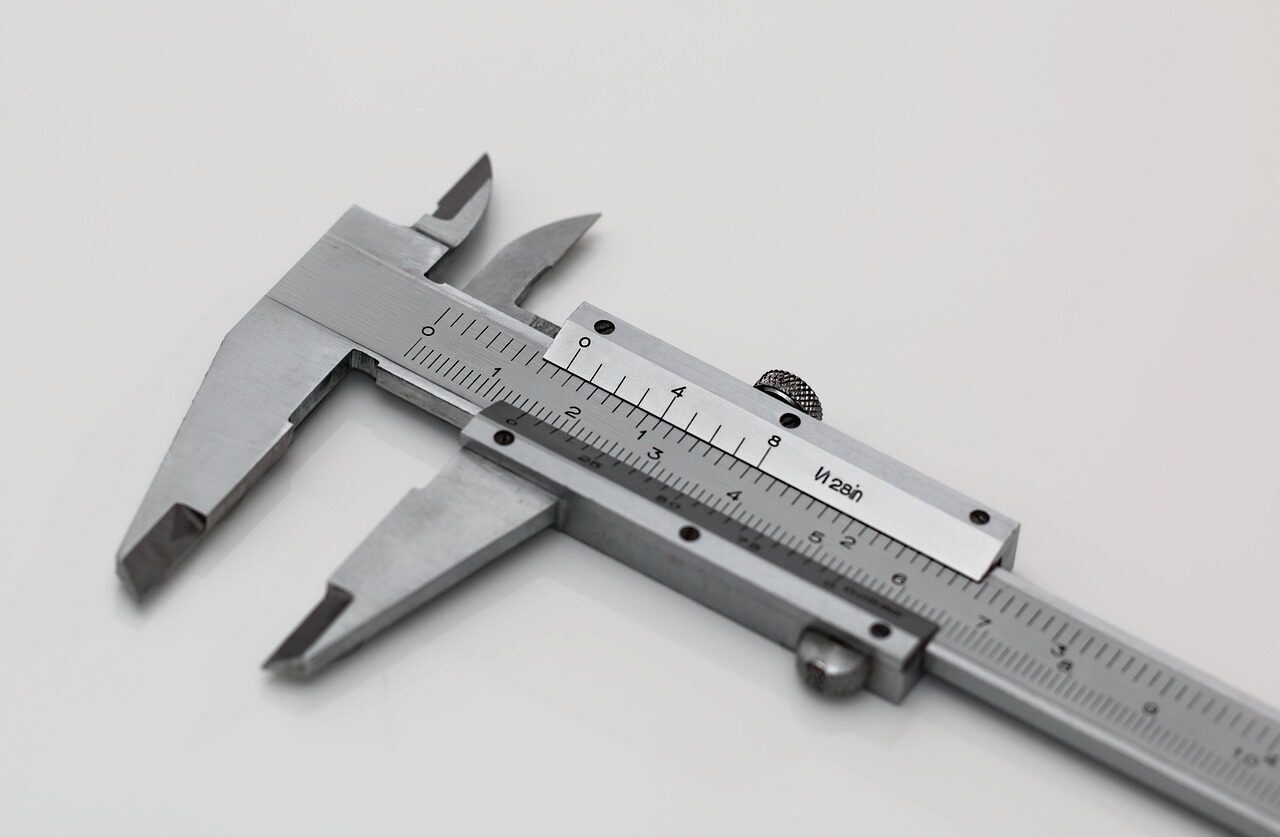
For high-resolution research on saplings, the speed and accuracy of a small Vernier monocaliper are unmatched.

Why the Vernier Monocaliper?
Precision: It allows for measurements down to the millimeter (mm) or even sub-millimeter level. This is vital when measuring growth increments over short, three-week intervals where changes might be microscopic.
Consistency: The parallel jaws of a monocaliper ensure you are measuring the true diameter, the widest part of the cross-section, rather than an offset angle that a standard ruler might provide.
Non-destructive: Unlike invasive sensors, you can measure the same tree repeatedly without damaging the delicate cambium layer or the bark.
Selecting the Right Tool for the Job
For Small to Average Trees: A small monocaliper works incredibly well. It is significantly faster to maneuver in tight experimental plots and offers the high-resolution data needed for young, fast-growing stems.
For Bigger Trees: If you are dealing with mature trees in an old-growth forest, you will naturally need larger tools. In these cases, researchers typically switch to large-scale forest calipers or DBH (Diameter at Breast Height) tapes, which are designed to wrap around substantial circumferences.
In professional research, “how to find stem width” is about matching the tool to the specimen. For my 192 birch replicates, the monocaliper provided the perfect balance of speed, maneuverability, and scientific rigor.
The “Mean Value” Methodology
In my experiment involving 192 trees, I couldn’t simply take one measurement and move on. To ensure the data was strong enough for ANOVA (Analysis of Variance), I developed a systematic approach to account for natural variations in stem shape (tapering).
1. Data Collection in the Field
Fieldwork requires organization. When I headed out to the plots, I always carried a standardized data sheet and a reliable pen. Each sheet included columns for the date, plot number, genotype, and specific tree ID.
Tip: Write everything down manually first. While digital tablets are popular, a paper data sheet doesn’t suffer from screen glare in the sun or battery death in the cold. Recording by hand allows you to spot “weird” numbers instantly, if a tree suddenly looks smaller than it was three weeks ago, you can re-measure on the spot.
2. The Two-Point Measurement (Base and Middle)
Trees are not perfect cylinders; they are tapered. If you only measure the base, you overestimate the total biomass.
-
The Base: Measure just above the soil collar (or your marked point).
-
The Middle: Measure halfway up the main leader (the primary stem).
3. Calculating the Mean Value in Excel
After fieldwork, all measurements are entered into Excel, where the main analysis begins. First, the average stem diameter for each tree is calculated using the base and middle measurements:
Mean Diameter = (Base Diameter + Middle Diameter) / 2
Next, growth is calculated by comparing mean values over time. The change in diameter is found by subtracting the previous measurement from the current one. This shows how much each tree has grown between measurement periods.
This also allows calculation of Relative Growth Rate (RGR), which helps track how quickly the stem expands over each measurement interval (about 2 to 3 weeks).
Field Results: What the Caliper Revealed
Using this method, the results provided clear evidence of genetic variation. We found that genotype gt15 consistently exhibited thicker stems than gt14, regardless of the environmental treatment.
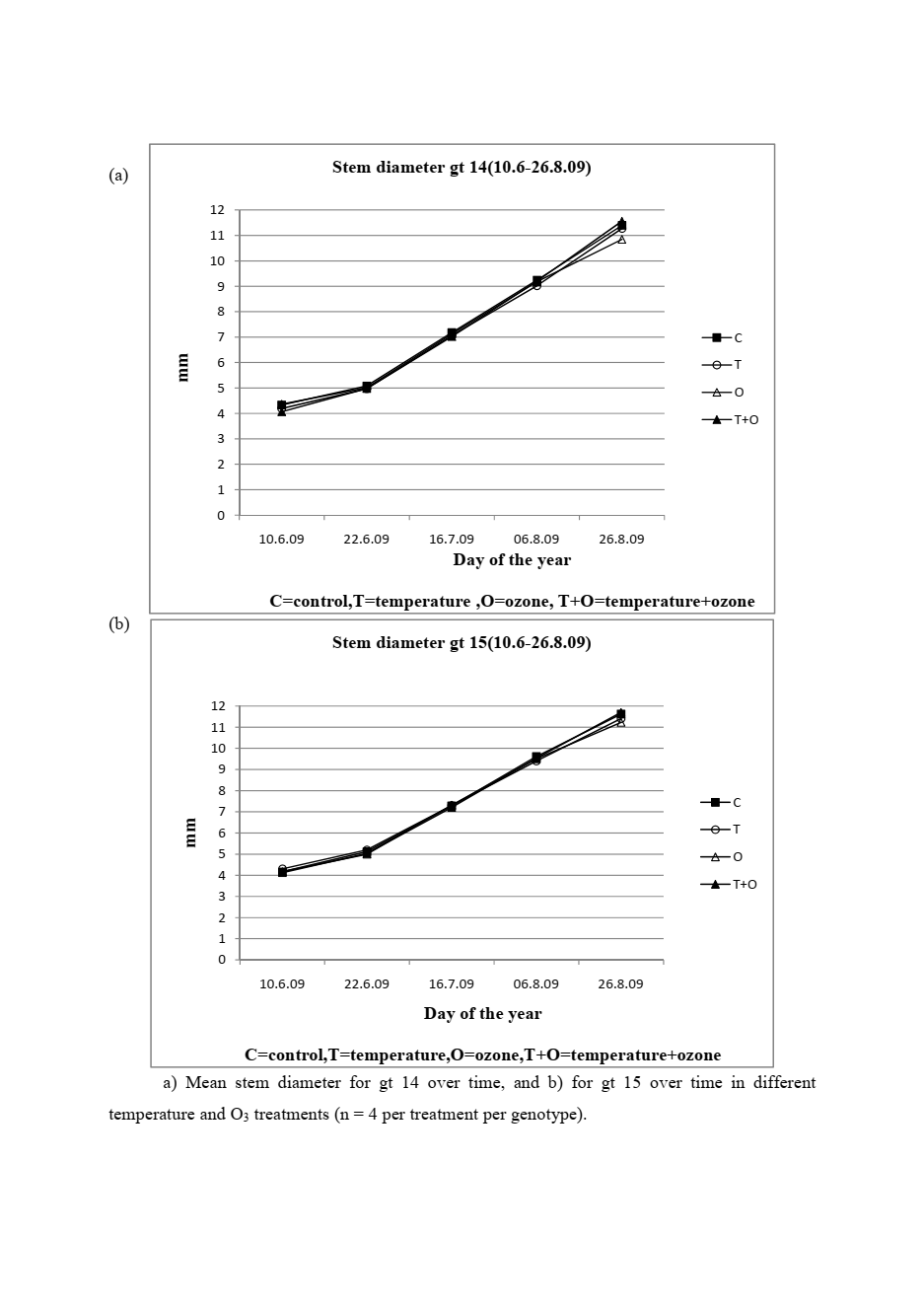
More importantly, the precision of the Vernier caliper allowed us to see that ozone reduced stem diameter in gt14 toward the end of the season, but only under ambient temperatures. In the plots where we used infrared heaters to raise the temperature, that negative ozone effect was mitigated..
Tips for Field Researchers
If you are heading into the field, keep these “lessons from the field” in mind:
Avoid “Caliper Tilt”: Ensure the jaws are perfectly perpendicular to the stem.
Watch the Pressure: Don’t squeeze the jaws too tight. On young birch trees, the bark is soft. Squeezing too hard will give you an artificially low reading.
The “Double Turn” Technique: For stems that aren’t perfectly round, take one measurement, then turn the caliper 90 degrees and take a second. Average these two to get a “true” diameter.
Conclusion
In forest science, conclusions about climate change, carbon cycling, or tree growth are only as reliable as the measurements they are built on.
Stem diameter provides a clear window into how trees respond to environmental stress and store carbon. Using the Vernier monocaliper, careful field measurements, and structured data analysis, small changes in growth can be detected and turned into meaningful scientific results.
By combining precise measurements with consistent methods, simple field observations become strong evidence for understanding how forests function under changing environmental conditions.
FAQs
How do you measure stem diameter for a plant?
The best way is to use a Vernier caliper. Place the jaws around the stem, ensuring the tool is level. For scientific accuracy, take measurements at two points (base and middle) and calculate the average.
Why is a paper data sheet better than a phone in the field?
Paper doesn’t have battery issues, it’s easier to read in direct sunlight, and it allows you to quickly compare today’s measurement with the previous date to ensure there are no errors before you leave the site.
What is the best way to evaluate growth?
Enter your base and middle measurements into Excel. Calculate the mean diameter for each date, and then compare those means over time to see the actual growth rate.
How often should I measure stem growth?
I measured every 2 to 3 weeks. Measuring every few days is pointless because the small daily changes are usually just water fluctuations rather than actual biomass growth.
What is the difference between a Vernier and a Digital Caliper?
A Vernier caliper uses a manual sliding scale, whereas a digital caliper uses an LCD screen. Verniers are preferred for remote field work because they don’t require batteries and are more durable.