


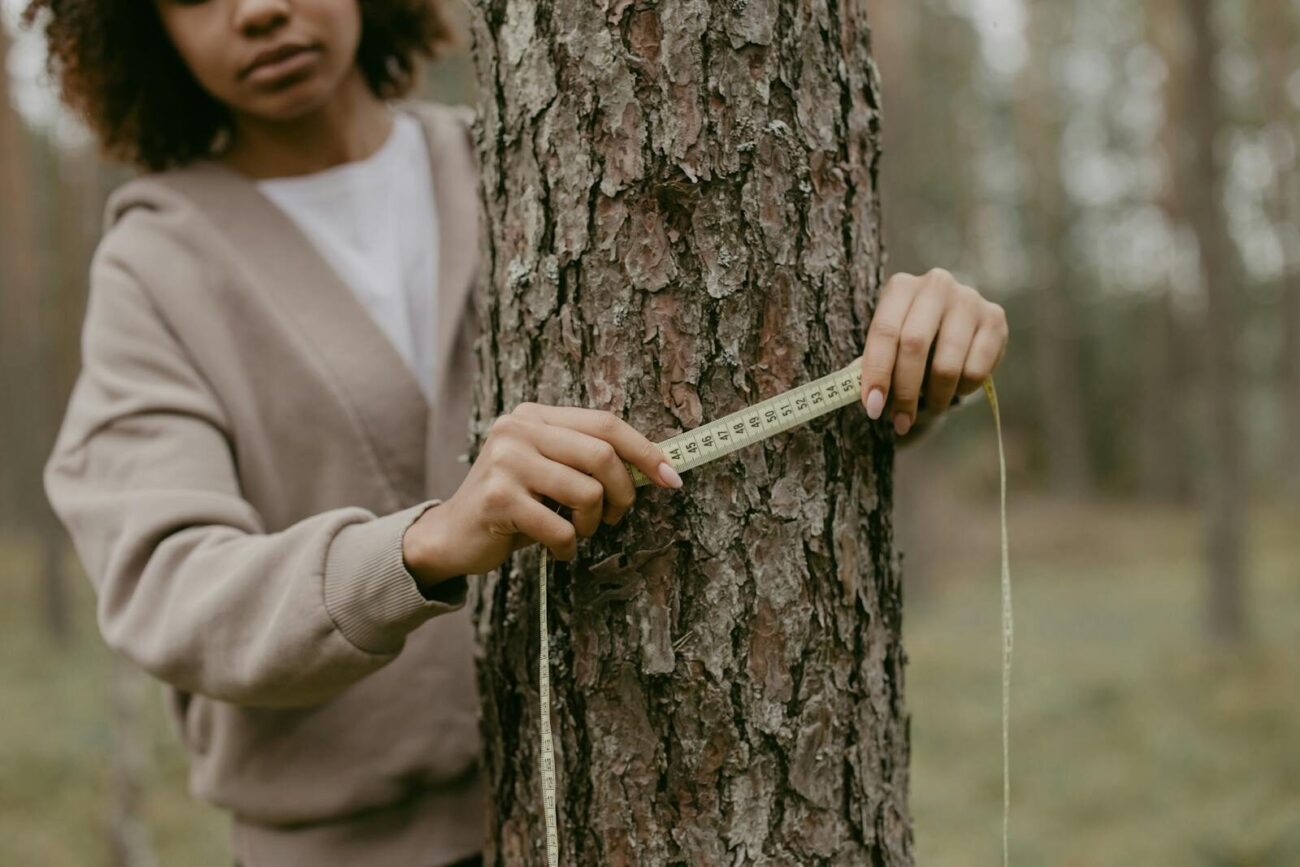
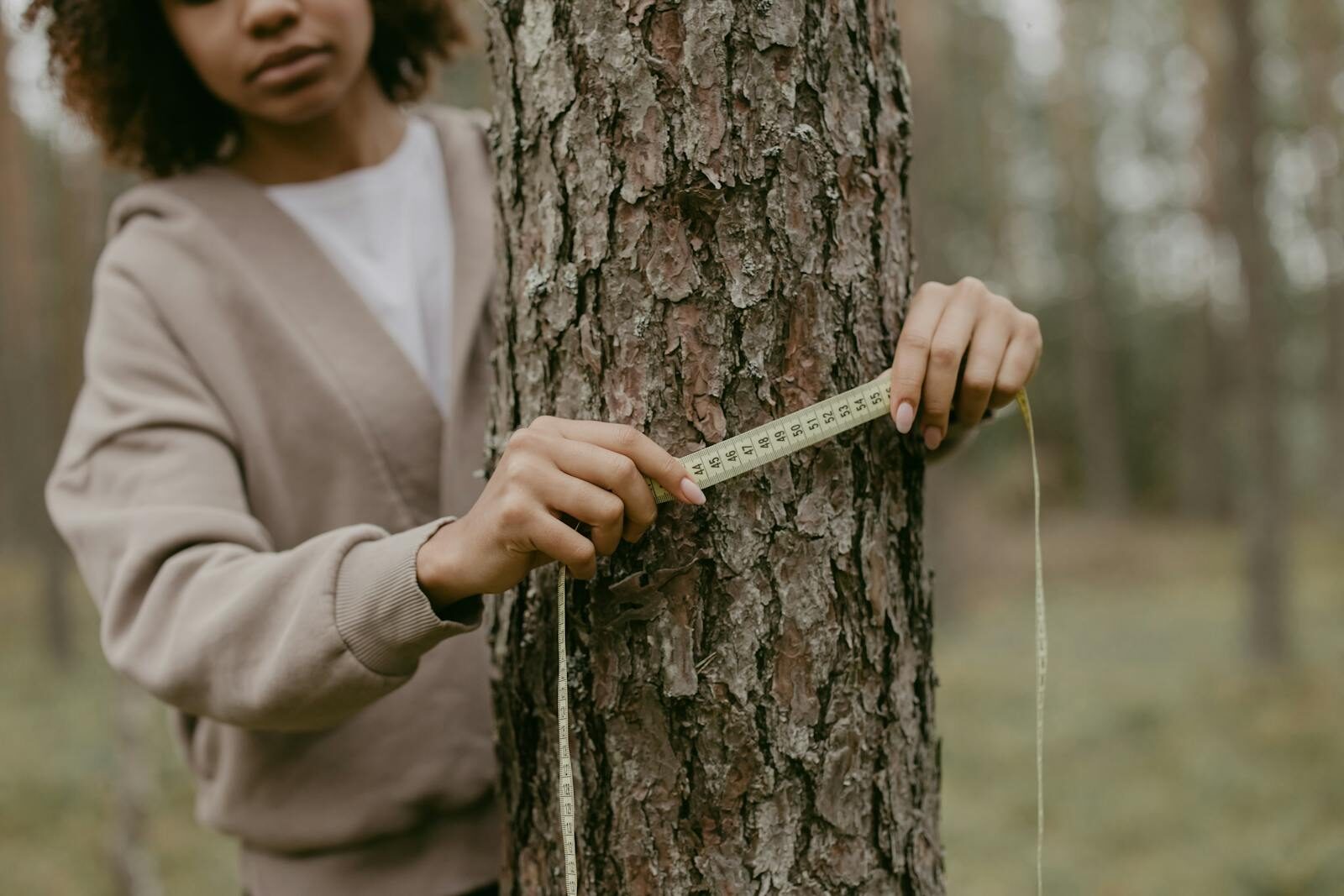
Measuring a tree trunk with a regular tape measure gives you circumference. What you actually need in most forest research and inventory work is diameter. Doing the maths every time, dividing circumference by pi, is tedious across hundreds of trees and introduces calculation errors into your dataset.
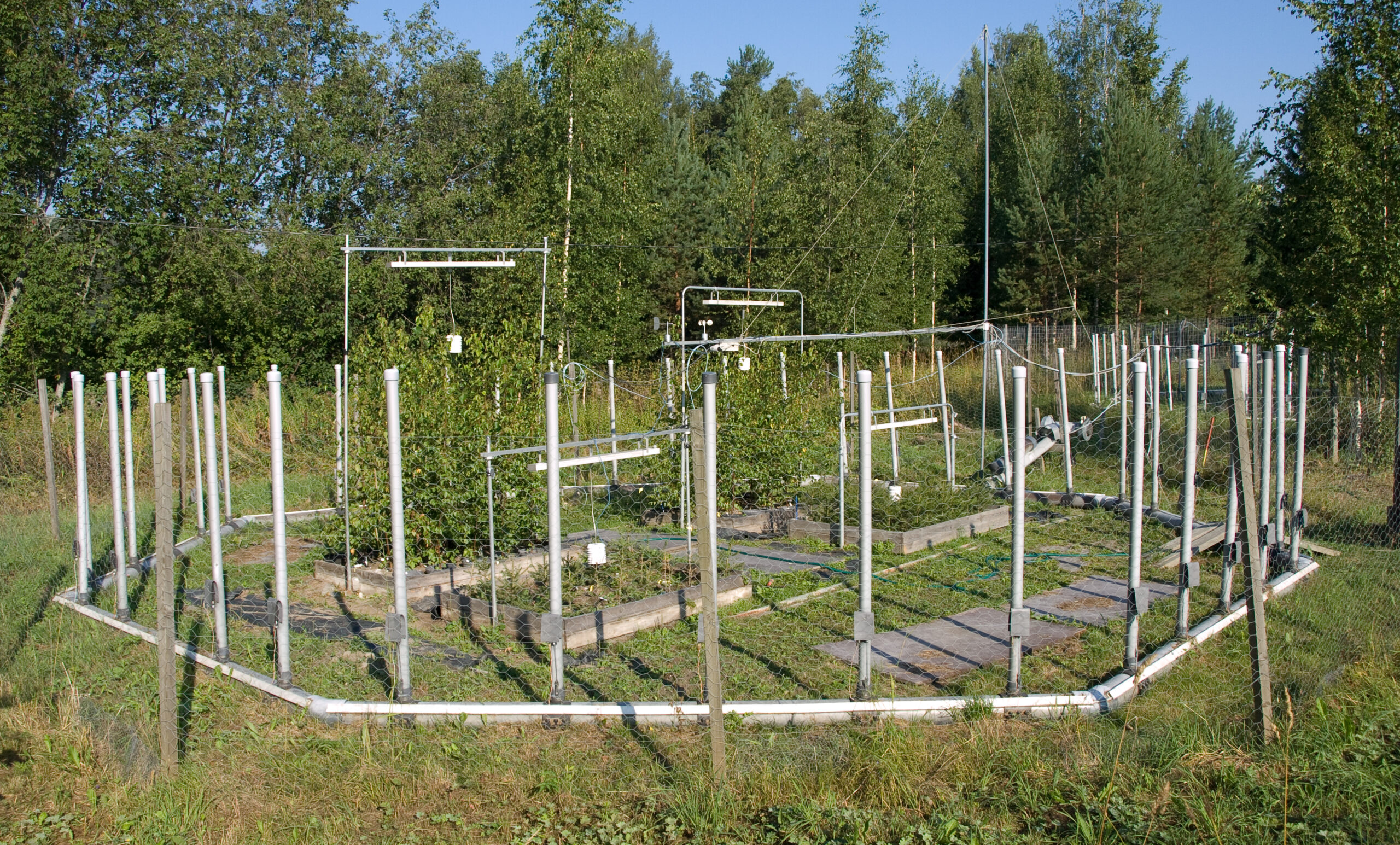
A DBH tape solves this by doing the conversion for you automatically. I measured stem diameter on 192 trees every three weeks throughout a full growing season. A DBH tape was part of that workflow and understanding exactly what it measures and how to read it correctly makes a real difference to data quality over a long field campaign.
What Is a DBH Tape?
DBH stands for diameter at breast height. Breast height is standardised at 1.3 metres above ground level in most European and international forestry protocols, though 1.37 metres is used in North American forestry. This standardised measurement height allows consistent comparisons between trees, sites, and studies over time.
A DBH tape looks like a standard measuring tape but its scale is calibrated in diameter units rather than length units. When you wrap it around a tree trunk and read the measurement, it shows you the diameter directly rather than the circumference. The tape does the pi calculation internally through its scale spacing.
This is the fundamental difference between a DBH tape and a normal tape measure. A normal tape gives you circumference in centimetres or inches. A DBH tape gives you diameter in centimetres or inches without any calculation needed.
How Does a DBH Tape Work?
The scale on a DBH tape is compressed relative to a standard tape by a factor of pi, approximately 3.14159. Every centimetre of actual tape length represents 1/pi centimeters of diameter. So when the tape wraps around a trunk with a circumference of 31.4 cm, the DBH tape reads 10 cm diameter directly.
This works on the assumption that the cross-section of the tree trunk is approximately circular at breast height. For most trees in practice this is close enough for standard inventory and research purposes. Strongly irregular or heavily buttressed trunks may require additional measurements or averaging of multiple diameter readings to get a reliable value.
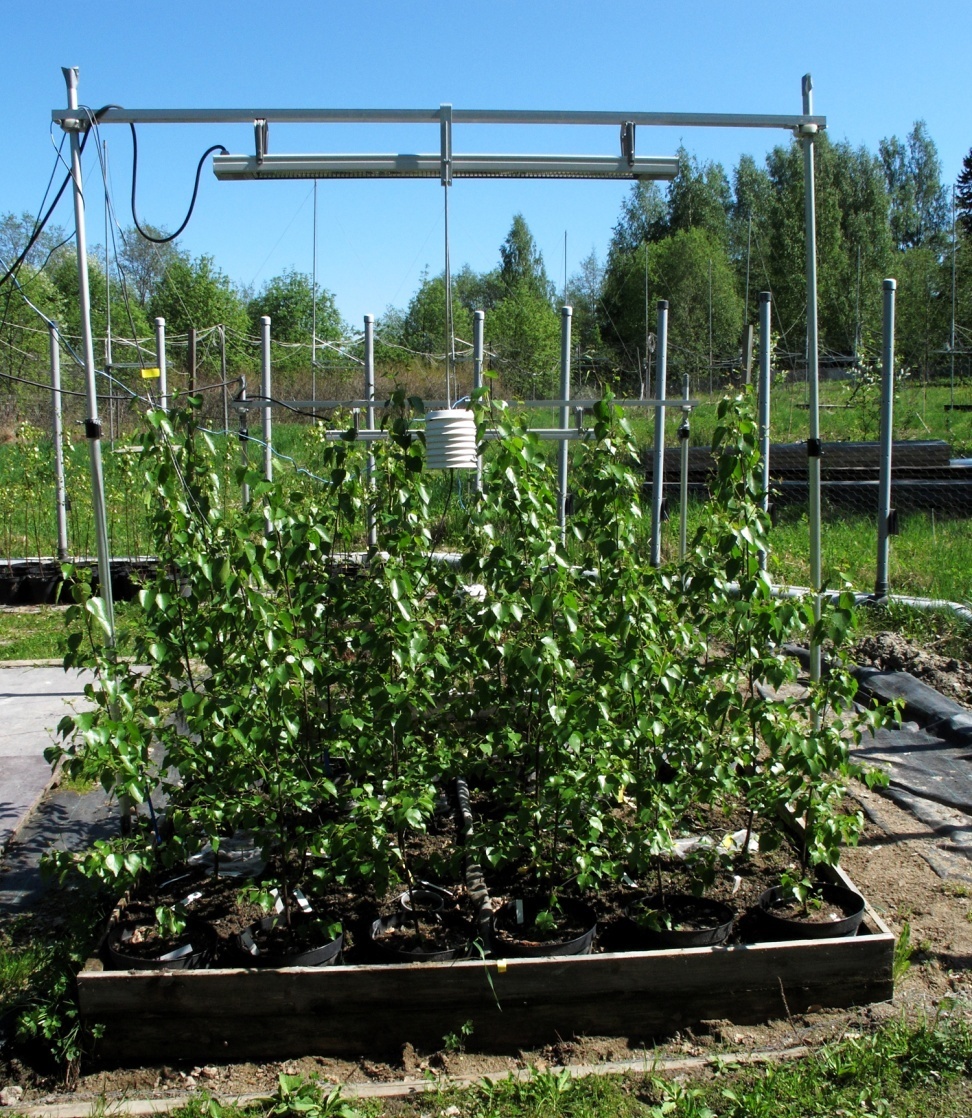
In my field experiment I used a Vernier caliper at a marked point on each tree rather than a tape, because my trees were young saplings with small stem diameters where caliper precision was more appropriate. But for larger established trees a DBH tape is faster, more practical, and sufficiently accurate for most research and inventory applications.
How to Use a DBH Tape Correctly
Using a DBH tape correctly takes about thirty seconds per tree once you are familiar with the method but there are a few details that affect accuracy.
Stand on flat ground beside the tree if possible. On a slope, measure from the uphill side and position yourself so the 1.3 metre height is measured from the ground on the uphill side of the trunk.
Wrap the tape horizontally around the trunk at exactly 1.3 metres above ground. The tape must be level and in full contact with the bark all the way around without gaps or twists. Any part of the tape lifted away from the bark will produce an underestimate.
Read the measurement where the zero end of the tape meets the graduated scale. The number you read is the diameter directly. Record it and move to the next tree.
On trees with obvious irregularities at breast height, such as branches, burls, or heavy bark ridges, move the measurement slightly above or below the irregularity and note the adjusted height in your datasheet.
What to Look for When Buying a DBH Tape
Scale units.
Most DBH tapes are available in centimetres, inches, or both. Choose based on the reporting standard for your project. Research publications in European forestry typically use centimetres. North American forestry often uses inches. Having both on the same tape is convenient for international projects.
Material.
Fibreglass tapes are the most durable for repeated outdoor use and resist stretching better than cloth tapes over time. Metal tapes are more precise but can be harder to handle in cold conditions and may damage bark if used roughly. For most field research, fibreglass is the practical choice.
Length.
Standard DBH tapes are typically 2 to 5 metres long. For most trees encountered in research and inventory work, 2 metres is sufficient. If you are working in old-growth forest or with very large diameter trees, a longer tape avoids the need to overlap or estimate.
Locking mechanism.
A tape with a locking mechanism or self-winding case keeps the tape taut during measurement and prevents it from retracting before you have read the value. Small but genuinely useful in practice when you are measuring alone.
Graduations.
Look for clearly marked millimetre graduations if you need sub-centimetre precision. For general inventory work, centimetre graduations are sufficient. For research where small growth increments are being tracked over time, finer graduations improve sensitivity.
DBH Tape vs Vernier Caliper: Which Should You Use?
Both measure stem diameter but they suit different situations.
A DBH tape measures the average diameter of the whole circumference and is faster for large trees. It assumes a circular cross section and works best on trees with diameters above roughly 5 cm.
A Vernier caliper measures at a specific point and gives higher precision on small stems. For young experimental trees with diameters of a few centimetres, a caliper at a marked point gives more reproducible results than a tape because it eliminates the variability introduced by irregular small-stem cross sections.
For standard forest inventory and monitoring of established trees, a DBH tape is the right tool. For experimental work with small saplings where precise repeated measurements at marked points are needed, a caliper is more appropriate.
A DBH tape gives you the diameter, but not the height. For tall trees you need a clinometer or a laser rangefinder, and I explain both methods and the two tools I recommend in Tree Height Measurement Methods Explained.
Frequently Asked Questions
What is the difference between a DBH tape and a normal tape?
A normal tape measures circumference in length units. A DBH tape has a compressed scale that converts circumference to diameter automatically, so you read diameter directly without calculation.
How do you read a DBH tape?
Wrap it horizontally around the trunk at 1.3 metres height, keep it level and in full contact with the bark, and read the number where the zero end meets the graduated scale. That number is the diameter in your chosen units.
What does DBH stand for in forestry?
Diameter at breast height. Breast height is standardised at 1.3 metres above ground in most international protocols and 1.37 metres in North American forestry.
Can a DBH tape measure tree height?
No. A DBH tape only measures stem diameter. Tree height requires a separate instrument such as a hypsometer, clinometer, or graduated measuring pole.
Where can I buy a DBH tape?
Forestry equipment suppliers, scientific instrument retailers, and Amazon all stock DBH tapes. Look for fibreglass construction with clear millimetre graduations and a locking mechanism for field use.