
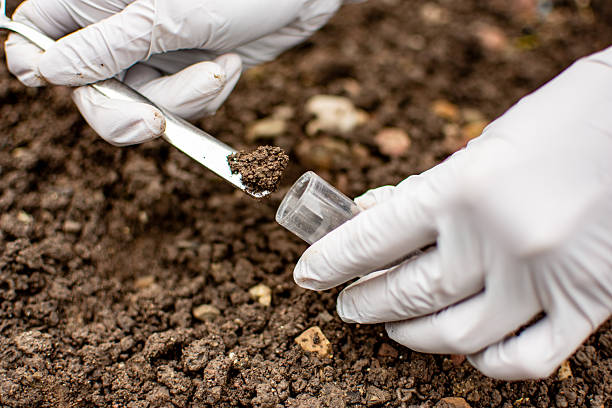






If you pick up a handful of soil from a healthy forest floor it is usually dark, almost black, and has an earthy smell. That darkness is a sign of humus. And humus is what separates productive forest soil from poor mineral soil.
I studied soil carbon and organic matter dynamics as part of my postgraduate biogeochemistry training. Humus came up repeatedly as the foundation that everything else in forest soil depends on. The more I learned about how it forms and what it does, the more I understood why mature forest soils behave so differently from disturbed or agricultural soils.
This article explains what humus is, how it forms, why forests build it well, and why it matters for nutrients, carbon storage, and water.
What Is Humus in Soil?
Humus is the stable dark organic component of soil that remains after organic matter has been fully decomposed by soil microorganisms. It is not fresh leaf litter. It is not partially rotted wood. It is the end product of a long biological process where complex organic compounds are broken down and transformed into new stable molecules that resist further decomposition.
The key word is stable. Fresh organic matter breaks down relatively quickly. Humus does not. It stays in soil for decades to centuries because its chemical structure is complex enough that most soil microbes cannot easily break it down. That stability is what makes it valuable. It holds nutrients, retains water, improves soil structure, and stores carbon over long timescales.
Humus makes up a small fraction of most soils by weight but its effect on soil properties is much larger than that fraction suggests. Even a small increase in humus content noticeably improves how well a soil holds water, exchanges nutrients with plant roots, and supports biological activity.
In forest soils humus accumulates in the upper mineral soil layer beneath the organic litter on the surface. The dark colour it gives to topsoil is a reliable visual sign of soil quality. When I visited forest sites during my studies I noticed the same pattern. The darkest topsoil was always under the deepest organic layer.
How Does Humus Form in Soil?
Humus formation is a slow biological process. It does not happen quickly and there are no shortcuts. Understanding how it forms explains why some soils have it and others do not.
It starts with fresh organic matter arriving at the soil surface. In a forest this means leaf litter, dead roots, woody debris, fungal material, and the remains of soil invertebrates and microorganisms.
The first stage is physical breakdown. Earthworms, beetles, millipedes, and other soil invertebrates break large pieces of organic matter into smaller fragments. This increases the surface area available for microbial activity and mixes organic material into the mineral soil below.
The second stage is microbial decomposition. Bacteria and fungi break down the fragmented material. Simple compounds like sugars and proteins break down quickly. Lignin, the structural compound in wood, breaks down much more slowly.
As decomposition continues, dead microbial cells become new substrate. Through repeated cycles of breakdown and transformation, organic compounds are gradually converted into complex humic substances. These bond strongly to clay minerals and other soil particles forming stable humus.
In my biogeochemistry training this process was called humification. Research published in Chemical and Biological Technologies in Agriculture confirms that humus is fundamental to soil health, improving physical fertility, limiting erosion risk, enhancing rhizosphere microbiome activity, and directly stimulating plant growth through physical, chemical, and biological mechanisms.
How Long Does It Take Humus to Form?
It depends on the ecosystem, climate, and organic matter inputs. In general building significant humus takes decades to centuries under natural conditions.
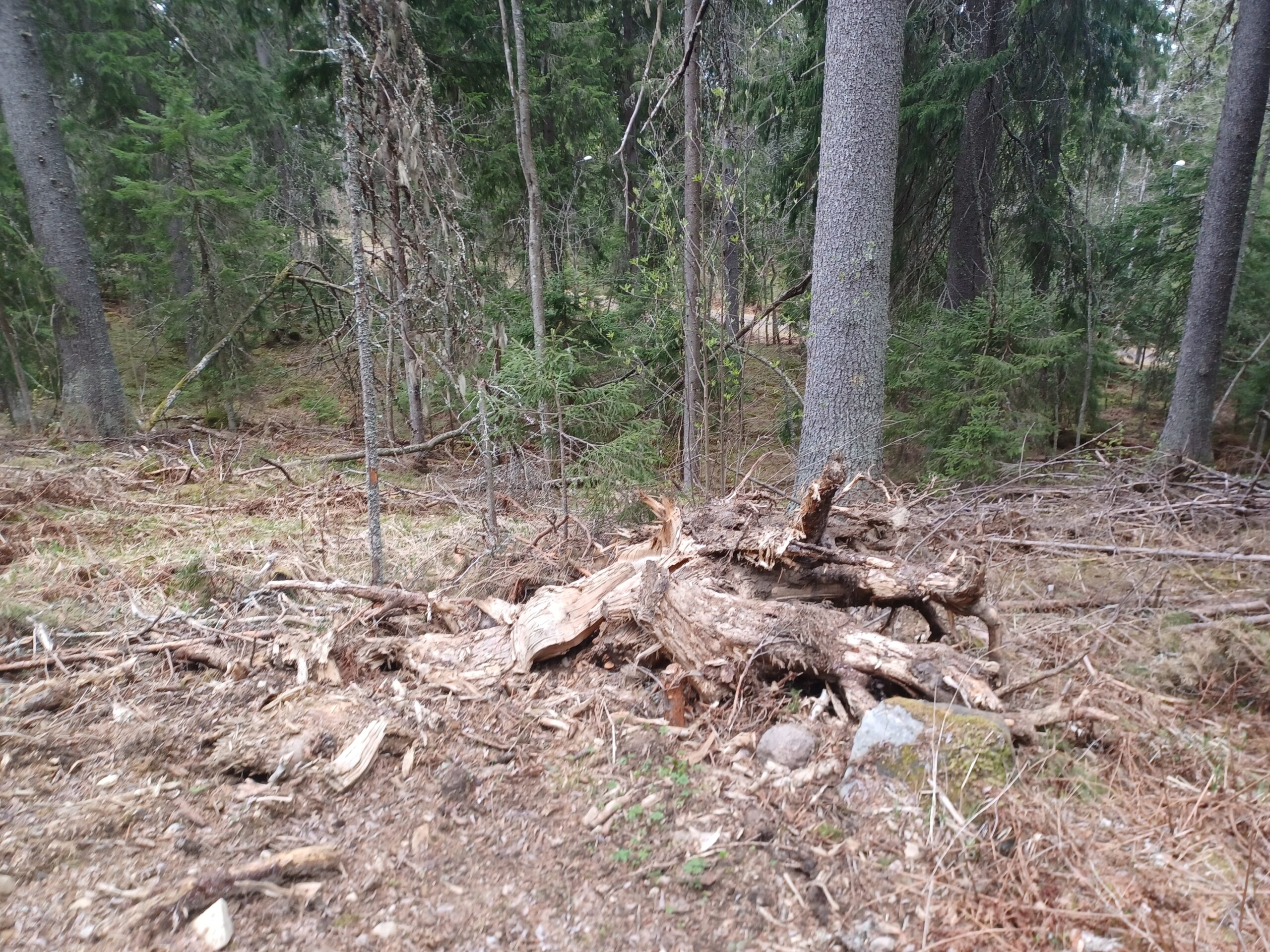
In a temperate forest with active decomposer communities, moderate temperatures, and enough moisture, meaningful humus can accumulate over decades. In a cold boreal forest where decomposition is slow it takes much longer. In tropical forests where decomposition is fast humus may turn over quickly and accumulate less despite high organic inputs.
The rate of humus formation depends on the balance between organic matter inputs and decomposition losses. When inputs exceed losses humus builds up. When losses exceed inputs it declines. Mature undisturbed forest soils have usually reached a point where humus levels are stable or slowly increasing.
Soil disturbance disrupts this balance. Tillage, compaction, erosion, and vegetation removal expose previously protected humus to rapid decomposition and release the carbon it contains. Rebuilding lost humus after disturbance takes much longer than it took to lose it.
Why Is Forest Soil Rich in Humus?
Not all forest soils are equally rich in humus but forests are generally better environments for humus accumulation than most other land use types. Several reasons explain this.
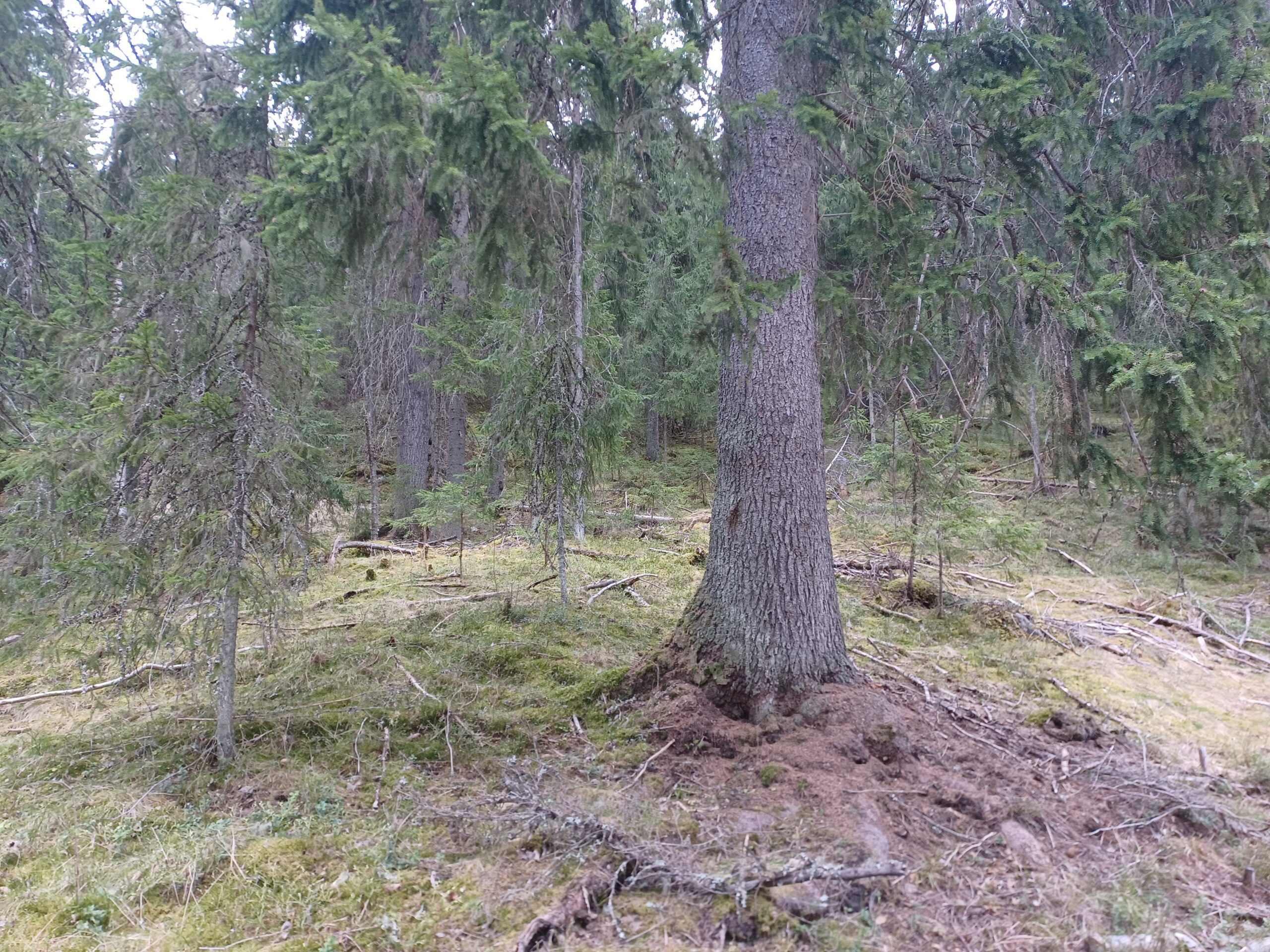
Continuous organic matter inputs are the main factor. A forest produces leaf litter, root turnover, woody debris, and microbial biomass throughout its life. There is no season when organic inputs stop entirely. This constant supply feeds the humification process year after year.
Undisturbed soil structure allows humus to accumulate in protected spaces within soil aggregates where decomposition is slower. Forest soils are rarely compacted or tilled which means these protective structures stay intact over long periods.
Diverse soil biology drives humification efficiently. Forest soils support diverse communities of bacteria, fungi, earthworms, and other organisms that together process organic matter through all the stages needed to produce stable humus.
Mycorrhizal fungal networks also contribute. When mycorrhizal fungi die their cell wall compounds, including a protein called glomalin, contribute to soil aggregate stability and humus formation. In a forest with dense mycorrhizal networks this adds up to a significant contribution over time.
What Does Humus Do for Soil?
Humus does several things for soil simultaneously and they all matter.
Nutrient retention is the most important function for plant growth. Humus carries a negative electrical charge that attracts and holds positively charged nutrient ions including calcium, magnesium, potassium, and ammonium. These nutrients stay in a form available to plant roots but are protected from washing away in rainfall. Without humus nutrients leach out of the soil much faster.
Water retention is closely related. Humus can hold several times its own weight in water. Forest soils with good humus content absorb rainfall more slowly and release it more steadily, which reduces erosion and keeps moisture available for trees during dry periods.
Soil structure improves because humus binds mineral soil particles into aggregates. These create a porous structure that allows water to drain while retaining moisture, and lets roots and soil organisms move through the soil more easily.
Carbon storage is the function most directly connected to climate. The carbon in stable humus is not returning to the atmosphere quickly. It stays in soil for decades to centuries. Forest soils with deep humus layers store significant amounts of carbon and anything that destroys humus releases that carbon as CO₂.
Biological support connects everything. Humus feeds and houses the microbial community that drives nutrient cycling. More humus means more microbial activity which in turn produces more humus from new organic inputs. It is a self-reinforcing system as long as the soil is not disturbed.
Why Does Forest Soil Sometimes Have Low Humus Content?
Not all forest soils are humus rich. Several conditions limit humus accumulation even under forest cover.
Cold temperatures slow decomposition but also slow humification. In very cold boreal forests organic matter builds up as raw undecomposed litter rather than converting to stable humus. The result is thick organic layers above the mineral soil but relatively little humus in the mineral soil itself.
High acidity from conifer needle litter favours fungi over bacteria in decomposition. Fungal-dominated decomposition under spruce and pine tends to produce a raw acidic organic layer called mor humus that sits on top of the mineral soil rather than mixing into it. This is different from the well-mixed mull humus that forms under broadleaved trees like birch and oak.
Waterlogging stops the aerobic decomposition needed for normal humification. In waterlogged soils organic matter builds up as peat rather than converting to humus. This is why peatlands and forest soils store carbon differently despite both accumulating organic matter.
Sandy soils with low clay content have less mineral surface area for humus to bond to. This limits how much stable humus can form even when organic inputs are high.
Why Is Humus Important to Forest Ecosystems?
Every major process in a forest soil depends on humus.
Nutrient cycling runs through it. Water storage depends on it. Soil structure is maintained by it. Carbon storage is concentrated in it. And the biological community that keeps all these processes running lives in it.
When humus is lost through deforestation, compaction, erosion, or fire all of these processes degrade at the same time. Nutrient cycling slows. Water retention drops. Soil structure weakens. Carbon releases to the atmosphere. And the biology that would rebuild humus from new organic inputs is itself depleted.
This is why forest soil recovery after severe disturbance takes so long. You cannot add organic matter and expect humus to form quickly. The biological community needs to come back. The physical structure needs to recover. The chemical bonding between organic compounds and mineral particles needs to re-establish. All of that takes decades.
I covered the carbon storage side of this in my articles on soil organic carbon and soil carbon sequestration on this site. Humus is where carbon storage becomes stable enough to matter over decades and centuries.
Frequently Asked Questions
What is humus in soil?
Humus is the stable dark organic component of soil that remains after organic matter has been fully decomposed by soil microorganisms. It is resistant to further breakdown and has a large effect on soil fertility, water retention, structure, and carbon storage relative to the small fraction of total soil it represents.
How does humus form in soil?
Through humification. Organic matter from leaf litter, dead roots, and other biological material is physically broken up by soil invertebrates, chemically broken down by bacteria and fungi, and gradually transformed through repeated microbial cycles into complex humic molecules that bond to mineral soil particles and resist further decomposition.
How long does it take humus to form?
Decades to centuries depending on climate, vegetation, and soil type. Cold or dry conditions slow the process. Temperate forest soils under continuous vegetation can build meaningful humus over decades. Rebuilding humus lost to disturbance takes much longer than it took to lose it.
Why is humus important for soil?
It retains nutrients that would otherwise leach away, holds water during dry periods, improves soil structure, stores carbon over long timescales, and supports the microbial community that drives nutrient cycling. Soil without humus is structurally weak, nutrient poor, and biologically limited.
Why is humus important to forest ecosystems?
Because nearly every process that keeps a forest functioning depends on it. Nutrient cycling, water storage, root penetration, carbon storage, and biological activity all rely on humus. When it is lost the whole system degrades and recovery takes decades.
Are forest soils rich in humus?
Temperate and some boreal forest soils tend to be rich in humus because of continuous organic inputs, undisturbed soil structure, and diverse biological communities. Very cold forests may build raw organic layers rather than stable humus. Sandy or very acidic forest soils can also be low in humus despite high organic inputs.
Why does forest soil sometimes have low humus content?
Cold temperatures slow humification. High acidity from conifer litter produces raw organic layers rather than stable mineral-associated humus. Waterlogging diverts organic accumulation toward peat. And sandy soils with low clay content have limited capacity to hold stable humic compounds.
How does humus improve soil structure?
Humus binds mineral soil particles into aggregates that create a porous structure. This allows water to drain while retaining moisture, lets roots penetrate more easily, and provides habitat for soil organisms. It is maintained by biological activity and damaged by tillage, compaction, and loss of organic inputs.