



How can we know what is happening in nature when we are not there to see it?
This is a key problem in biogeochemistry.
To understand how ecosystems react to climate change and air pollution, scientists cannot rely only on looking at them. Instead, they use tools that can measure changes all the time and in great detail.
Modern environmental research uses two main types of tools:
Automated environmental sensors: These collect data all the time about things like air and soil conditions.
Analytical field instruments: These take accurate measurements at specific times to show how ecosystems respond.
By using both types together, scientists can connect changes in the environment with changes in living organisms and natural processes as they happen.
In my research work with silver birch, I used a system with different instruments to study how slightly warmer temperatures (+0.9°C) and higher ozone levels (1.4 times normal) affect how carbon moves in silver birch trees (Betula pendula).
This article explains the sensors used in that study and the modern technologies that help scientists monitor the environment today.
Atmospheric Manipulation and Monitoring Systems
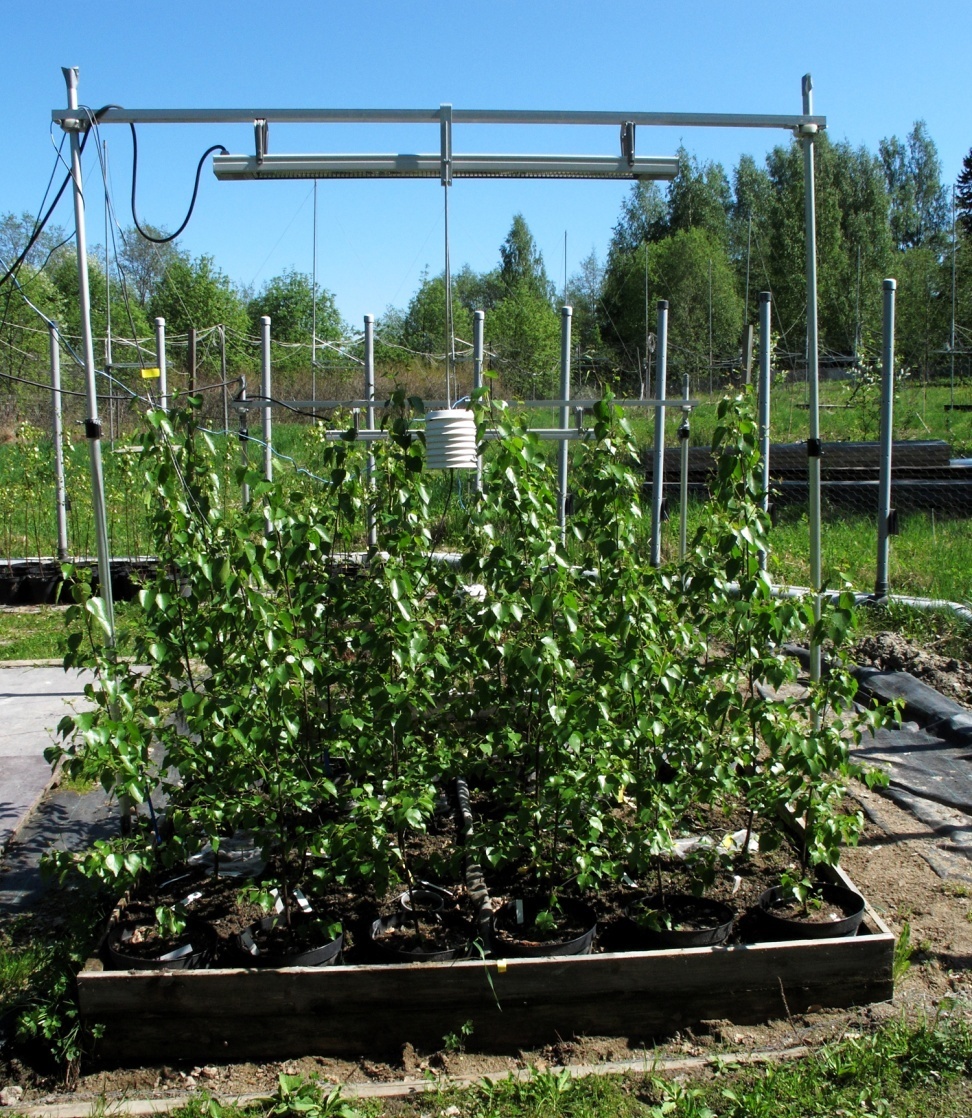
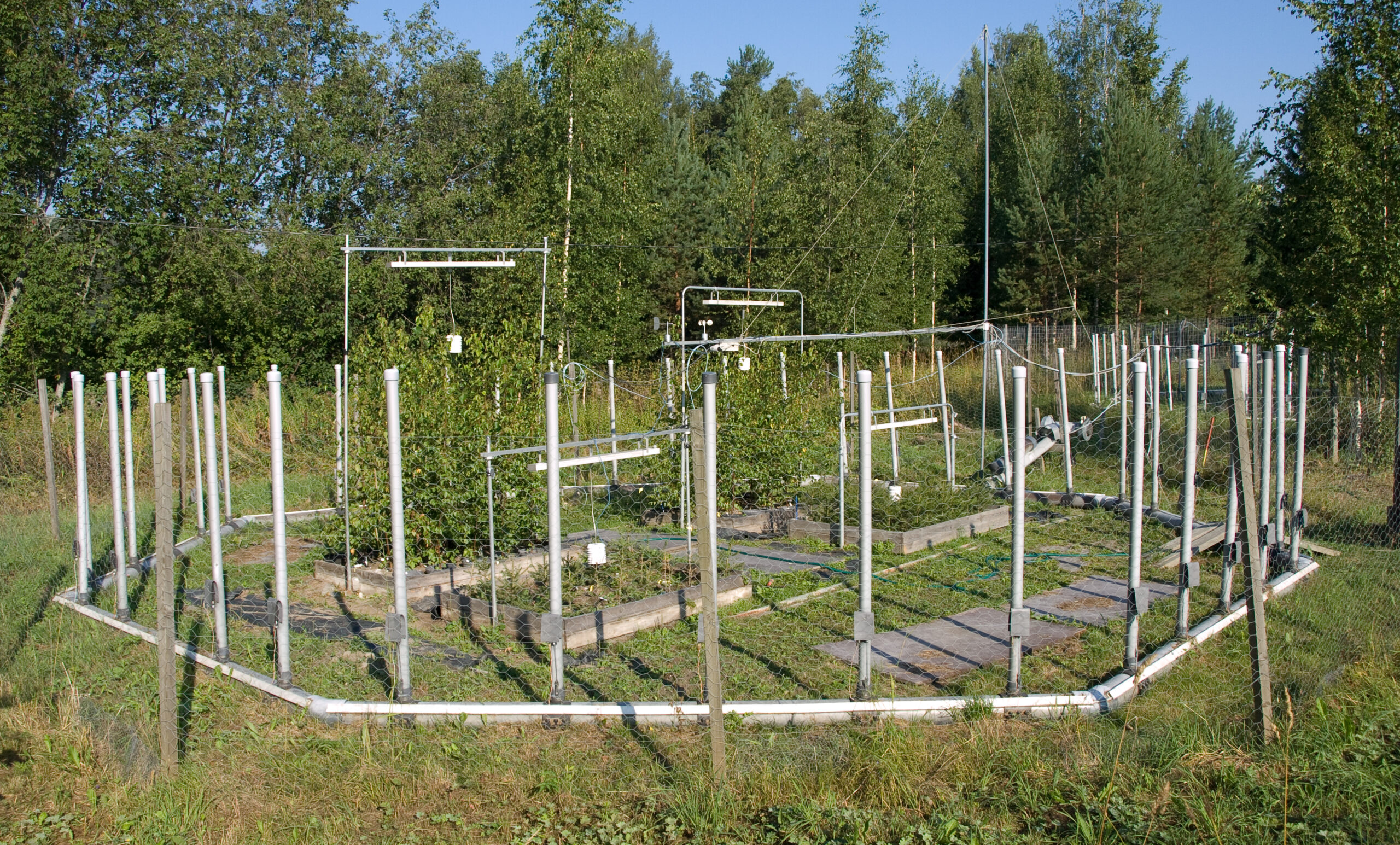
Open-field experiments need very precise control of environmental conditions, even though they take place outdoors under natural and changing weather. To handle this, we used a free-air exposure system supported by real-time sensor feedback.
Thermal Monitoring System (Thermocouples)
To simulate a warmer climate, we did not simply heat the plots. Instead, we used a closed-loop system that continuously adjusted conditions based on sensor readings.
Technology:
We installed thin thermocouple sensors to measure both air temperature and leaf surface temperature.
How it worked:
These sensors continuously sent temperature data to a central controller. When the outside temperature changed, the system automatically adjusted infrared heaters placed above the plant canopy.
This setup kept the warming stable at about +0.9°C above normal conditions. Because the temperature was carefully controlled, we could clearly link plant responses to warming, such as a 9% increase in stem height observed in mid-July, directly to the higher temperature.
Tropospheric Ozone Monitoring System
Ozone (O₃) is a reactive gas that can cause oxidative stress in plants. In open-field experiments, it must be carefully monitored and controlled to maintain stable exposure levels.
Technology:
An open-air ozone enrichment system was used to maintain target ozone concentrations in the field.
How it worked:
Ozone levels were continuously monitored and adjusted in response to environmental conditions such as wind and weather. This helped keep exposure stable across plots.
This system maintained elevated ozone levels of about 33.4 ppb in treatment plots (compared to approximately 24.2 ppb in ambient air), simulating realistic atmospheric pollution conditions in boreal forest environments.
Soil and Carbon Flux Measurement Systems
Soil is very important in the global carbon cycle. It stores more carbon than the atmosphere and plants combined. Because of this, measuring soil respiration (the release of CO₂ from soil) is very important.
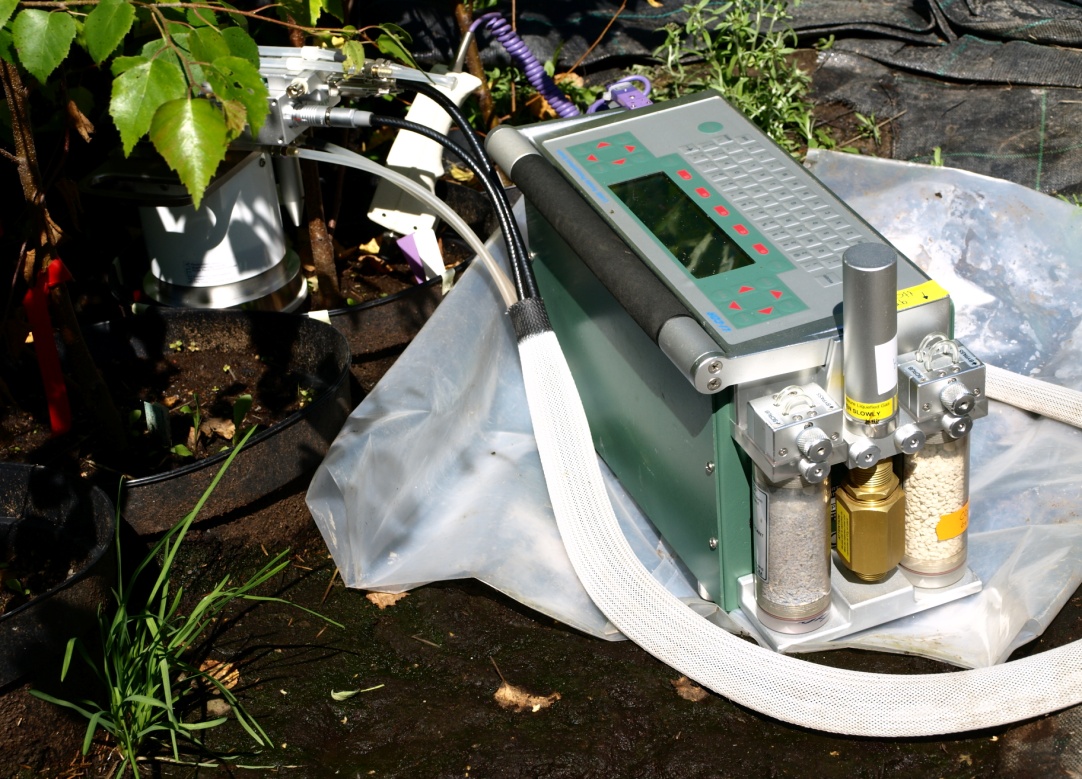
The LI-COR 6400 Soil CO₂ Flux System
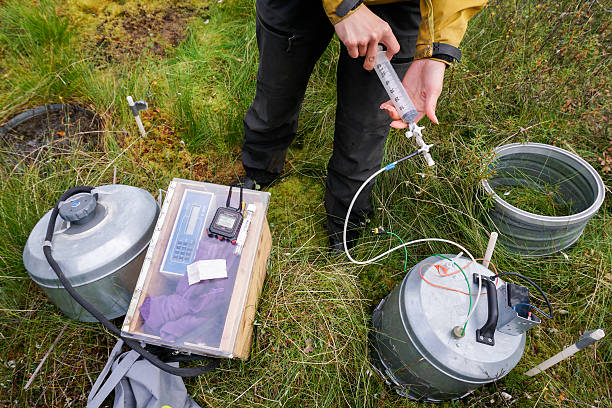
To measure how soil “breathes,” scientists use a tool called an Infrared Gas Analyzer (IRGA).
The system places a chamber over the soil and measures how quickly CO₂ builds up inside it. It uses infrared light because CO₂ absorbs light at a specific wavelength. By measuring how much light is absorbed, the system can calculate the amount of CO₂ in the chamber.
At the same time, the system also records soil temperature and moisture. These are important because soil respiration is a biological process controlled by roots and microbes, and it strongly depends on temperature and water availability.
Experimental Design and Sensor Placement
As a general rule, I recommend that in environmental monitoring studies, sensor placement should never be random. Careful planning is essential to ensure accurate and meaningful data.
In our research, the sensors were strategically positioned based on the experimental objectives and measurement requirements.
This approach ensured that the data collected truly reflected the physiological responses being studied, without unwanted influence from surrounding conditions.
Other Environmental Monitoring Sensors
In my research, I mainly used tools like flux chambers and temperature sensors. But in environmental science, many different sensors are used around the world to study nature.
Weather and Climate Sensors
Anemometers:
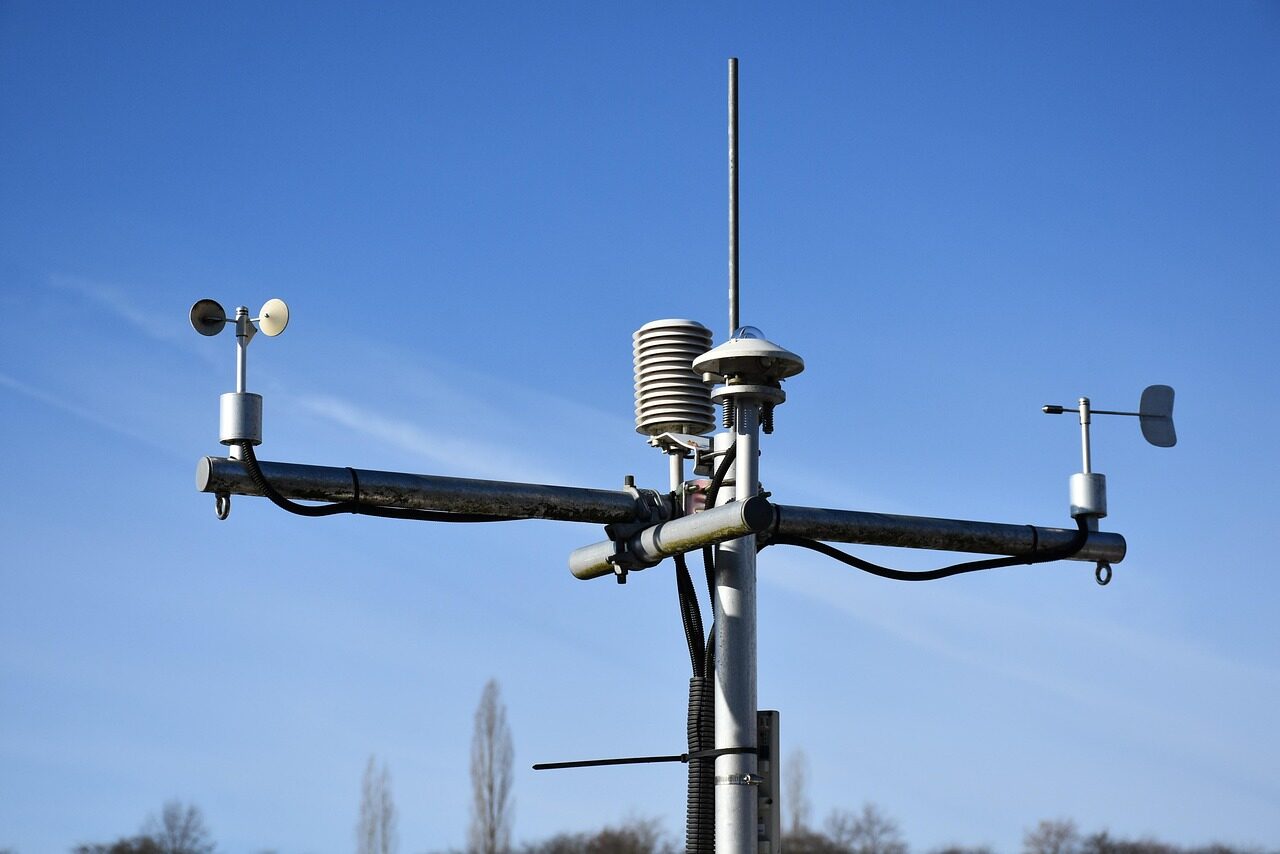
These measure wind speed and direction. Newer versions use sound instead of moving parts to measure wind in three directions.
Pyranometers:
These measure how much sunlight energy reaches the ground (W/m²). This helps scientists understand how much energy ecosystems receive.
PAR Sensors:
These measure the light plants can actually use to grow. Plants only use a certain range of light, and these sensors focus on that.
Soil and Water Sensors
Soil moisture sensors (TDR probes):
These measure how wet the soil is using electrical signals. They are important for studying drought in forests and farms.
pH and EC sensors:
These measure how acidic water is (pH) and how salty it is (EC). They can help detect pollution or changes in water quality.
Satellite Sensors
Satellites like Landsat and Sentinel watch Earth from space. They help scientists see large changes like forest loss, drought, or plant health across big areas using special images.
Summary
Environmental monitoring integrates physics, biology, and engineering to quantify ecosystem processes that cannot be observed directly. By combining automated environmental sensors, field-based analytical instruments, and rigorous statistical validation, we can accurately observe how ecosystems respond to climate and atmospheric change.
My research demonstrates that reliable environmental understanding depends not only on advanced instrumentation but also on rigorous experimental design and strict measurement integrity.
As climate change intensifies, these monitoring systems provide the scientific foundation needed to manage carbon dynamics in forest ecosystems worldwide.
FAQs
What is an Environmental Monitoring System?
An environmental monitoring system (EMS) is a group of sensors and computer tools that work together to track environmental conditions over time. It is used to study nature or ensure environmental regulations are followed. It can measure things like air quality, water levels, or soil conditions.
What are environmental sensors?
Environmental sensors are devices that measure changes in the environment. They detect physical or chemical properties. For example, thermocouples measure temperature, gas sensors measure gases, and moisture sensors measure water content in soil.
What is environmental monitoring and why is it important?
Environmental monitoring means collecting and analyzing data from the environment over time. It helps scientists understand changes, detect problems early, and study climate change, ecosystem health, and pollution effects.
How can I use sensors to detect changes in the environment?
You can use connected sensor networks (such as IoT systems) to collect real-time data like temperature or CO₂ levels. These values are compared with past measurements or control sites to detect changes, similar to what was done in my research on silver birch.
What environmental parameters need to be monitored?
Common environmental factors include air temperature, humidity, wind speed, sunlight (PAR), soil moisture, and gas levels such as CO₂, O₃, and CH₄.
Are satellite sensors used in environmental monitoring?
Yes. Satellites are used for remote sensing, which allows scientists to study large areas of Earth. They can monitor things like forest growth, glacier melting, and global vegetation changes.
Where are moisture sensors used?
Moisture sensors are used in farming to control irrigation, in forests to study drought stress, and in construction to monitor soil stability around buildings and infrastructure.
Why is it important that environmental parameters are monitored?
Ecosystems are interconnected, so one change (for example, higher ozone levels) can affect many other processes like plant growth or soil respiration. Continuous monitoring helps scientists understand these connected effects and predict future environmental changes.